“Your house isn’t done yet? What have you been doing?!” Well, we haven’t made much progress on the building because we’ve been focused on forestry work from November through May. (Warning- this post covers a lot, so skip to the “before and after” photos if you’re not up for a long read.)
If you’re from the suburbs, like me, then you probably thought the trees take care of themselves. A healthy forest actually requires a lot of maintenance and even more TLC to grow valuable timber.

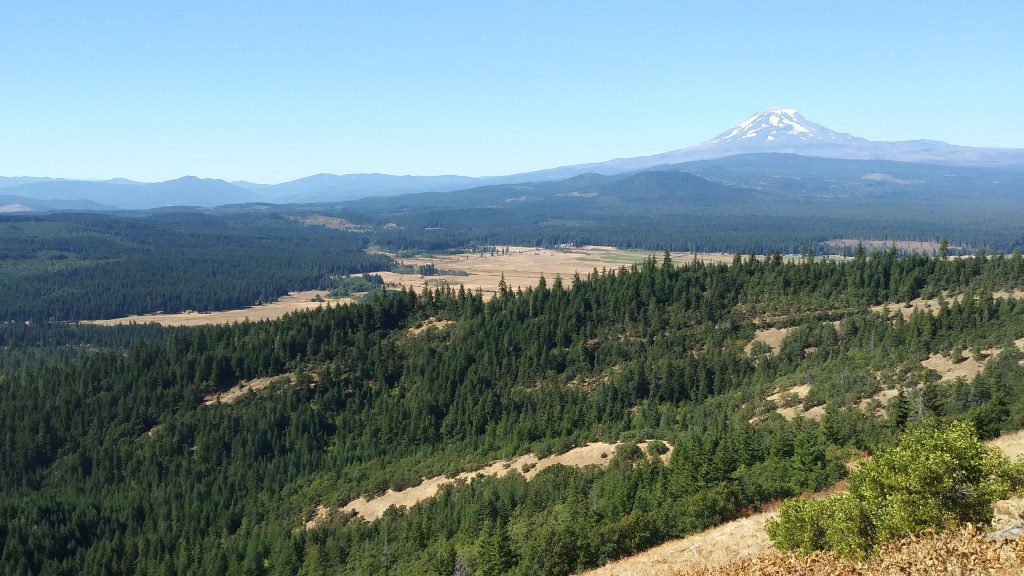
In our neck of the woods, we can only do forestry work between November and April/May when there is no fire danger (and when the destructive beetles aren’t active). See all the patches of dry grass below? Things get quite crispy here. Not only is there a burn ban, but for about three months, we can’t operate heavy equipment, chainsaws, dirt bikes, or anything that may spark. We can pick sticks up off the ground and make piles by hand when it’s 100 degrees out, but that activity got dull after a few years.
Our goal is to have a healthy, nice-looking, and wildfire resilient forest. The majority of our property is comprised of young trees (about 20 years old now). In those stands, our main activities are thinning, pruning, and shrub removal.
Thinning. When trees are densely planted, they don’t get enough water or sunlight and therefore, grow to be tall, skinny, and disease-prone. We walk around and flag trees to cut down, so we are left with a tree about every 10 feet. Sometimes this takes forever because we can’t decide which ones to keep and remove. Thinning also helps to slow the spread of wildfires. The rule-of-thumb is that the fire won’t be as devastating if the crowns (tops) of the trees aren’t touching.
Hauling trees out of the forest is a challenge. Sam attached a winch to our tractor this year. The tractor isn’t a very powerful machine, so this was only useful in select areas that weren’t too steep. The winch is also painfully slow.


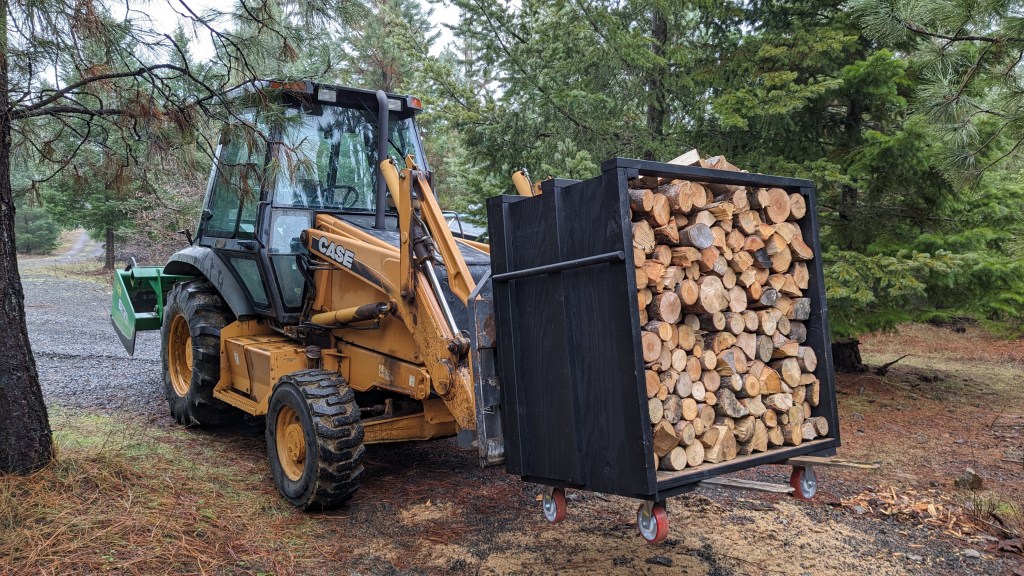
Sam had more success with the loader.

In most situations, a machine can’t access the felled trees, so they need to be hauled out to a road by hand. This method is usually the fastest (if the right person is on the job- I’ll tell you about her later), and disturbs the soil less.
Our trees are too small to be useful to anyone, so we process them for firewood.
Pruning. The trees we leave standing need to be pruned. That involves removing the lower limbs with a chainsaw. This is mainly for wildfire risk reduction. If there is a ground fire, the flames shouldn’t reach the foliage. This also makes it nice for walking and prohibits bears from hiding and jumping out at you.


Shrub removal. You probably hear the word “shrub” and think of a cute little bush by your front porch. Our shrubs are unruly monstrosities and shade out younger trees. They are also nearly impossible to get rid of. Ever-persistant and often coming back ten-fold, you have to cut them down every few years. We may try renting goats some day. This shrub below is average size. Many are much larger.

Battling the shrubs is slightly less annoying during winter when they don’t have leaves.


What do we do with all the stuff we clear out? There is no cost-effective solution, so we burn most of it. Many many hours were spent burning. In just the last year, we spent nearly 200 hours actively tending to fires (that’s not the total amount of burning time). And almost as many hours were spent studying the weather to decide if the conditions were good enough for a fire.


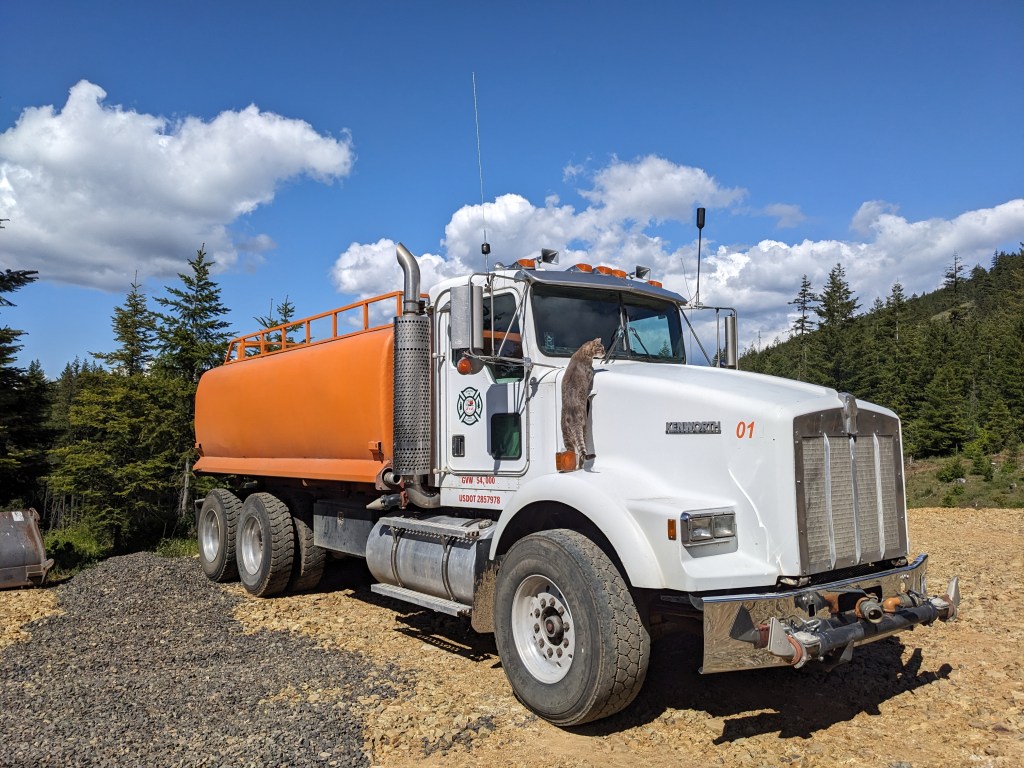
Our main concerns are starting the fire easily, not blowing smoke towards the house, and not scorching nearby trees. Fire likes to spread, so we always have a water tote and pump on hand as well as a really comfortable metal backpack sprayer. This year we had a number of larger piles and borrowed a water tender (truck) from our friends. Luckily we didn’t need it.
How do I know we spent 187 hours burning? We log all of our activities for a cost-share program run by Washington State’s Department of Natural Resources (DNR). Since DNR spends a ton of money fighting fires, they are incentivized for reducing wildfire risks by having private landowners clean up ground fuels, thin trees, etc. We are about to complete our third contract.

Here are the highlights of our current projects.
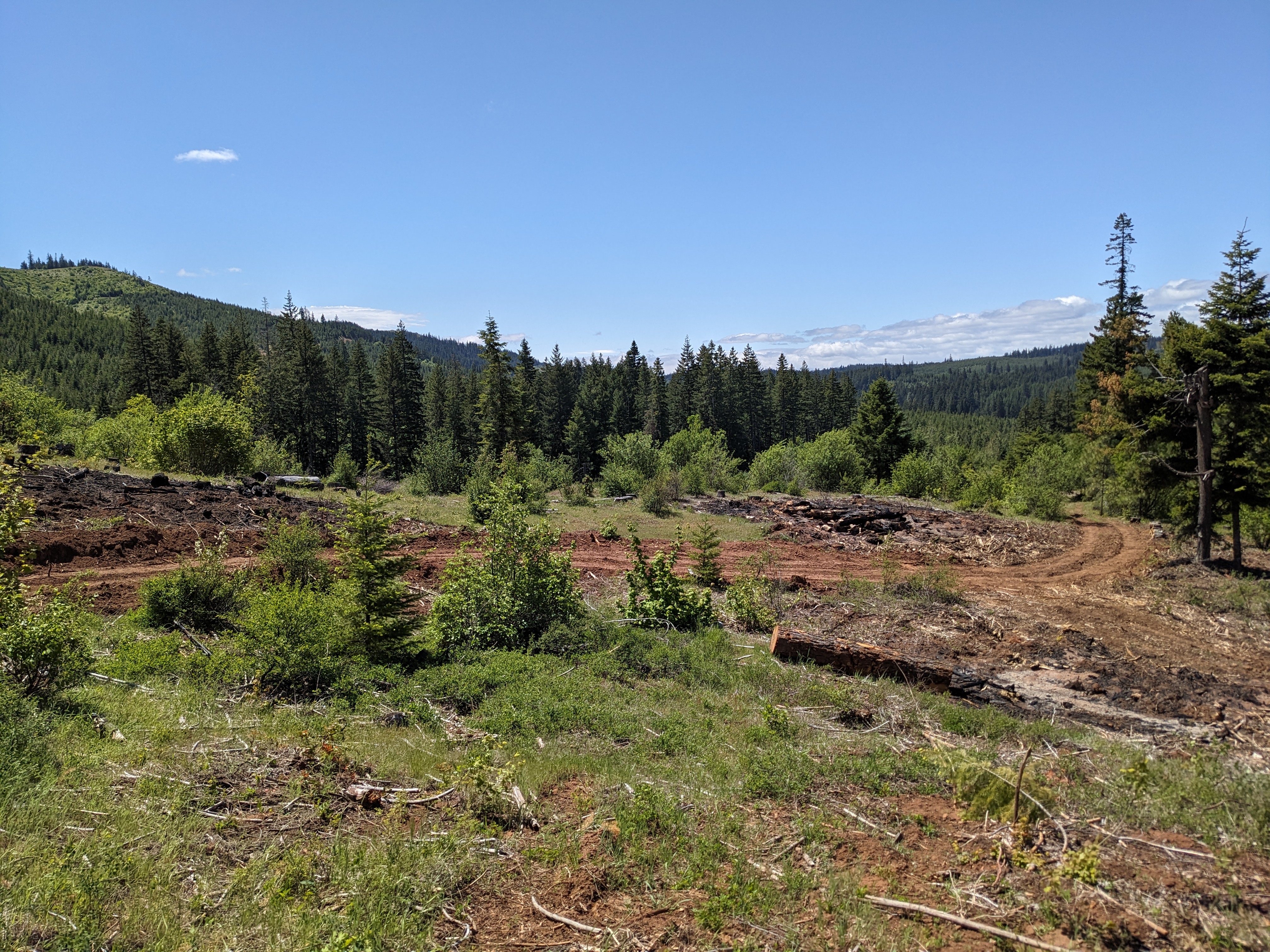
When we got the property, about 20 acres had been clear-cut and littered with knee-deep slash, aka fuel. We’ve been chipping away at this area for a few years and are almost done cleaning up the slash. We made hundreds of piles (by hand and machine) and burned most of them. Then we re-planted the areas. This spring, we planted about 150 pine tree seedlings and 50 larch, bringing our total to about 1700!
Before:

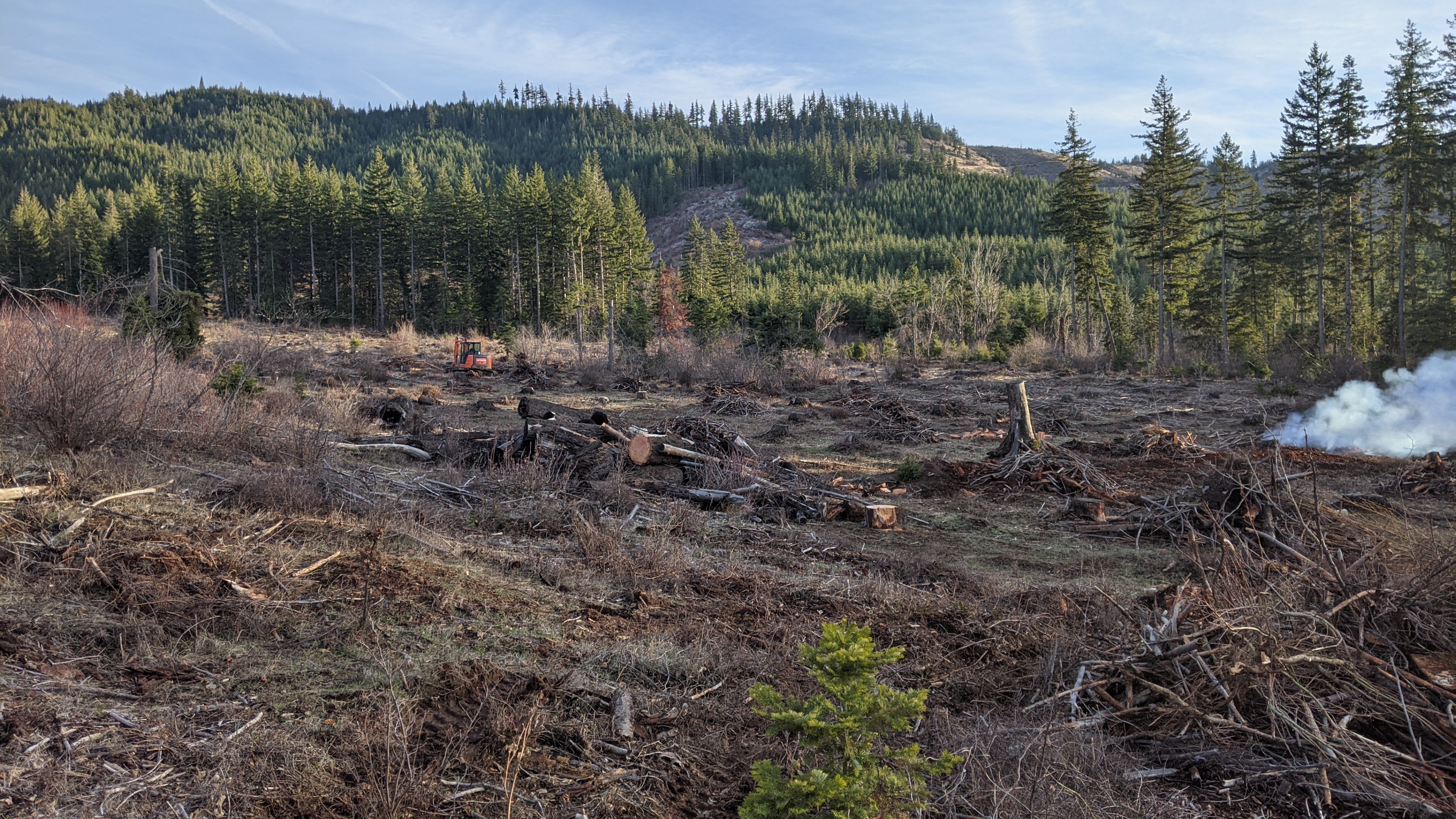

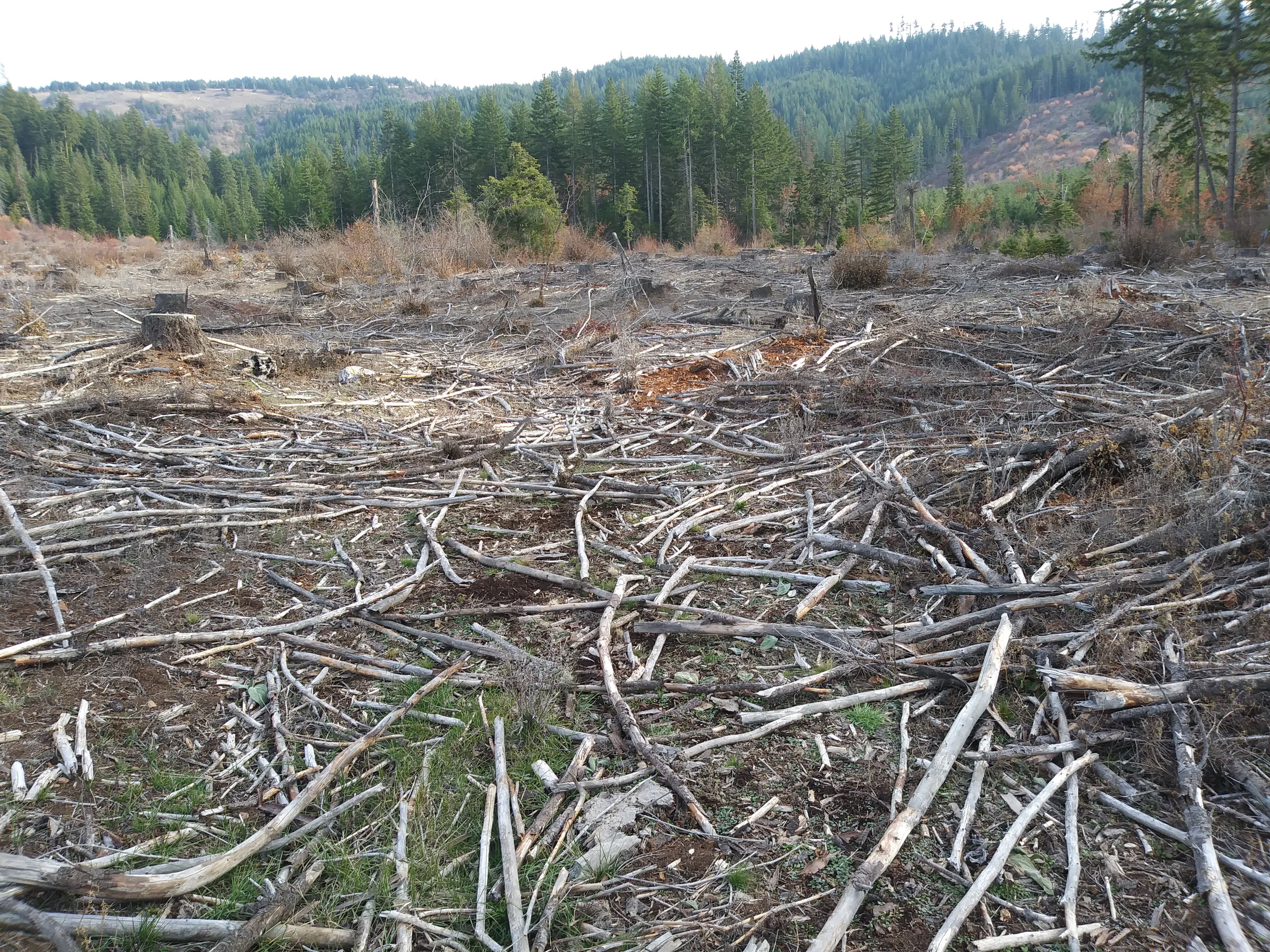
An intermediate stage is pictured below, before we burned the piles. This is the area we just re-planted, so there are no good “after” shots yet.

After (we planted these 1-3 years ago):
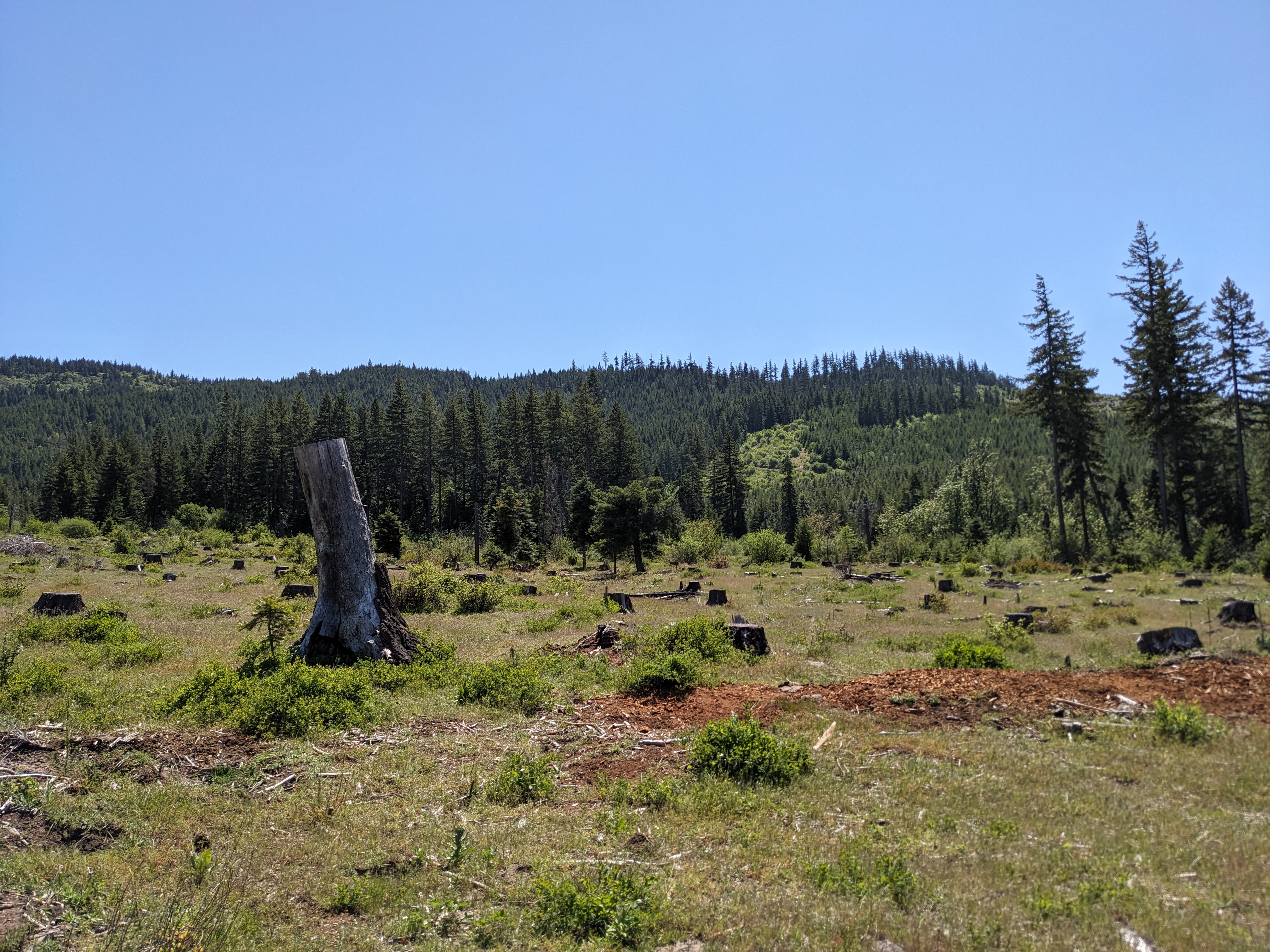
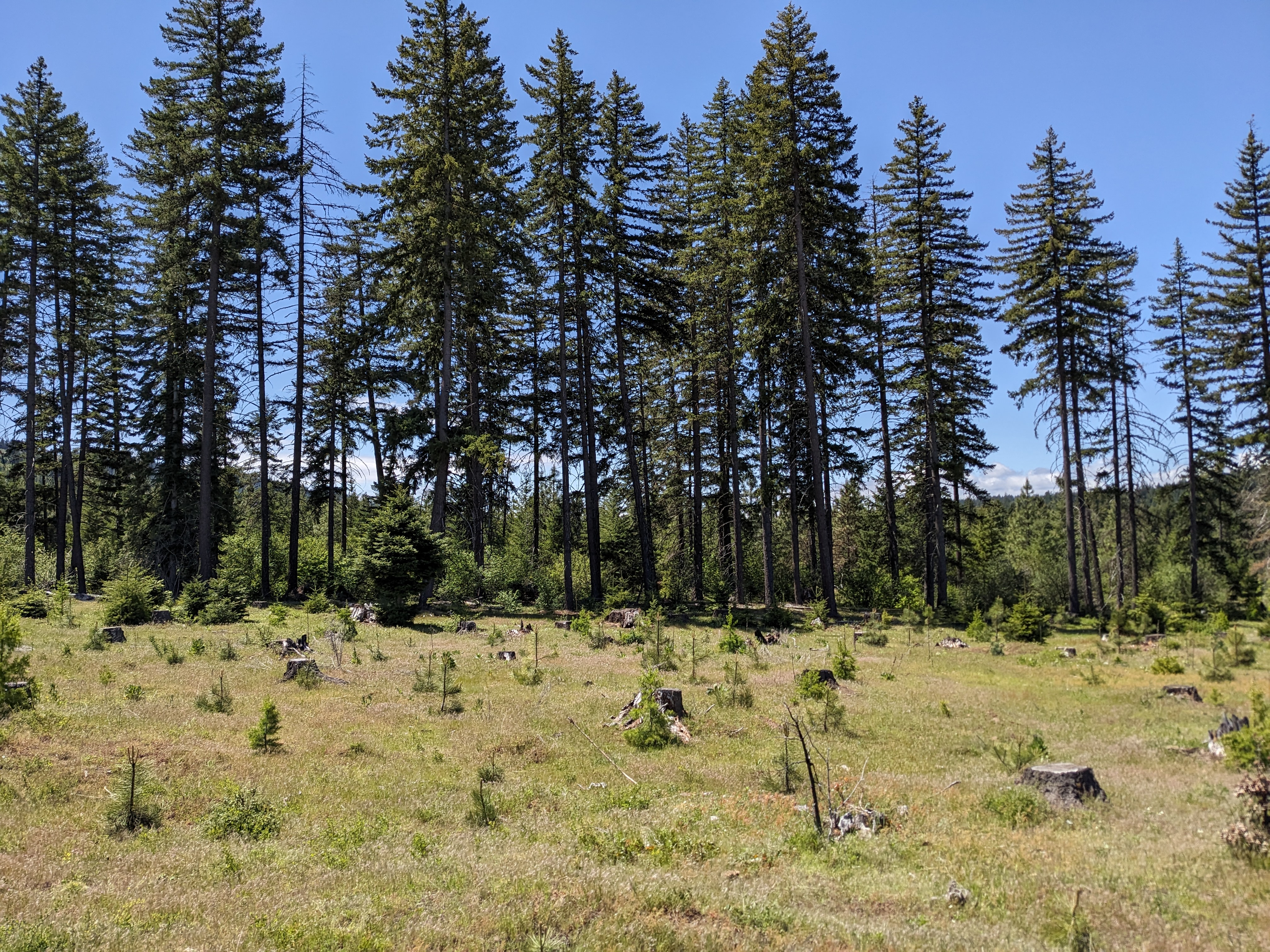
The section we planted in 2019 is thriving.

Some trees are taller than us!


The larches grew from 8 inches to 8 feet!


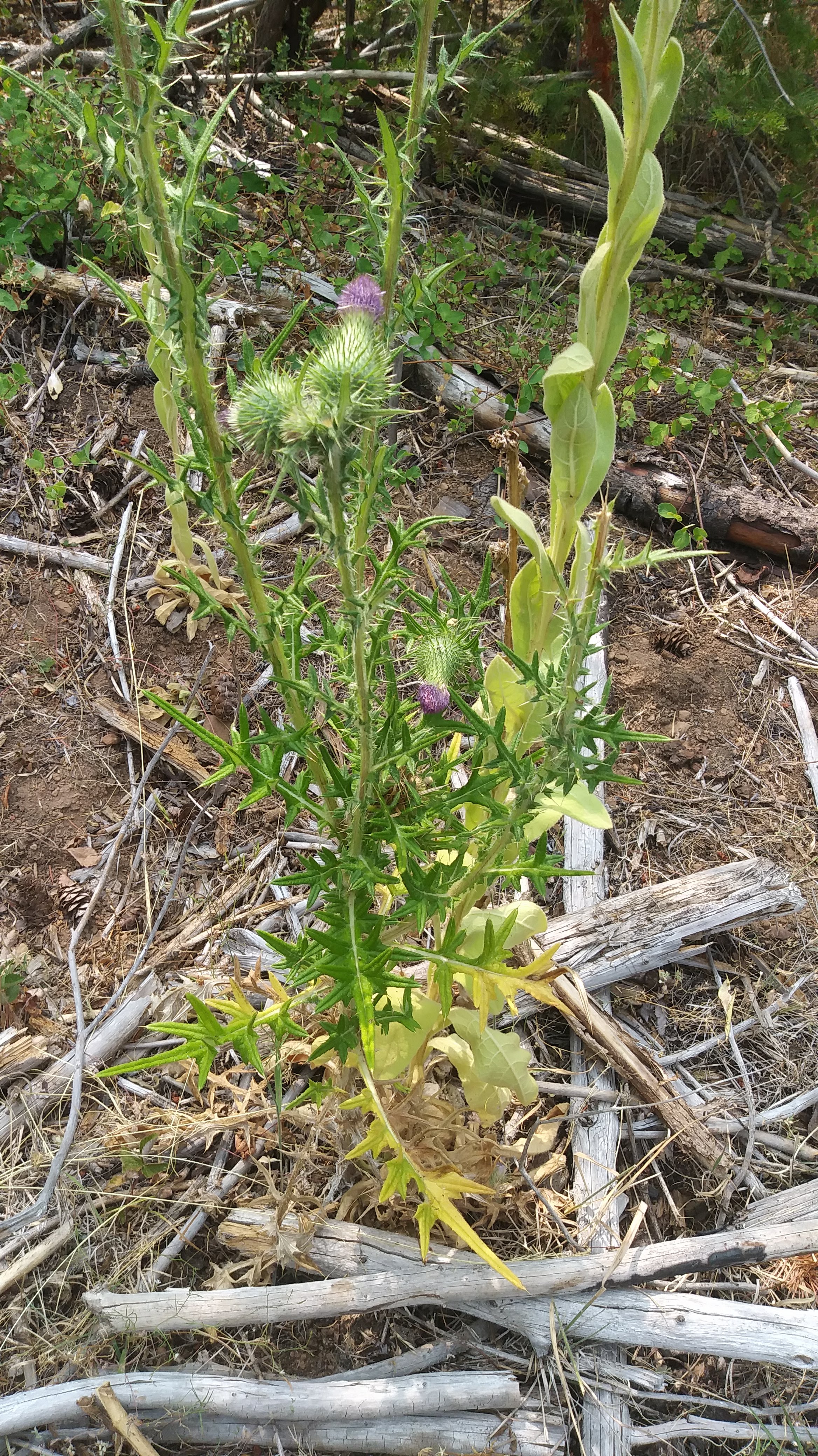
Don’t be fooled by the pretty pictures. This area still requires maintenance. Since the trees are too small to provide shade, the invasive weeds grow like crazy. We had help with a few rounds of weeding this spring. She also hacked down blackberry vines and other pesky plants. We have a mowing crew too, but they tend to favor the softer grasses over the thorny plants (although we’ve seen them eat a thistle!)

Our second big, ongoing project has been clearing the shrubs from a steep downhill corner of our property. This area is visible from the shop. Well, it is now. At one point, you couldn’t see down the hill. It was a solid thicket of shrubs.
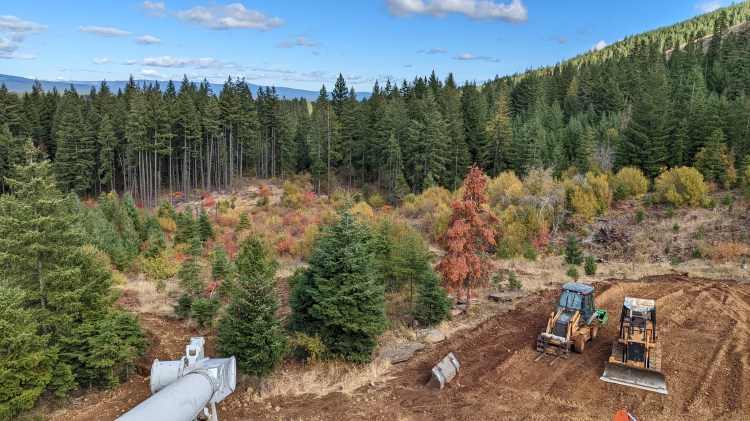
The terrain was so uninviting that I only set foot in that area twice during the first few years we owned the property. Sam has been patiently working his way down the hill in the excavator, removing the majority of shrubs. He left a few specimen shrubs for variety and for the animals. Hazelnut and elderberry are especially beneficial to wildlife. After two years, Sam finally made it to the bottom.

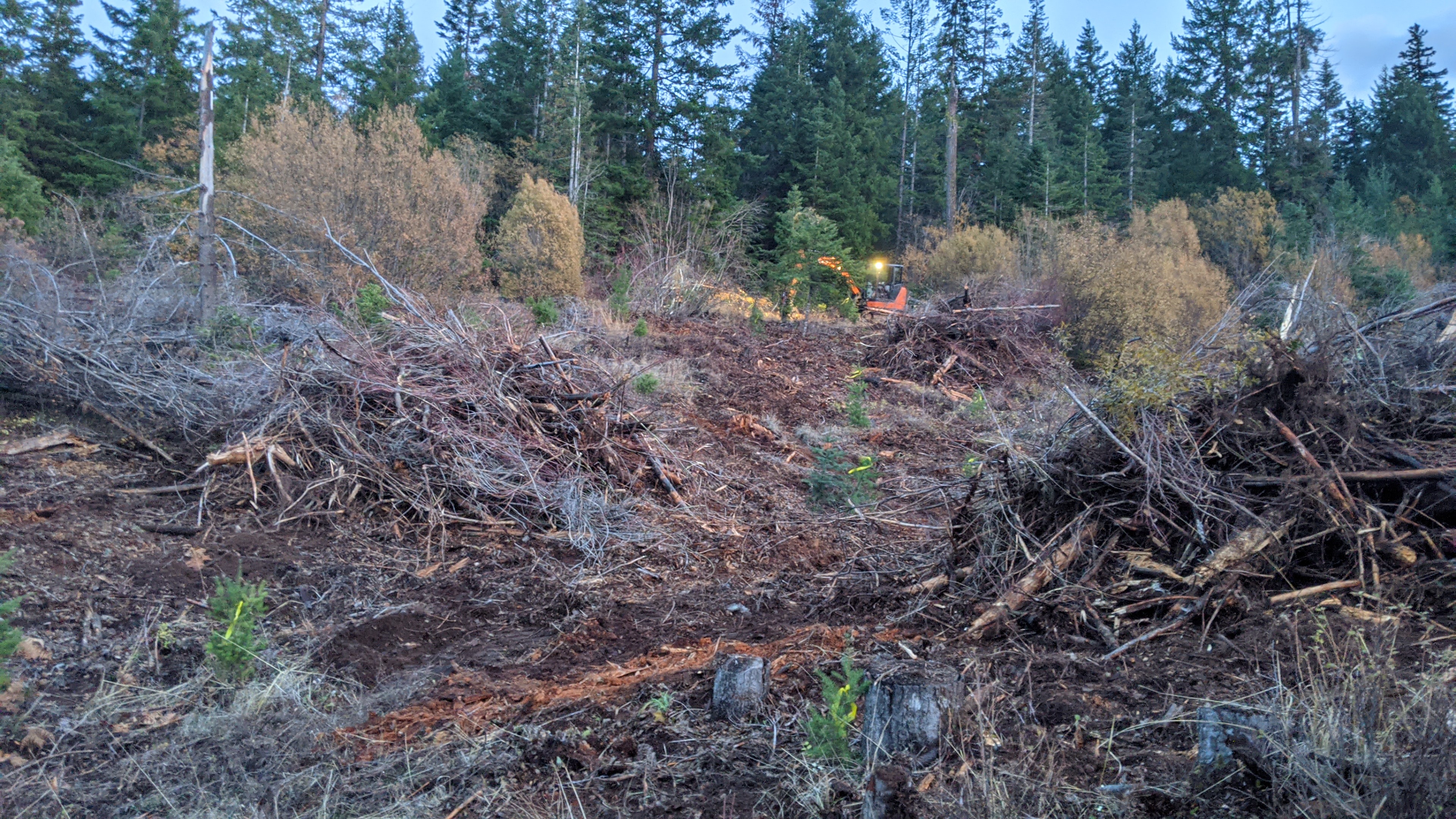

Before (Left) and After (Right):


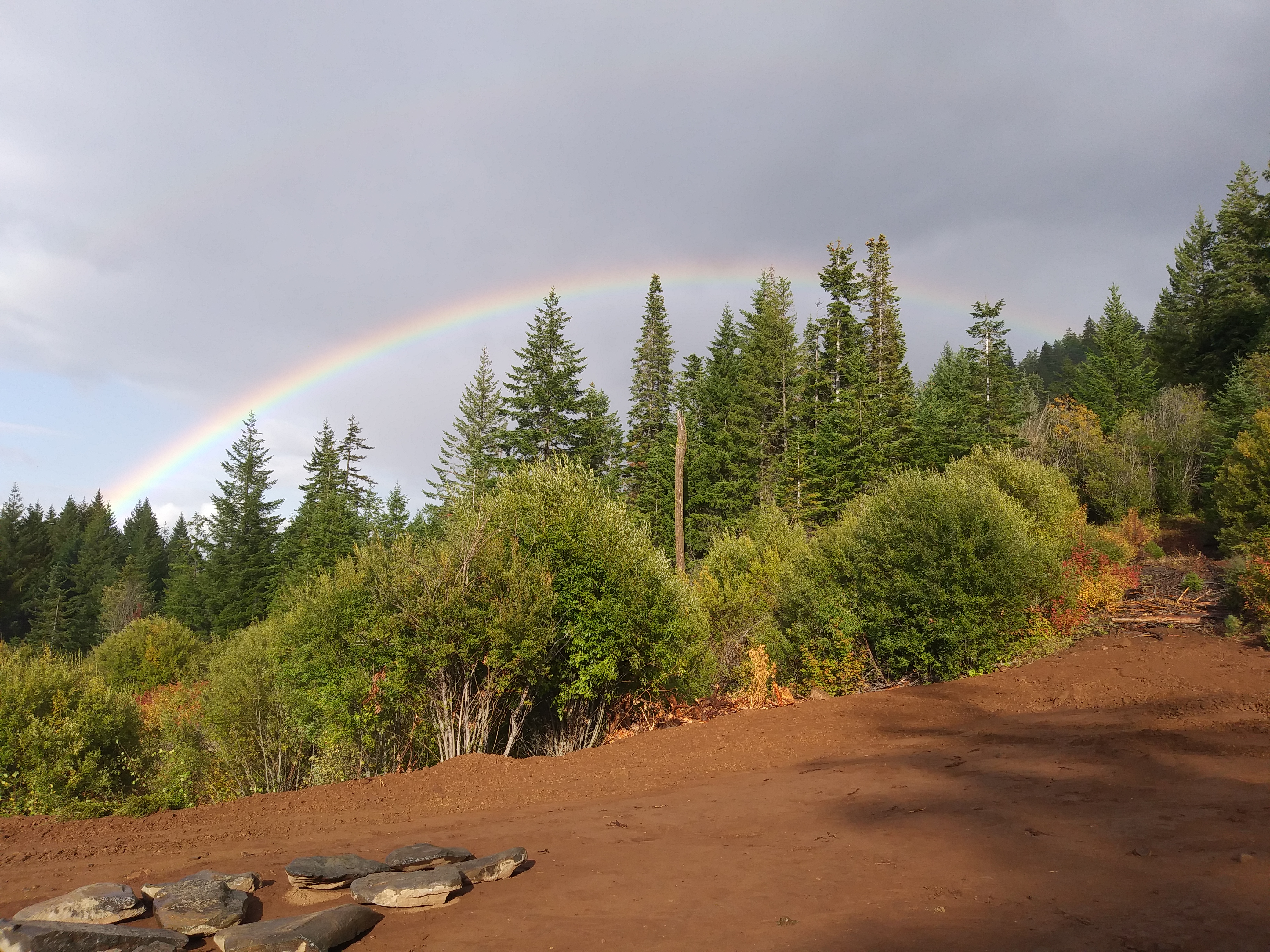


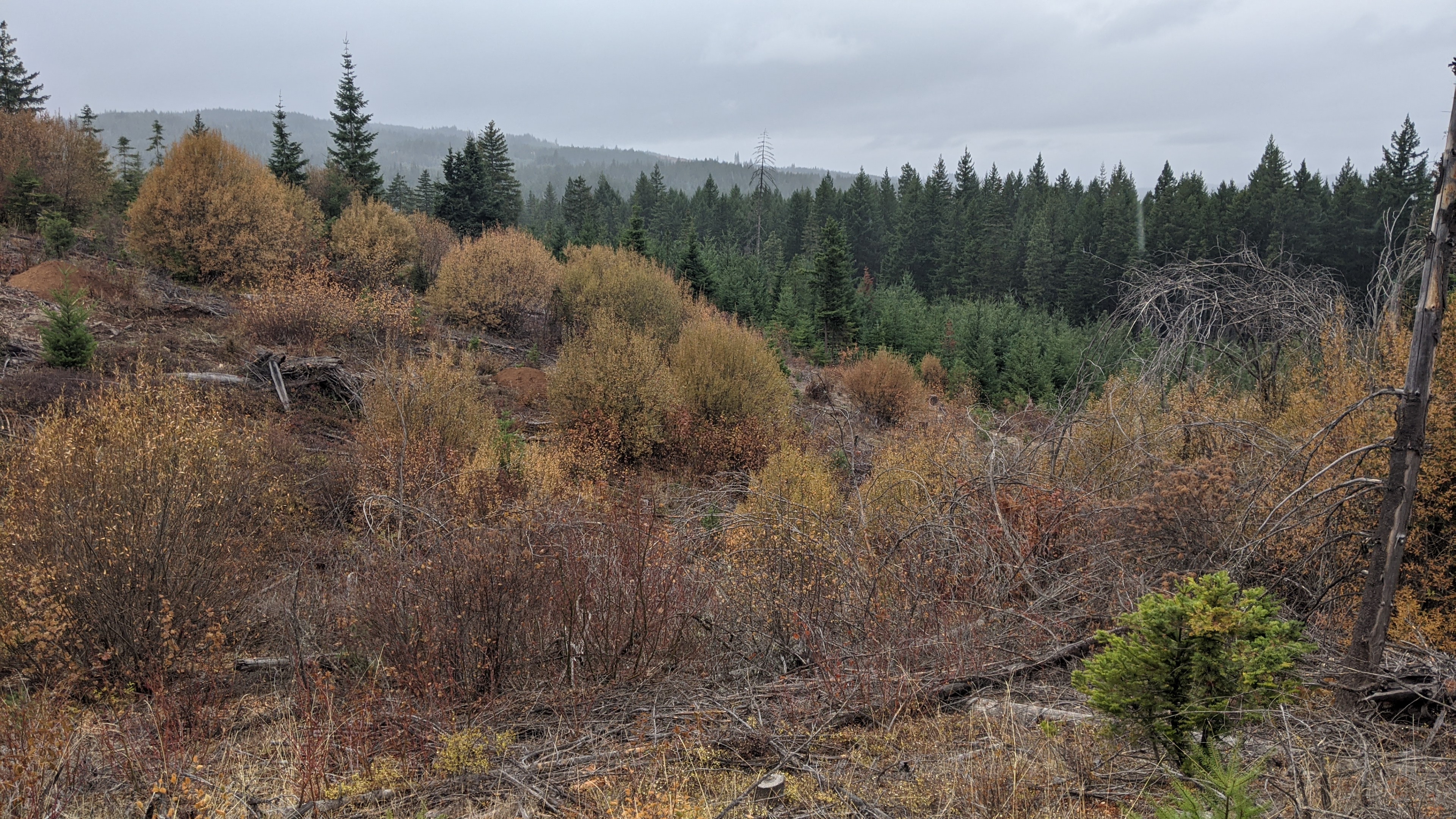


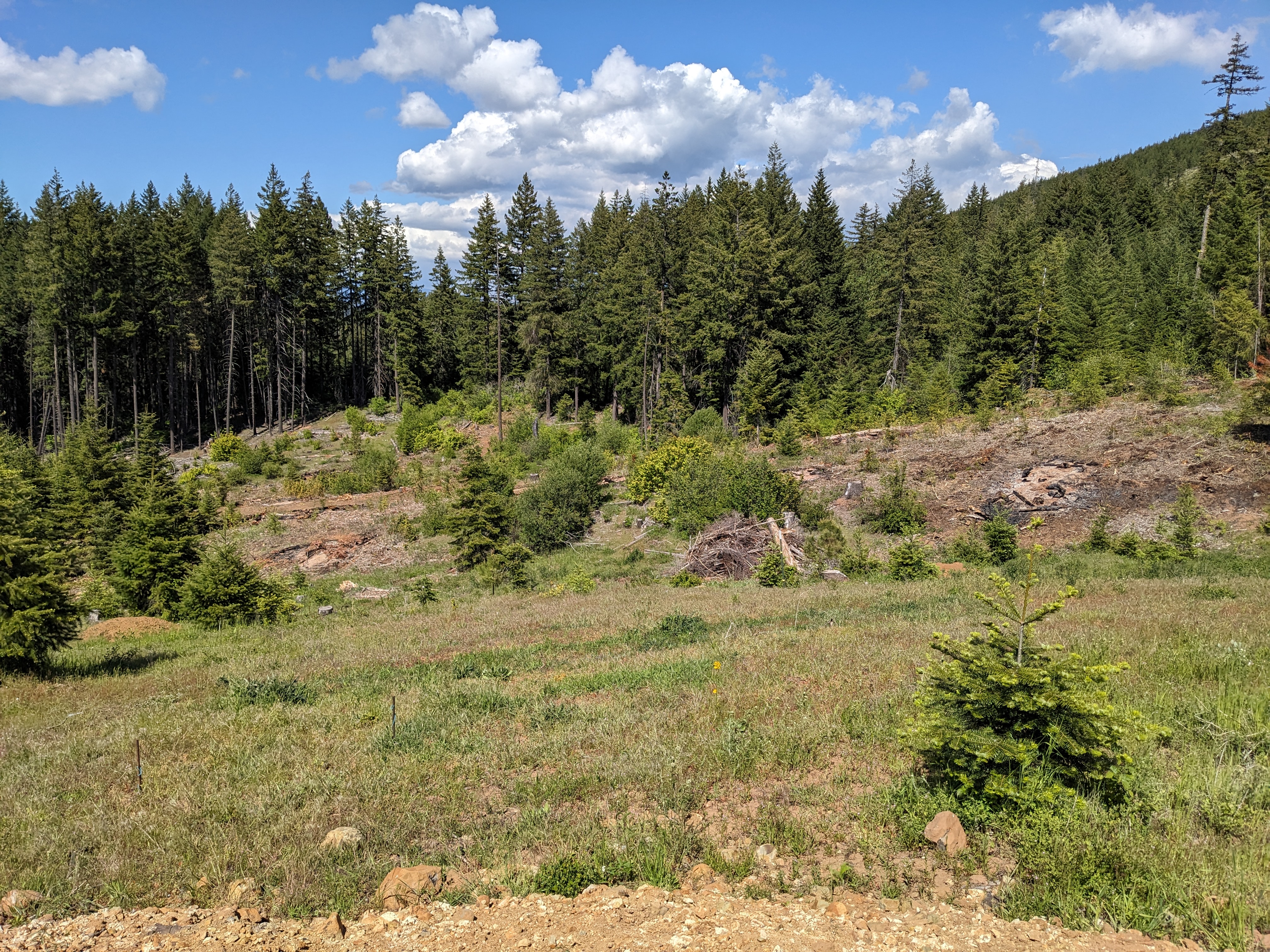

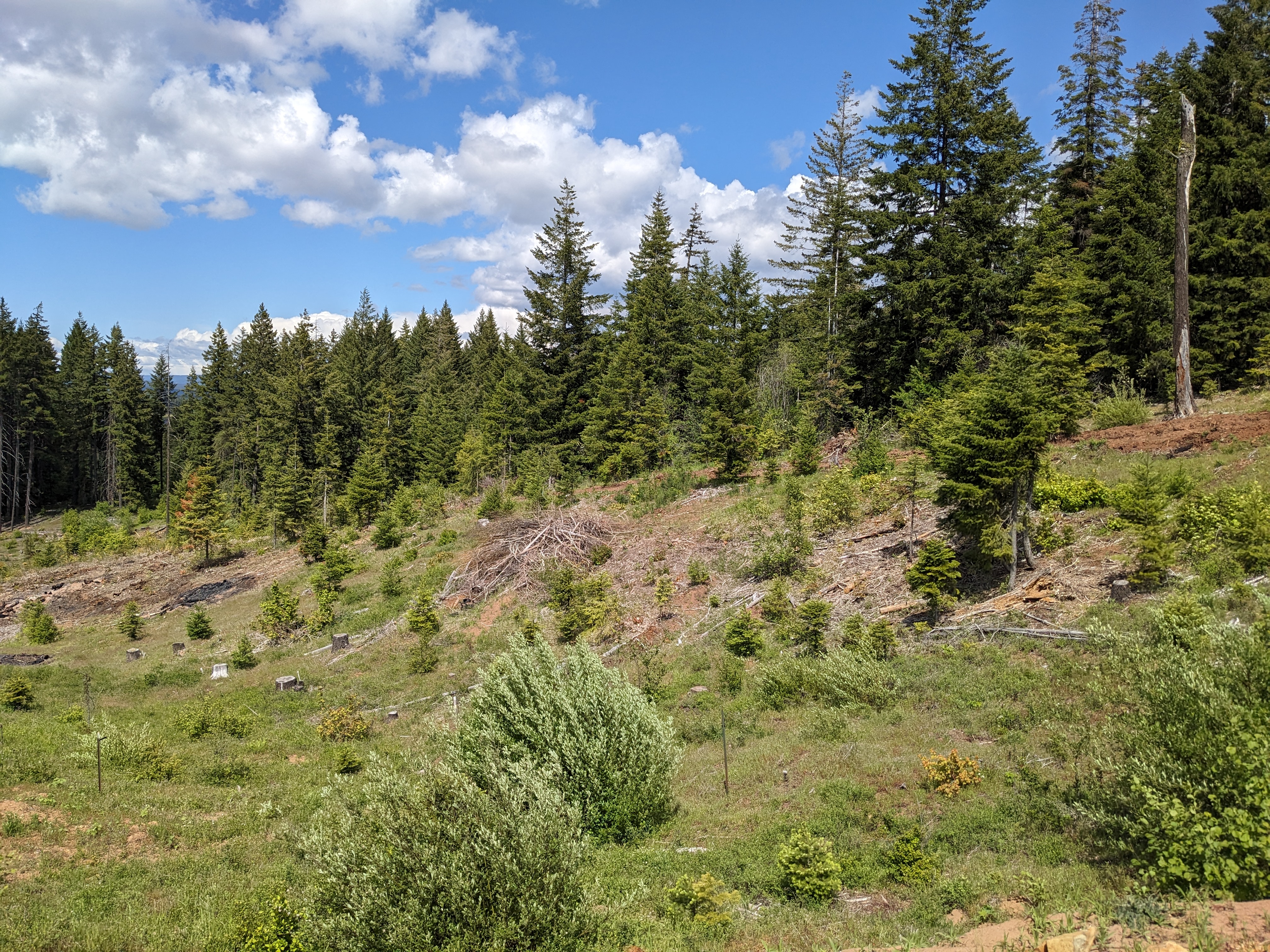


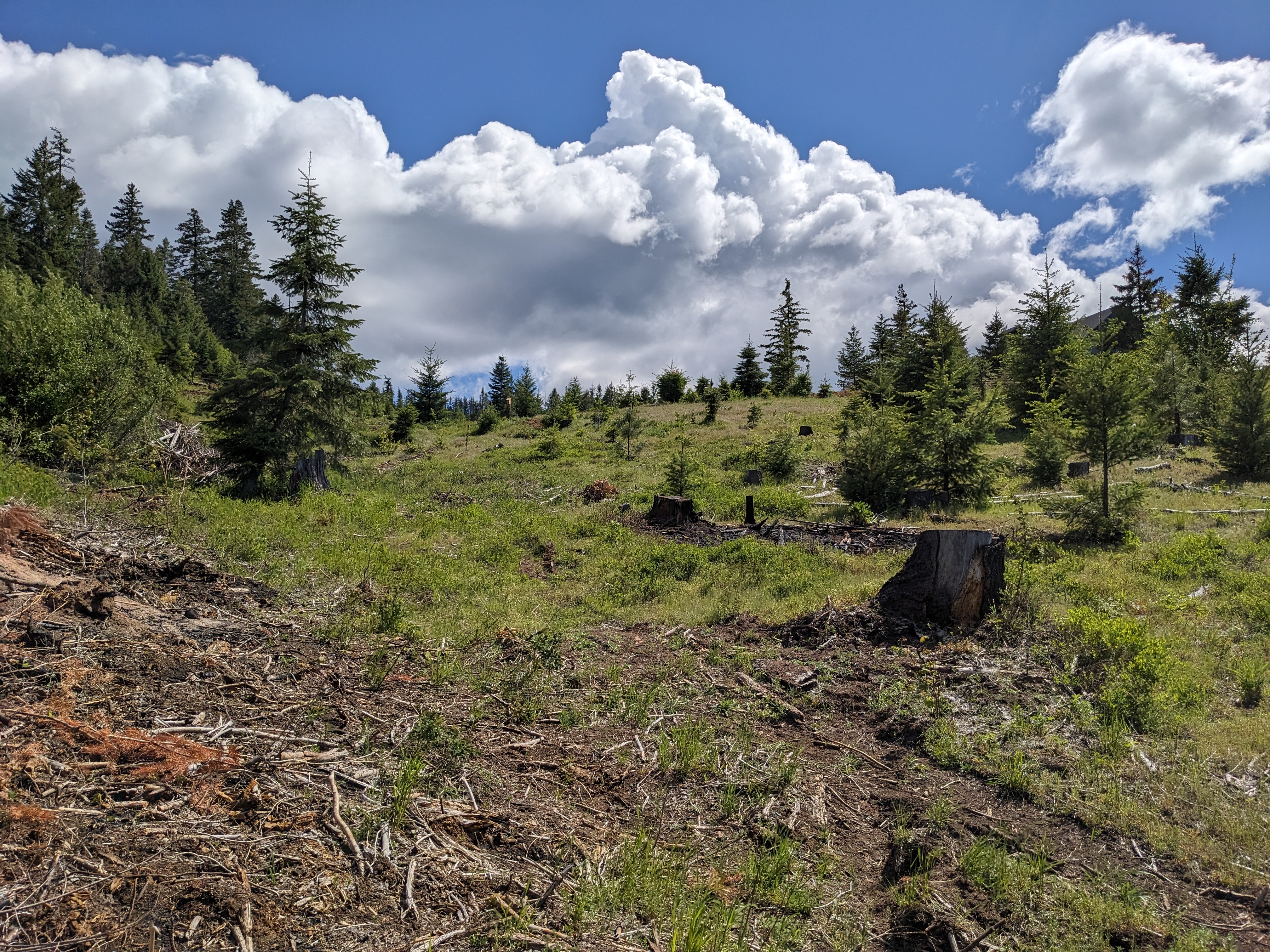
He unveiled a number of fir trees in the process- enough that we don’t need to re-plant the hill!

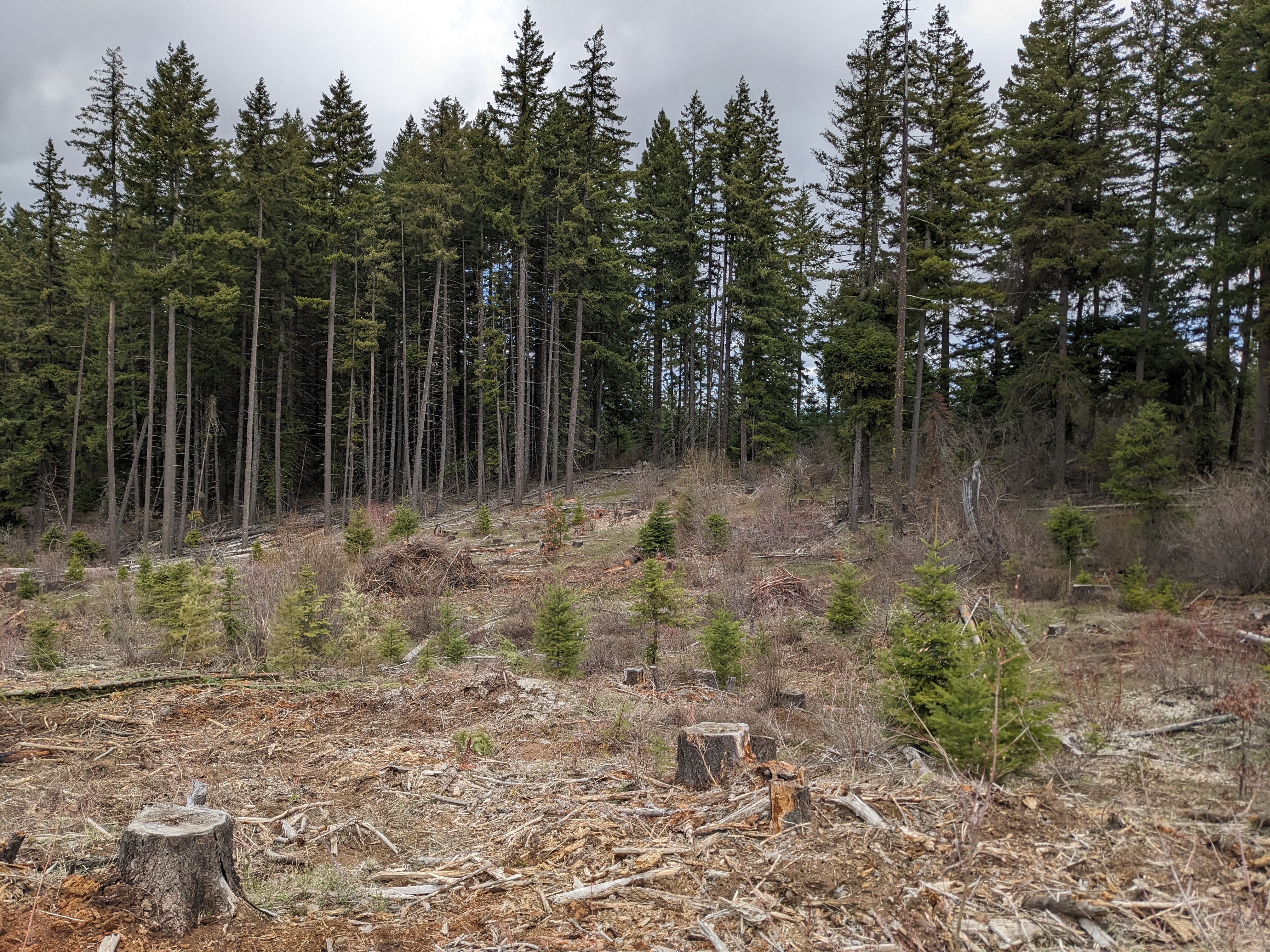
This spring, Sam and Jackson made a fire road along the property boundary. It’s a pleasant walk down the hill now!

Our third current working zone is a section of 20 year old trees adjacent to the shrub hill. (In the above photo, see the light green trees in the middle-ground.) That zone got the full treatment of thinning, pruning, shrub removal, and slash disposal.

Before:


After:


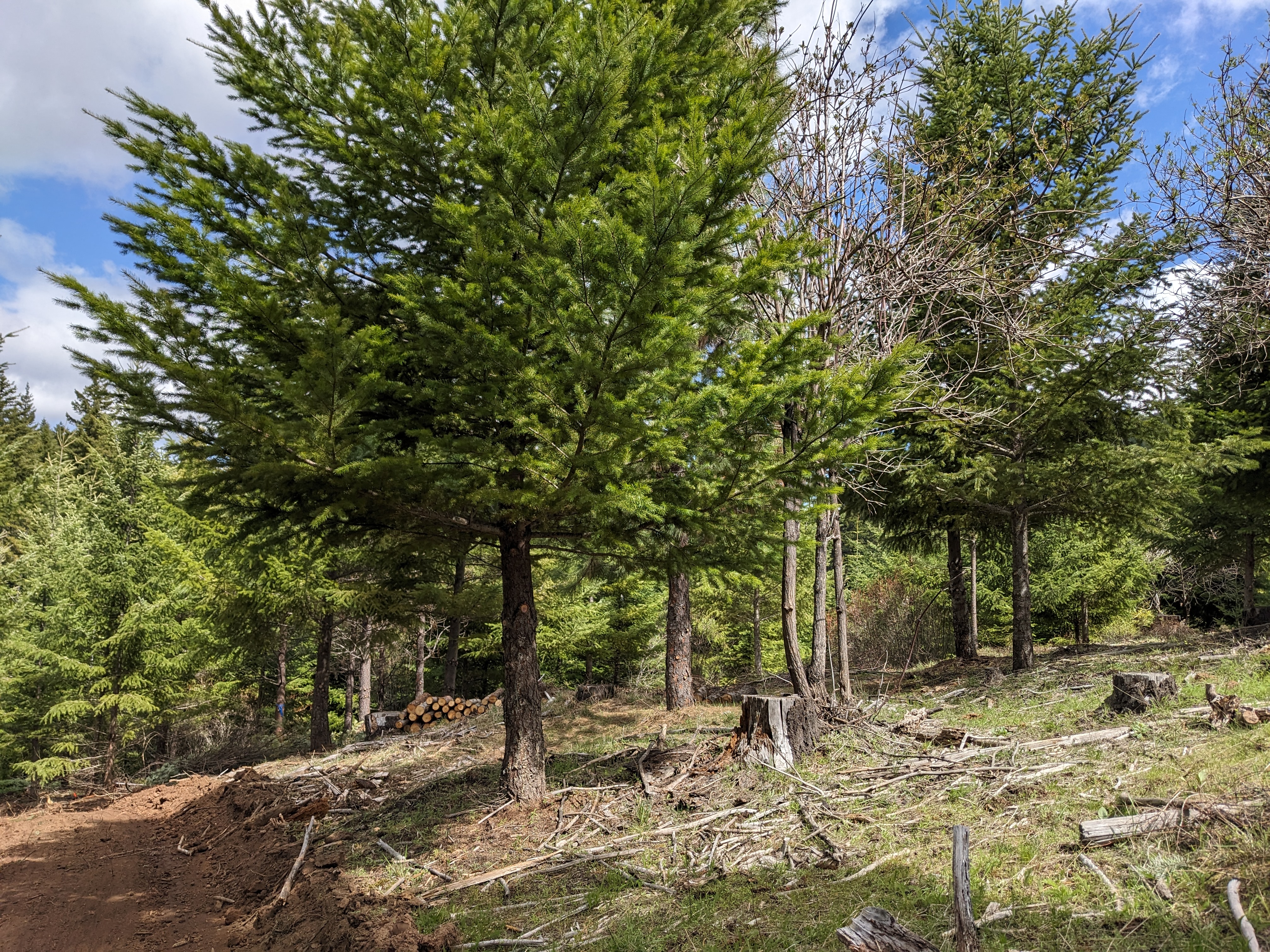

How do we do it all, especially with two bum knees? We hired Whitney this past fall! She didn’t have much experience to begin with but she’s a hard-worker. She pruned a lot of trees, hauled out a lot of tree parts, and made a lot of burn piles by hand.
We hired a second female powerhouse with a lot of chainsaw experience. She worked in a large area that the excavator couldn’t access, cutting down trees and dragging them out of the woods. Unfortunately, she was only available for a month.
I was thankful to have the help and didn’t participate in much of the work this year. Sam was relieved of chainsawing, but he put in just as many hours in the excavator. And, he got this awesome tree shear attachment! After a 9 month journey from Finland via Canada, it finally arrived! (We didn’t get scammed!)
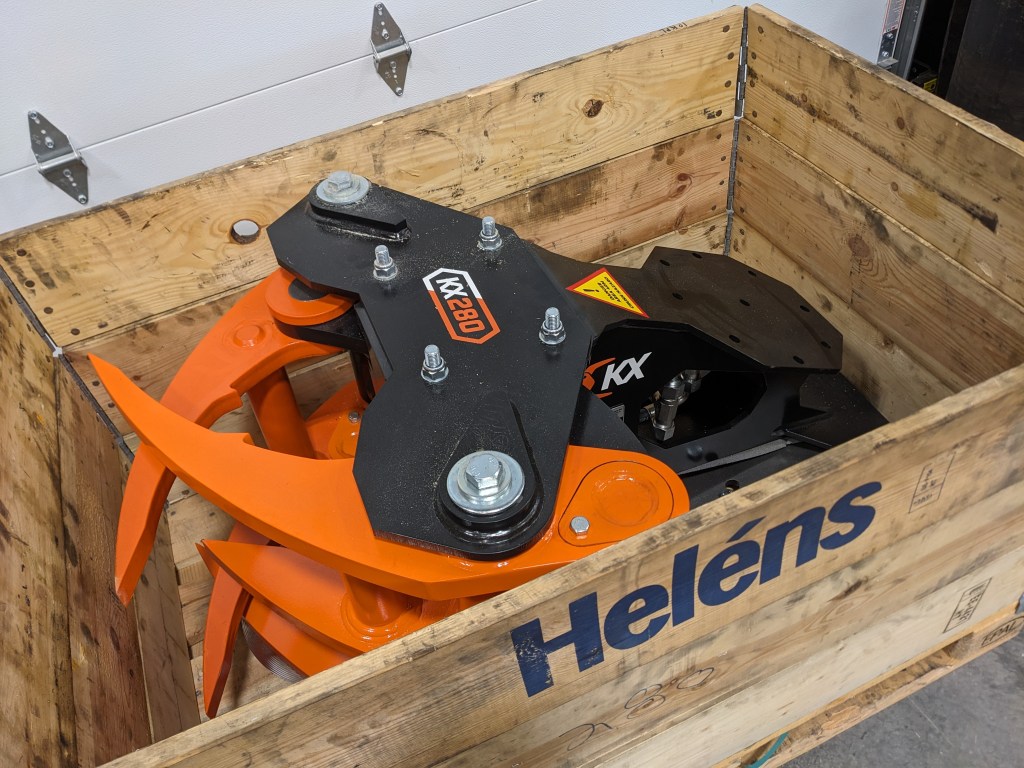
To our relief, it was worth the wait. The blade is stationary, and the grapple squeezes the tree into the blade. It works well on trees and shrubs, plus the blade is removable if you just want to use the grapple to pick things up.


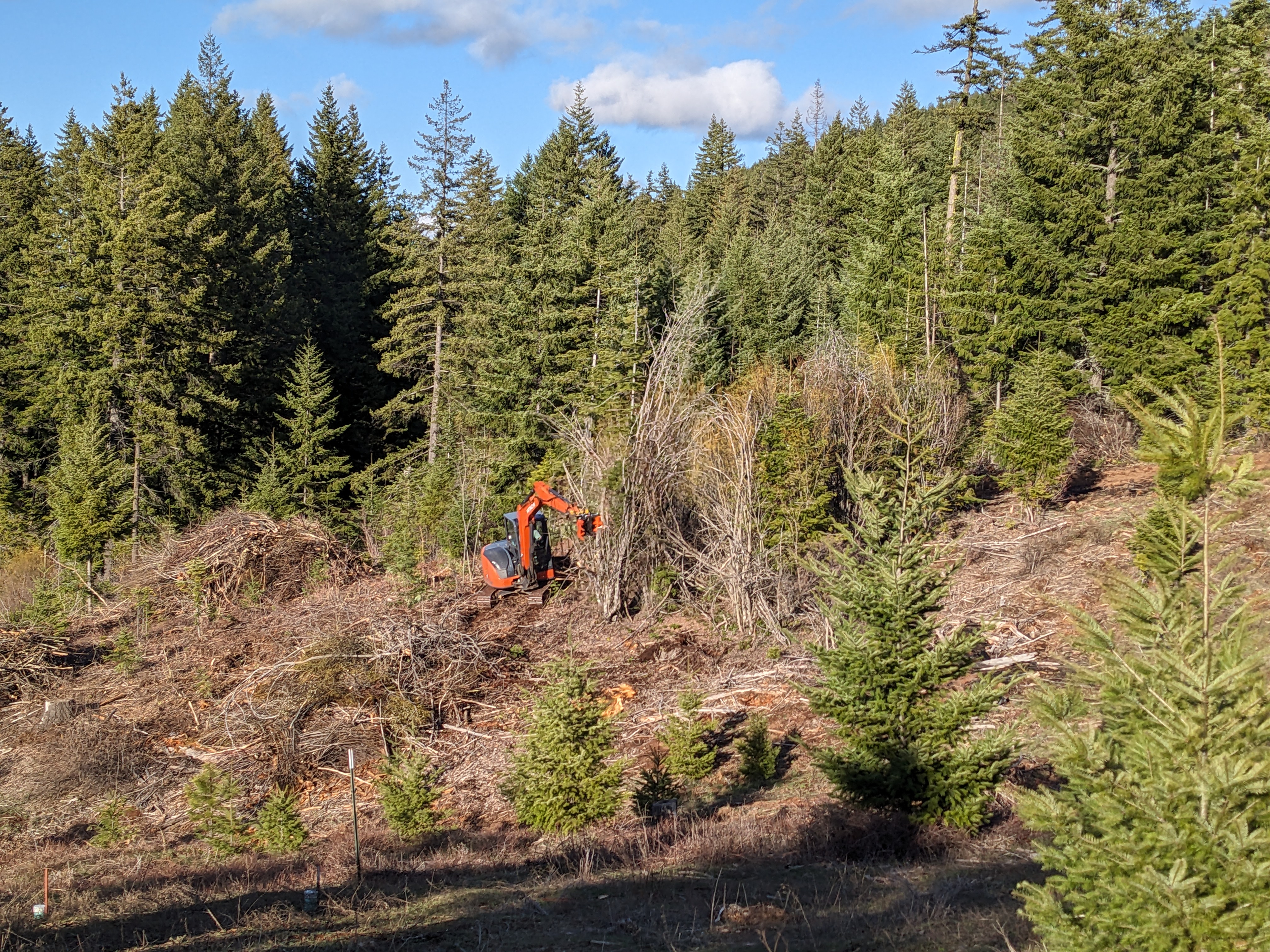
Not long after getting the tree shear, Sam hit the excavator window with a branch. After replacing the broken window, he decided to make a safety cage.


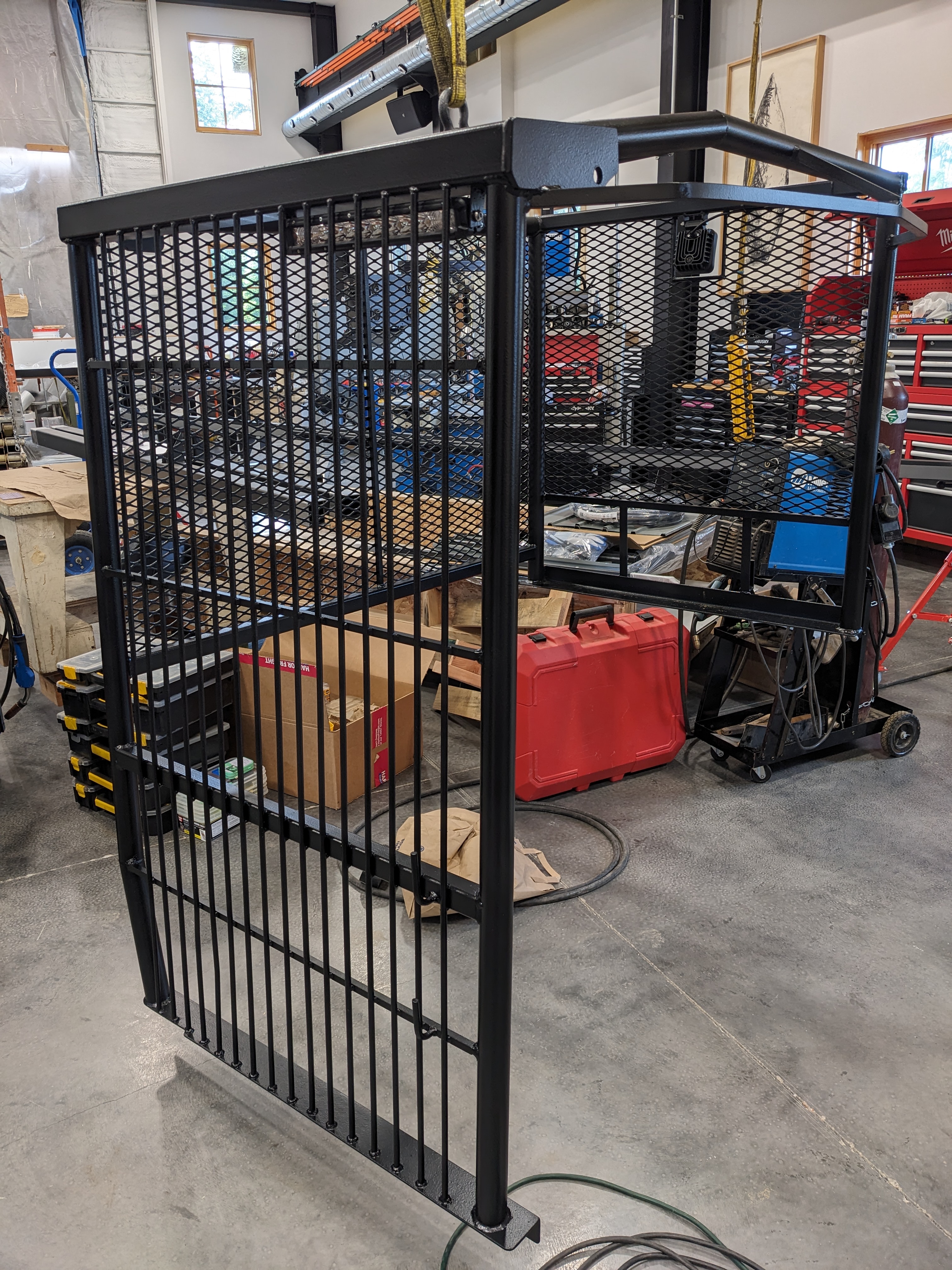

The season for shearing has come to an end, but we’ll be set this fall! It’s time to resume work on our building…
 diamondgapbuild.com