With every new building, there comes a new drainage system. Similarly to what we did around the shop, we installed French drains around the new buildings.
Drainage was a hot topic at the breakfast table for a number of days. There wasn’t a straightforward or easy solution. The garage is 120 ft long. Since the buried drain pipe needs to be sloped, one end of the drain would need to be very deep. We also had to factor in the slope of the ground surface. And, we wanted to avoid all of the drainage water going to one spot or washing out the driveway.
Here is what we came up with:

dashed arrows=French drain, solid arrows=ground slope
Time to move some rock. Sam wanted to get the final grade around the buildings real nice before digging the drains. Our rock pit finally ran dry, so Sam had some rock delivered.
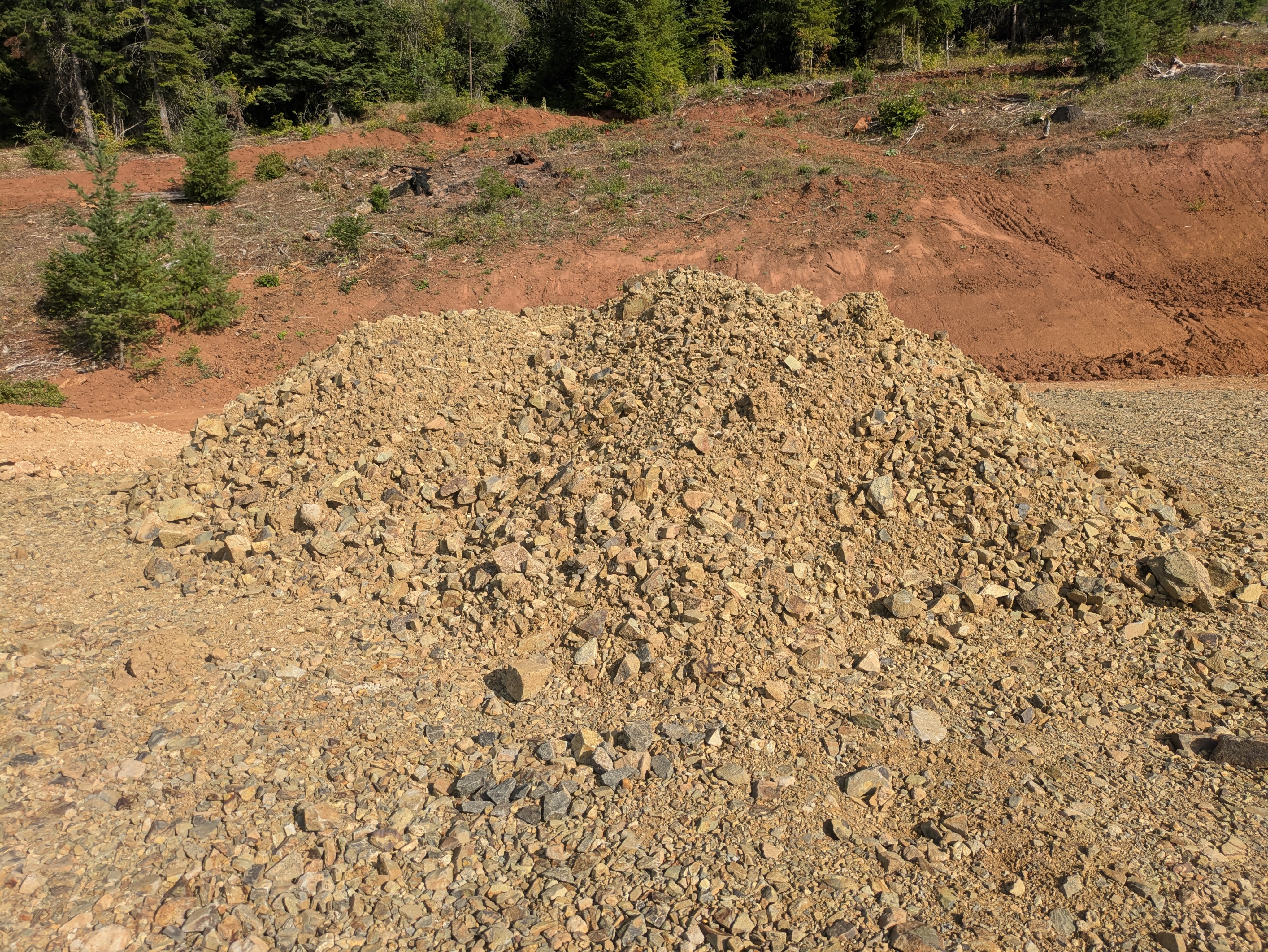
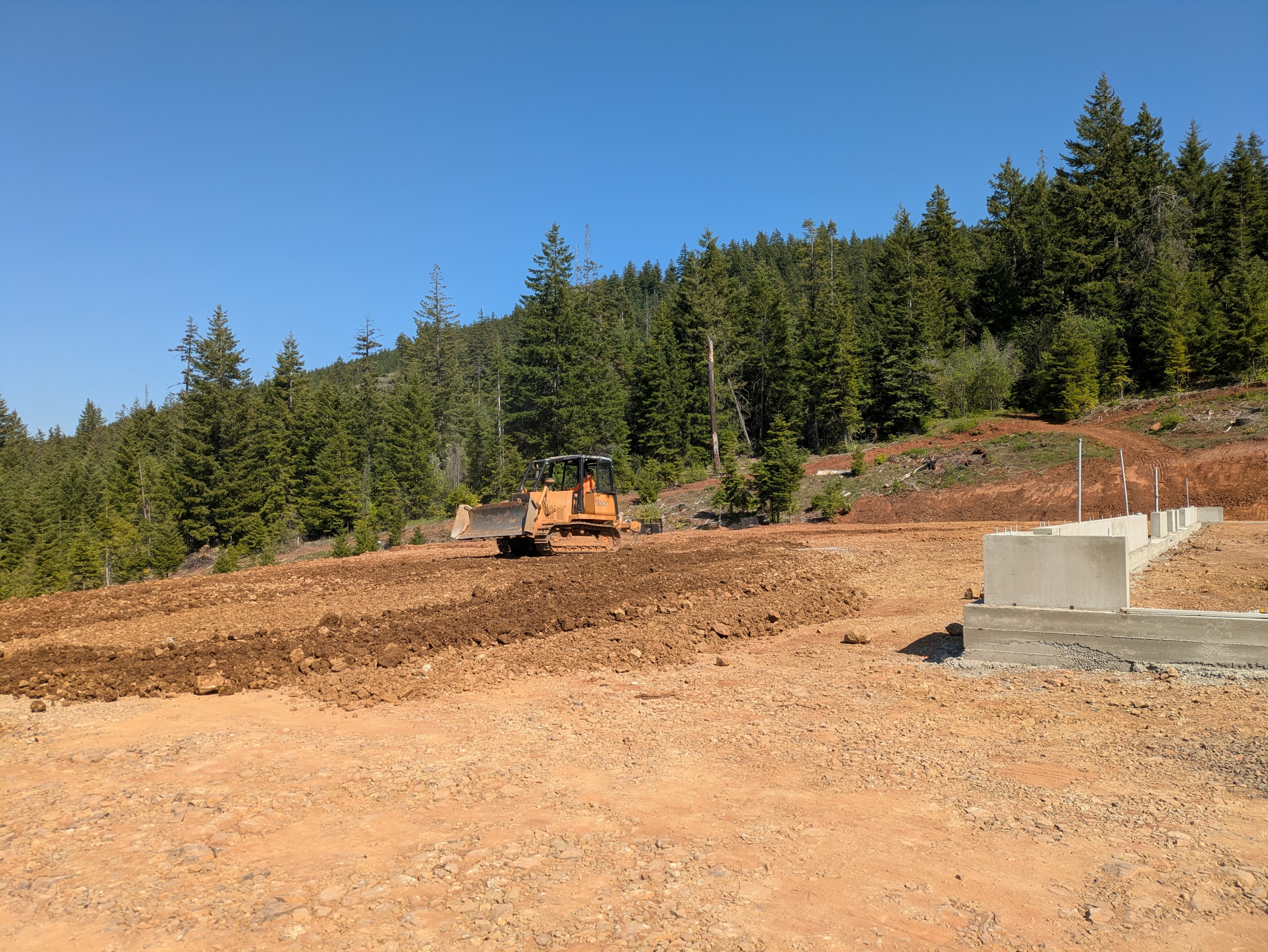

I thought we needed about 5 loads in the big dump truck. After the 5th delivery, I thought maybe 10 more loads tops….
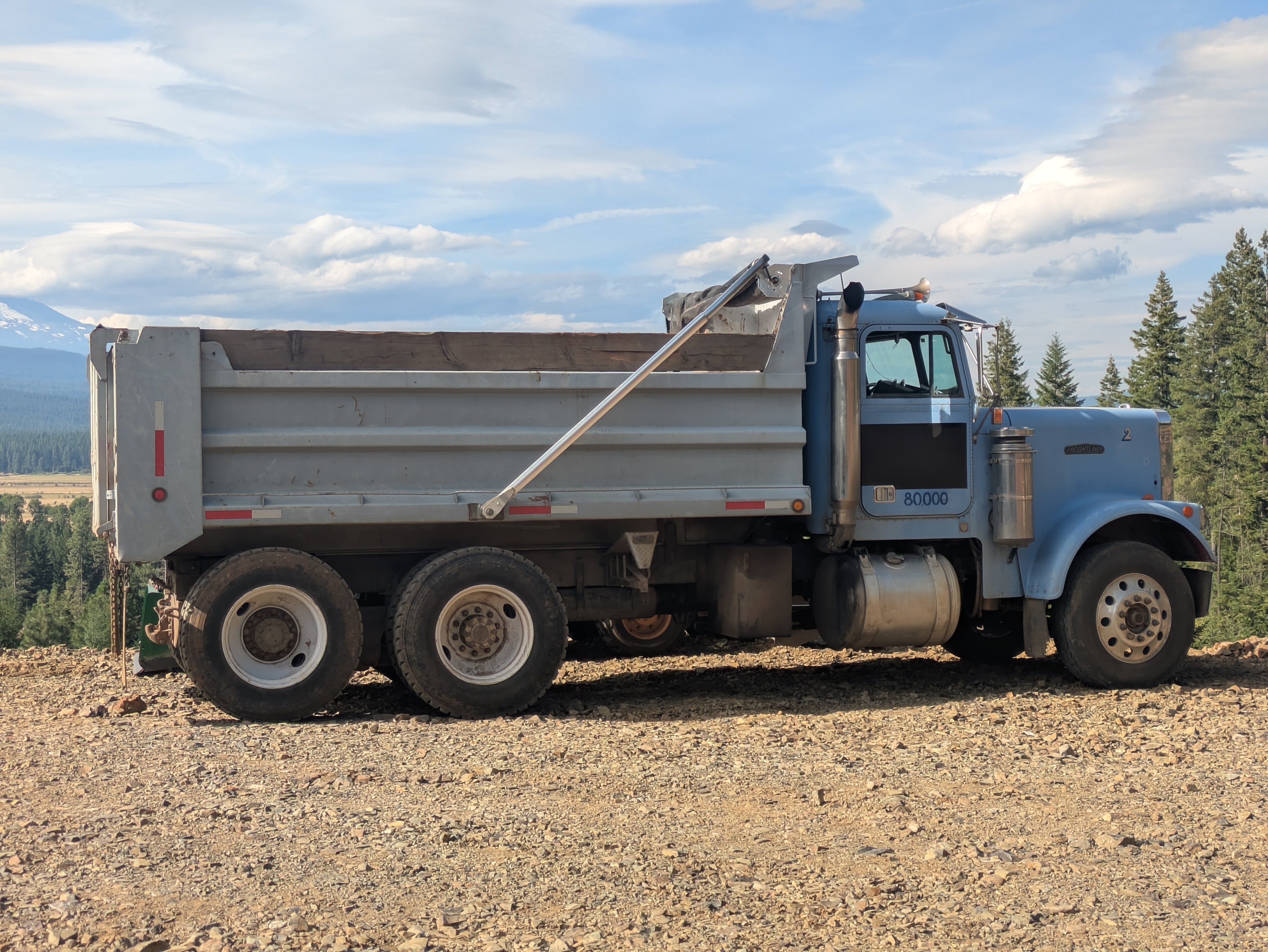
The rock piles were disappearing faster than they were being deposited.
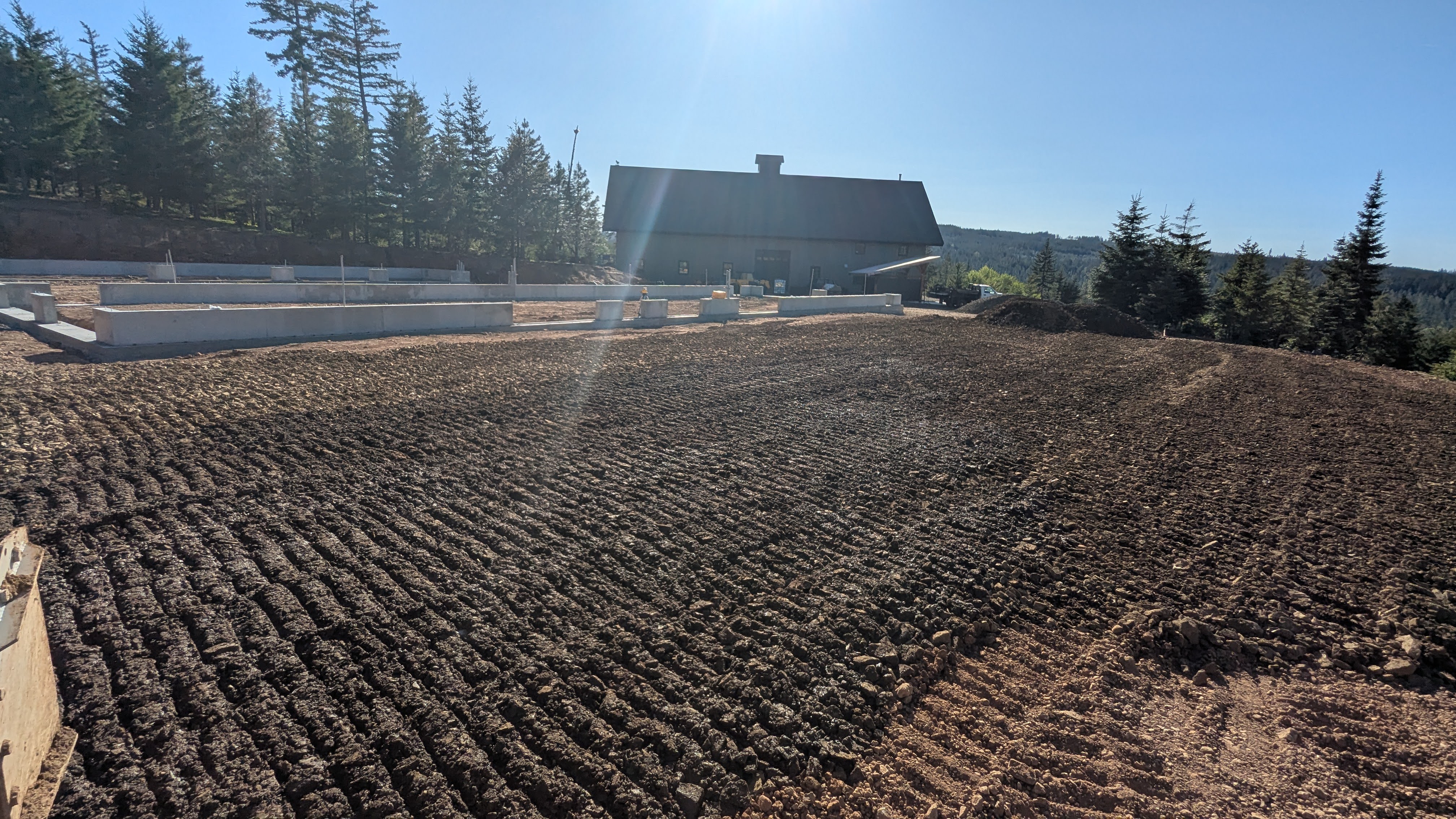
The grand total was 22 loads, equating to 341 tons! It’s not every day you get 682,000 lbs of rock delivered.
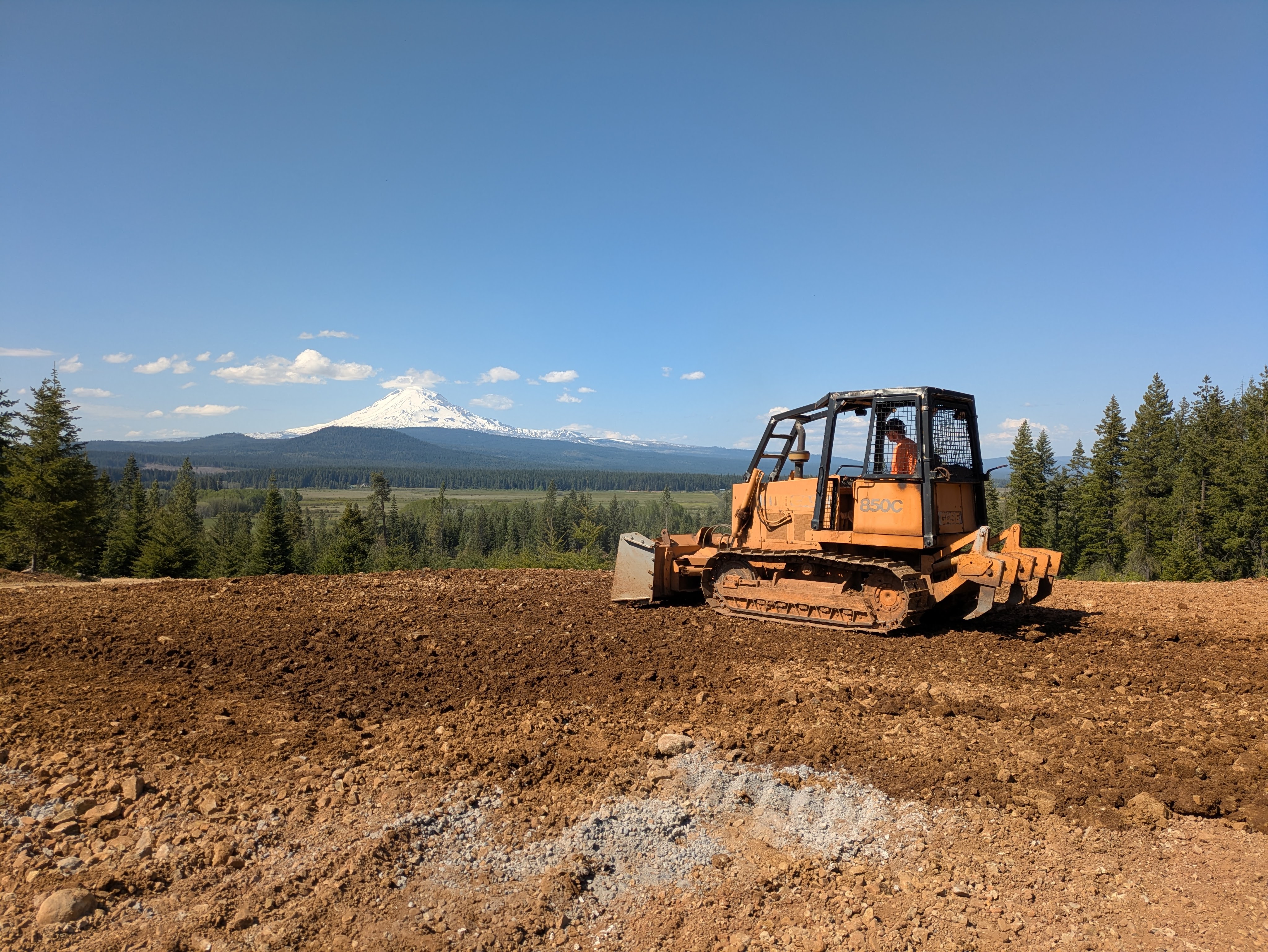
When Sam finished spreading the rock out, we checked the area with the laser to make sure the ground sloped downhill from the garage and that there were no low spots.


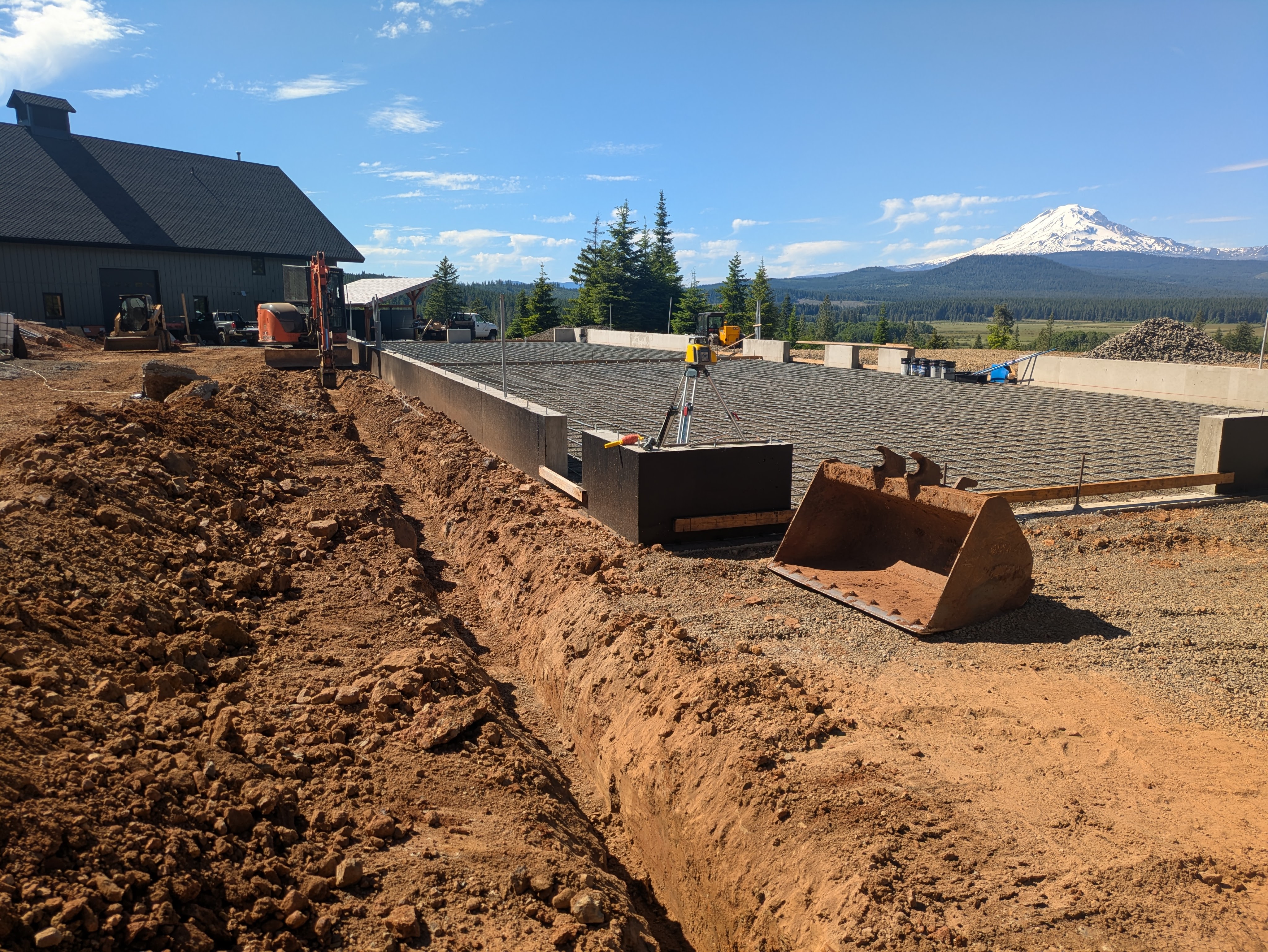
Next, Sam dug trenches for the French drains and fine-tuned the slope in the bottom of the trenches. He dug a minimal slope of 3/16″ per foot, so we had to be extra careful that there weren’t any high spots.
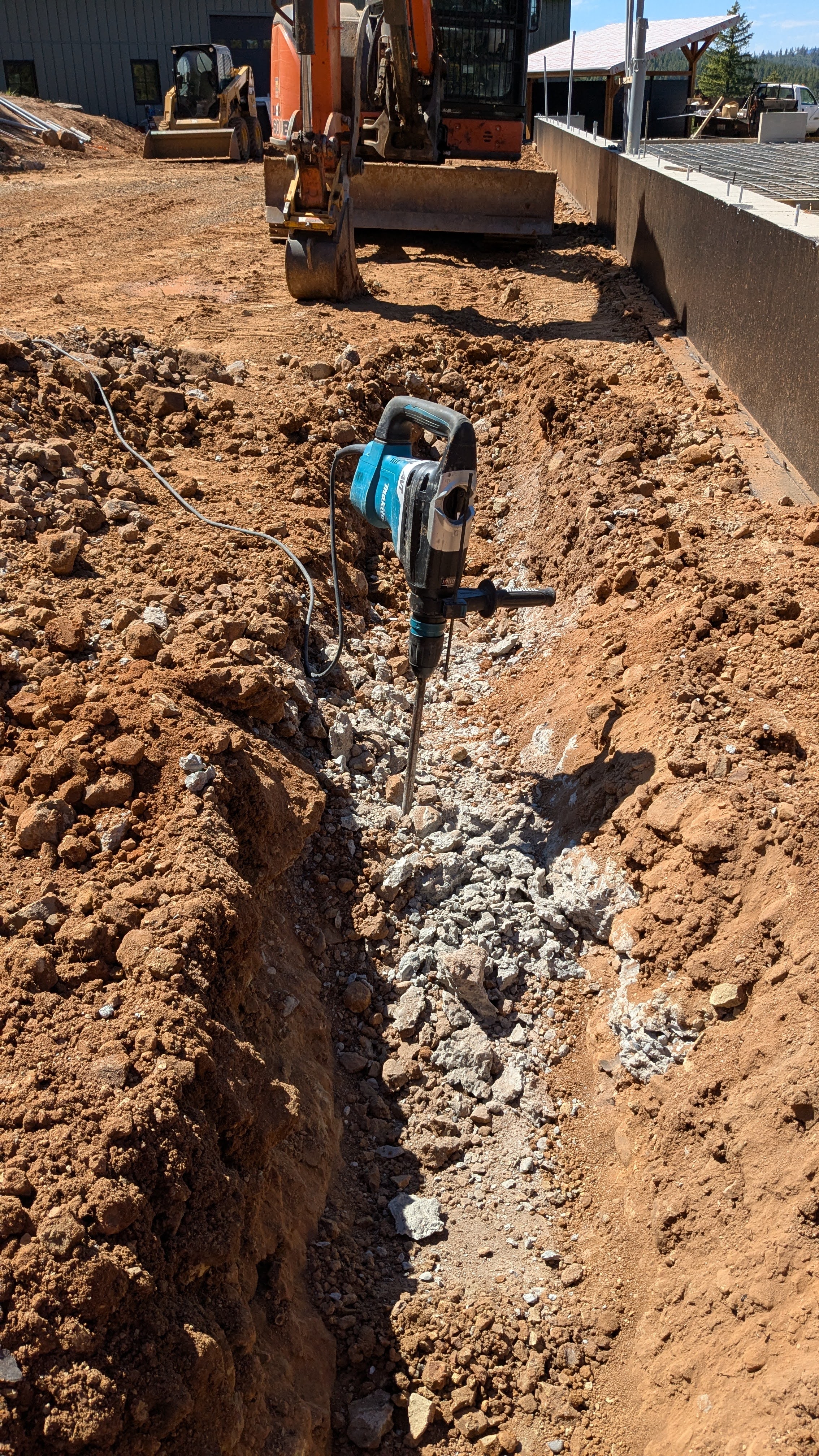
Sam ran into a little hiccup in one spot. There was a mass of concrete overflow in the path of the trench. The excavator couldn’t break the material, so Sam dusted off the old rock drill to break up the concrete. He eventually got the concrete out and continued digging.

Simultaneously, Sam graded the space between the garage and shed to make sure the ground had enough slope to direct water into the drain (and not towards the other building). Since it was so dry and dusty, we borrowed a water truck to spray the ground.
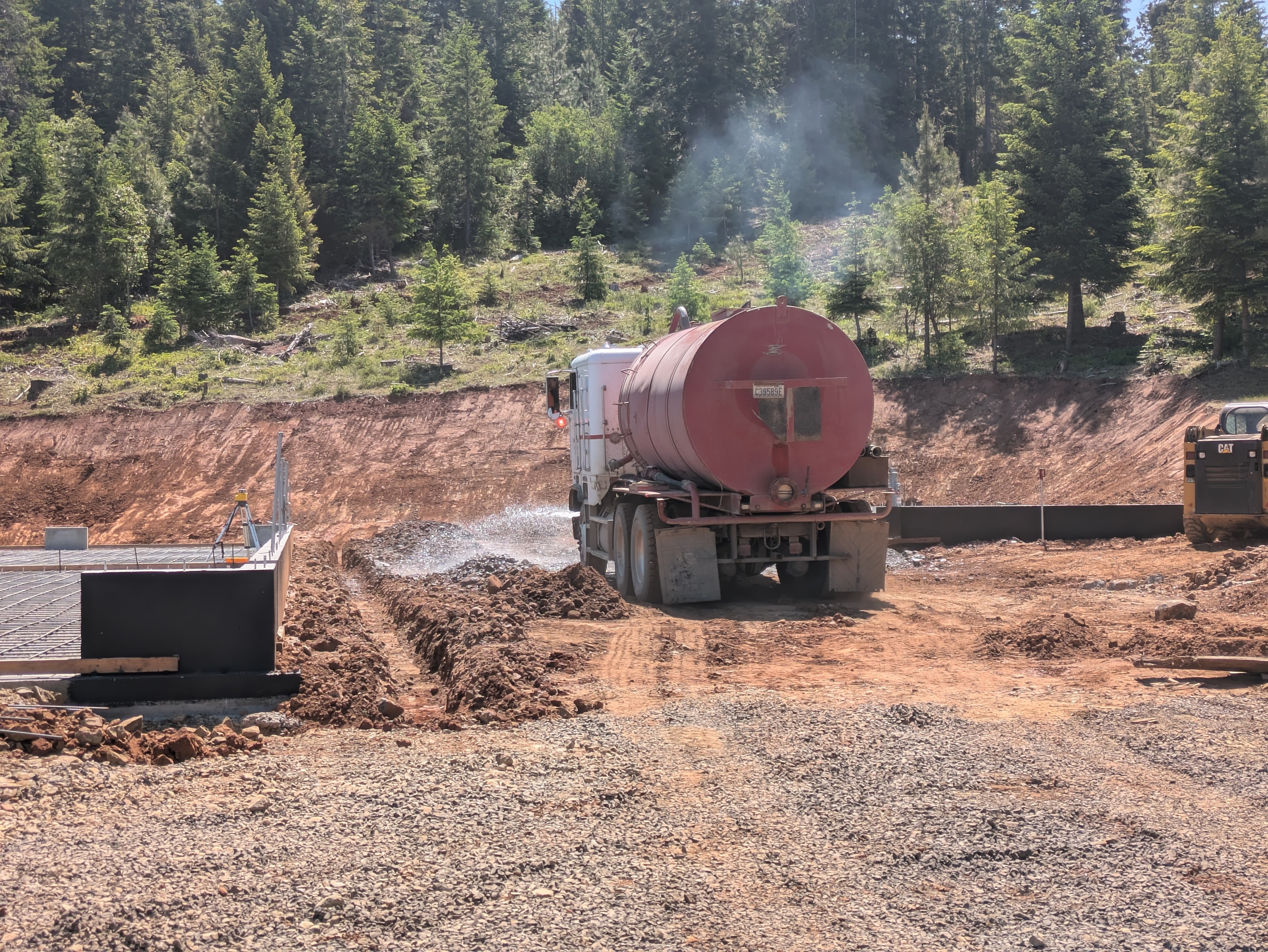
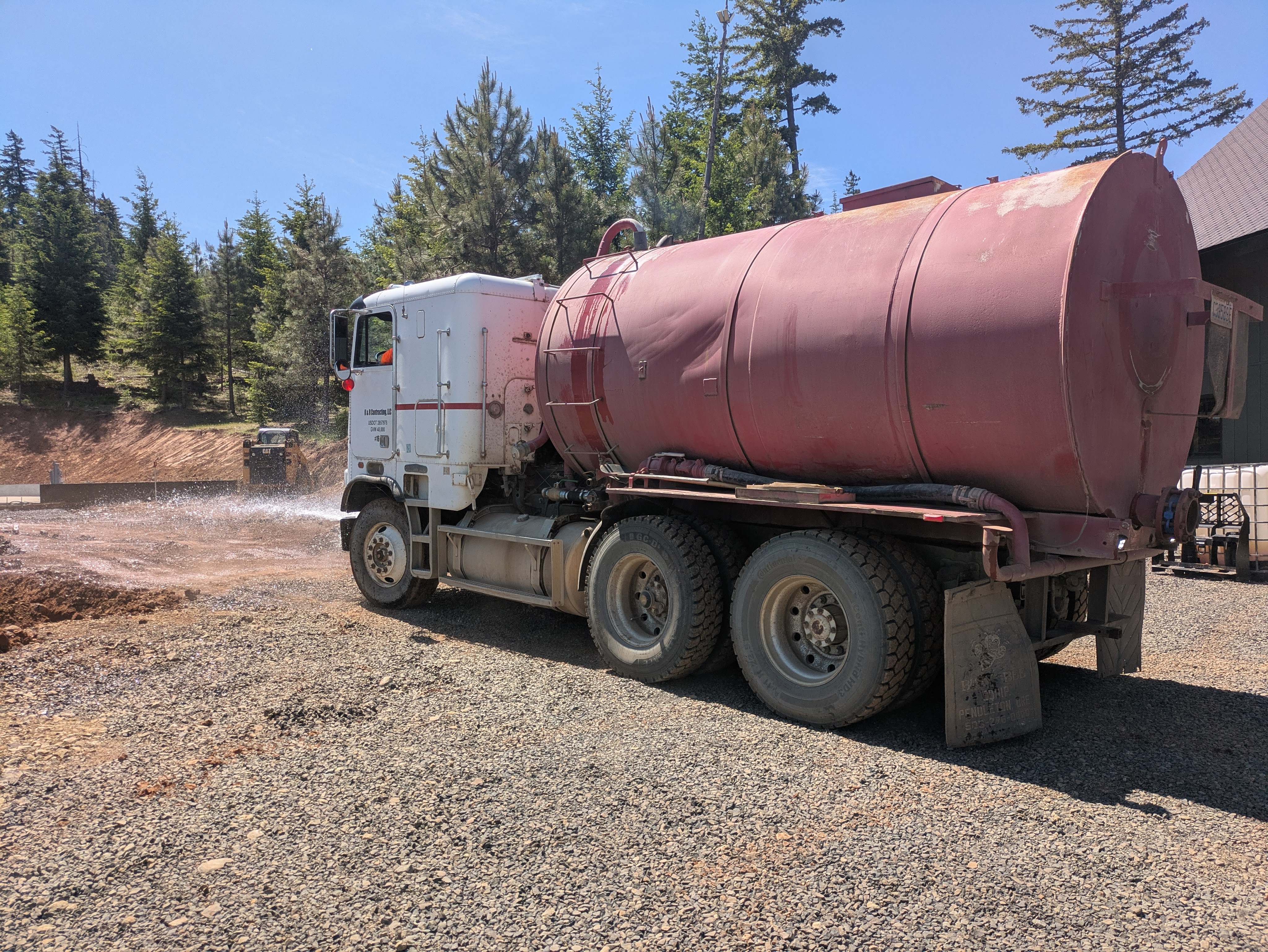

Once it was moistened a bit, Sam moved a lot more dirt. We were ready to install the drains.

We bought over 500 ft of 4″ perforated drain pipe. (We rarely go into town without stopping at the plumbing store.) Once the wind picked up, we unfurled the landscape fabric. Then we assembled long sections of drain pipe. The wind continued to increase, so Sam rushed to get a layer of rocks down while I battled the flapping fabric.
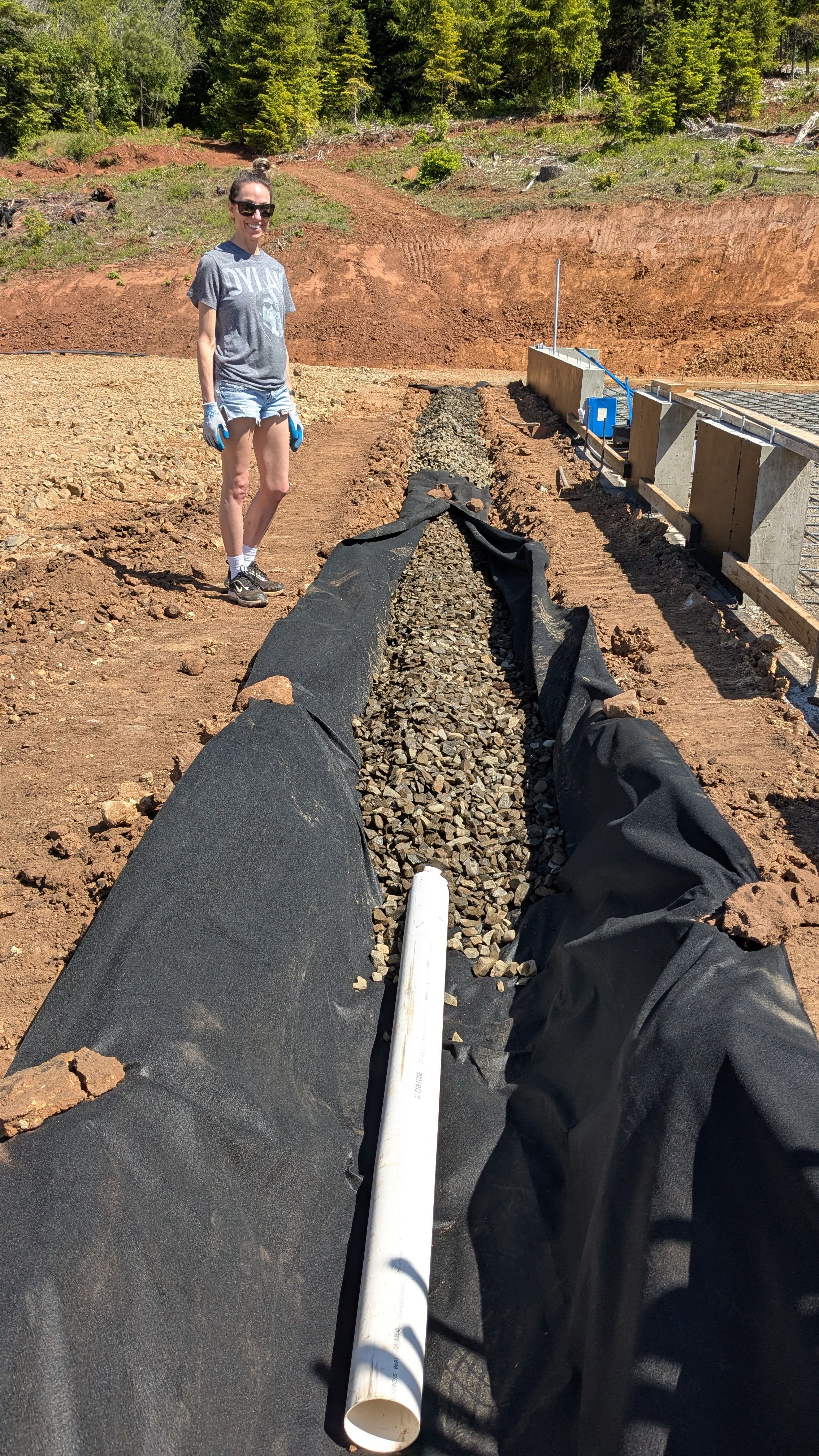
You might notice the drain rock looks different from the brown rock Sam spread on the ground. It is different. It’s about 1.5″, more uniform, and very clean.
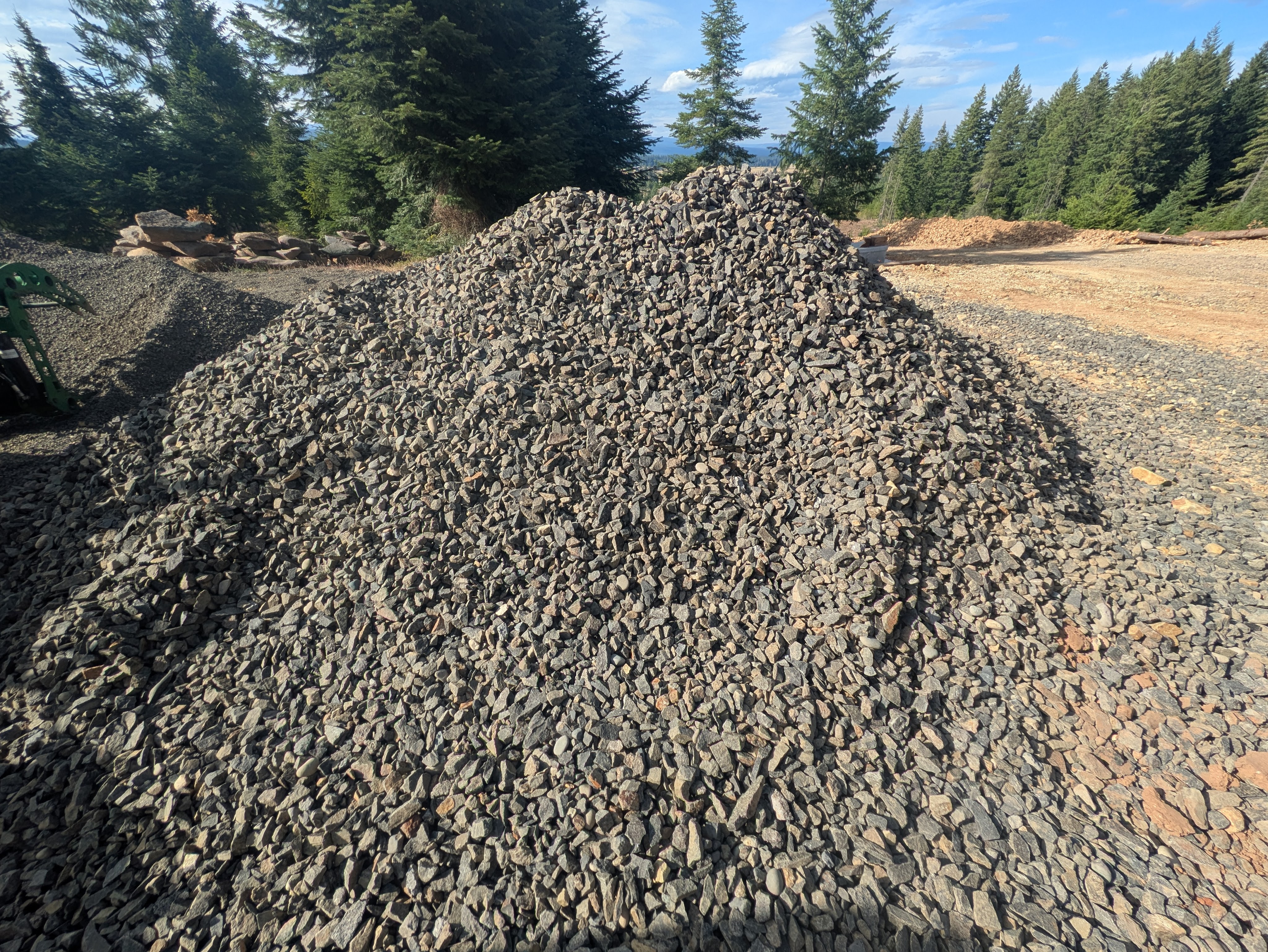
We imported 2 superdump loads of drain rock, about 50 tons! Once the pipe was covered in enough drain rock, we closed up the burrito.

Sam put a thin layer of drain rock on top of the burrito.
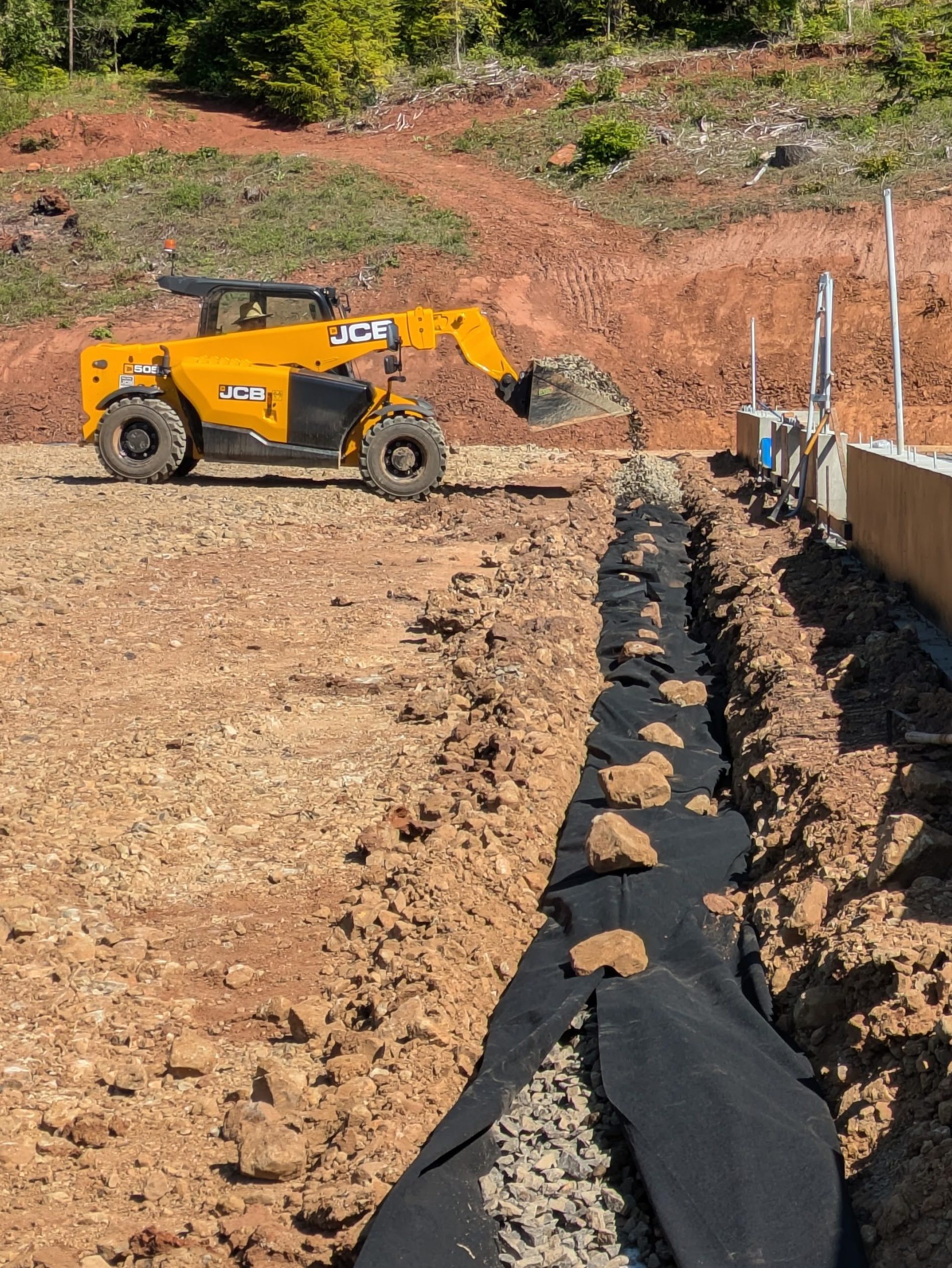
He topped off the trench with this 2-4″ fractured basalt:

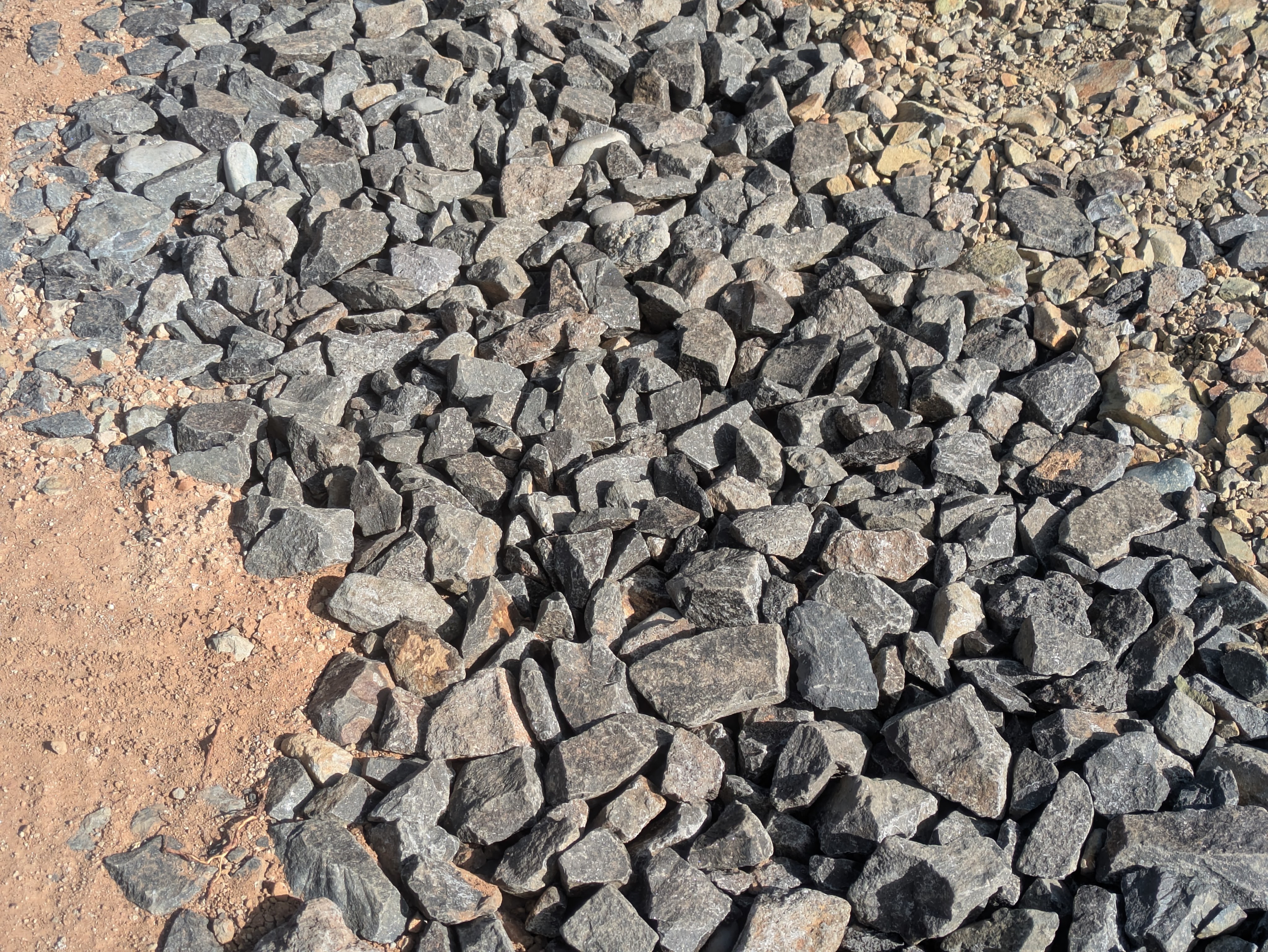
We got another 20 tons of the coarse rock. Sam and I hadn’t seen this product before and were pretty excited about it. We might get more of it for a landscaping project one day. Since it isn’t processed as much, it’s more affordable than drain rock or finer gravel.
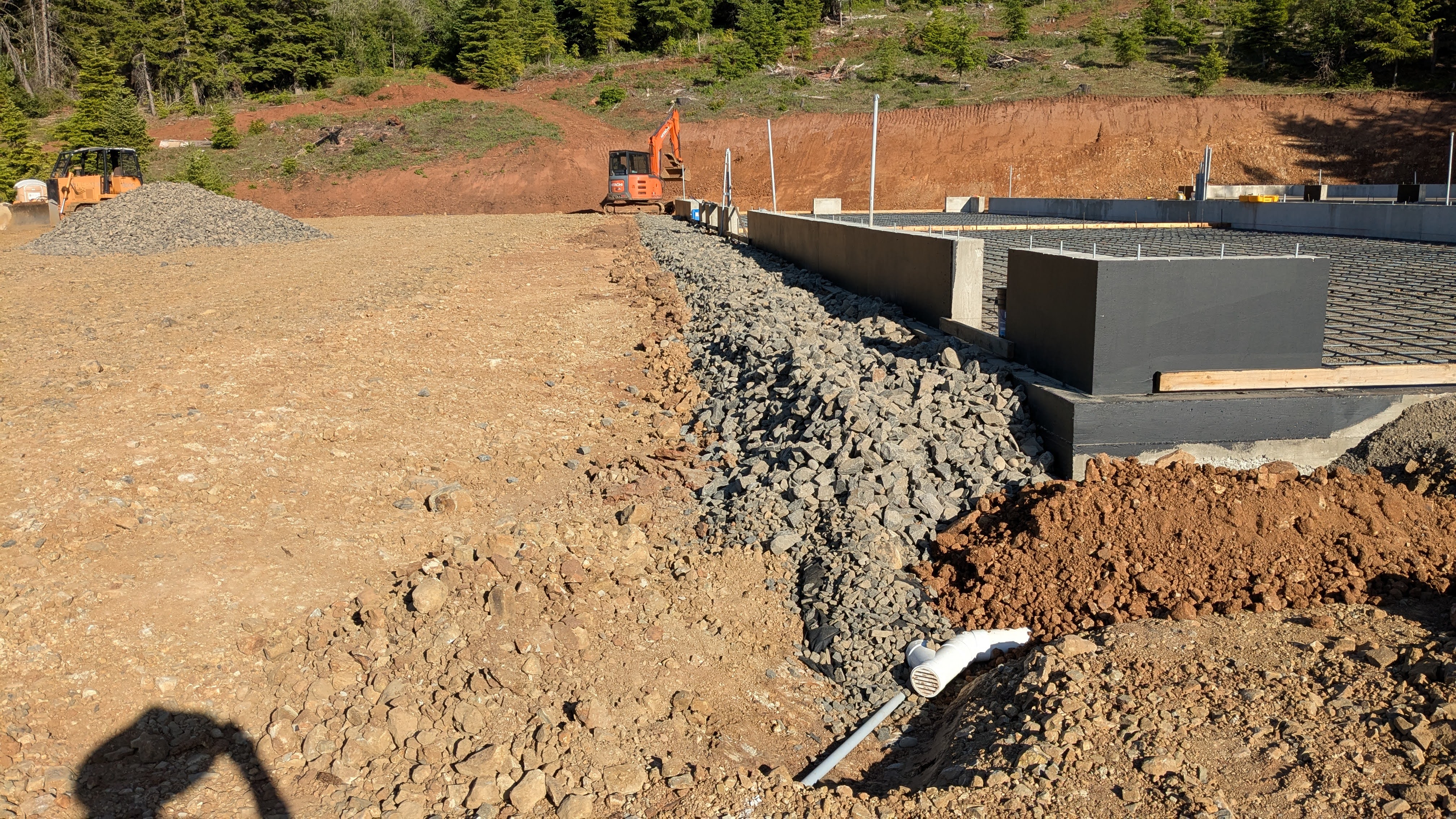
We completed the first long run by the garage. About 140 ft of drain was as much as anyone could handle for a day, so it took awhile to finish it all. Sam even worked on some shorter segments by himself. (In the picture below, you can see the pipe is about 2 feet below the ground level.)

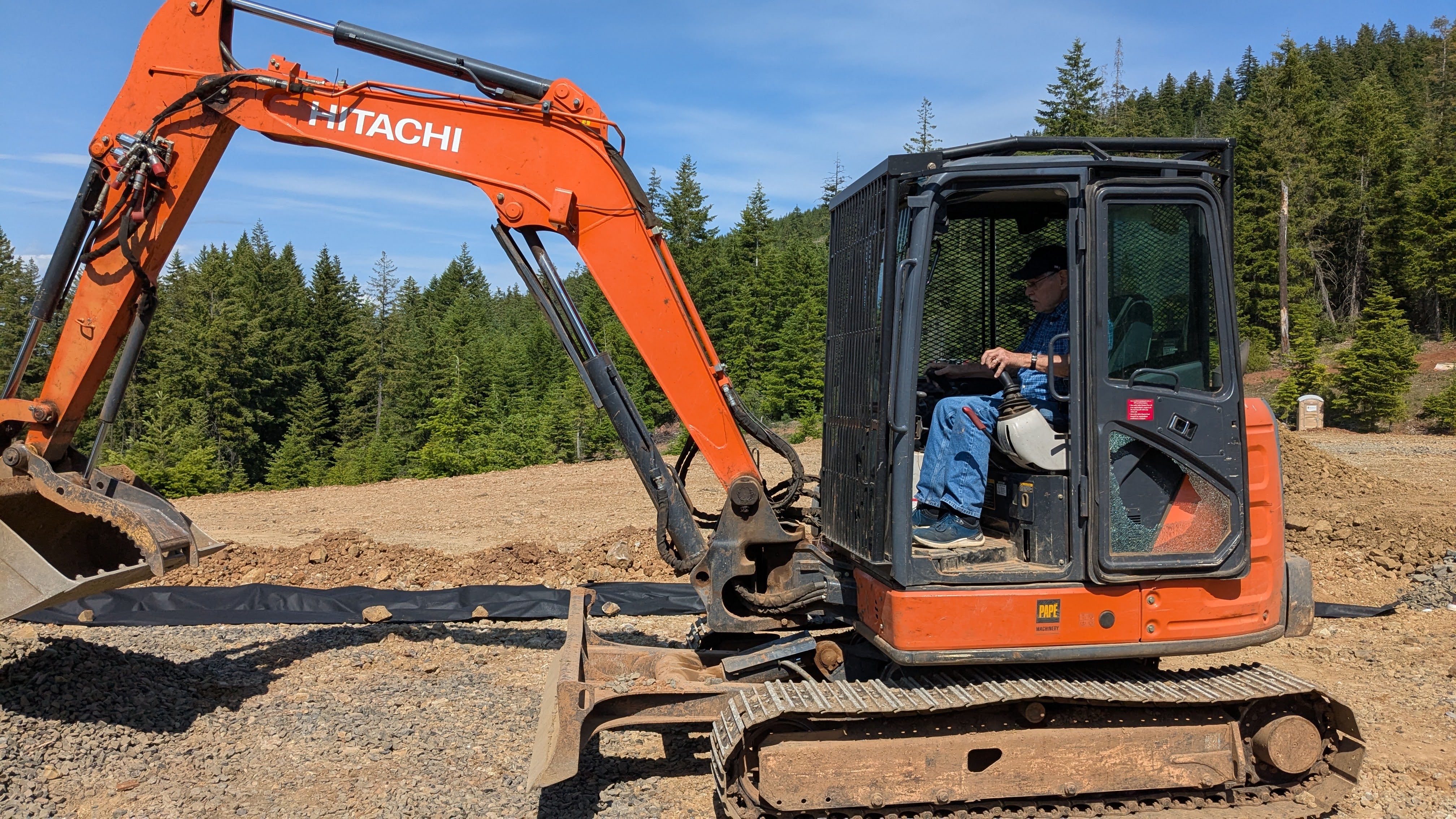
Jackson’s dad made a special appearance and helped us with the last 20 ft!
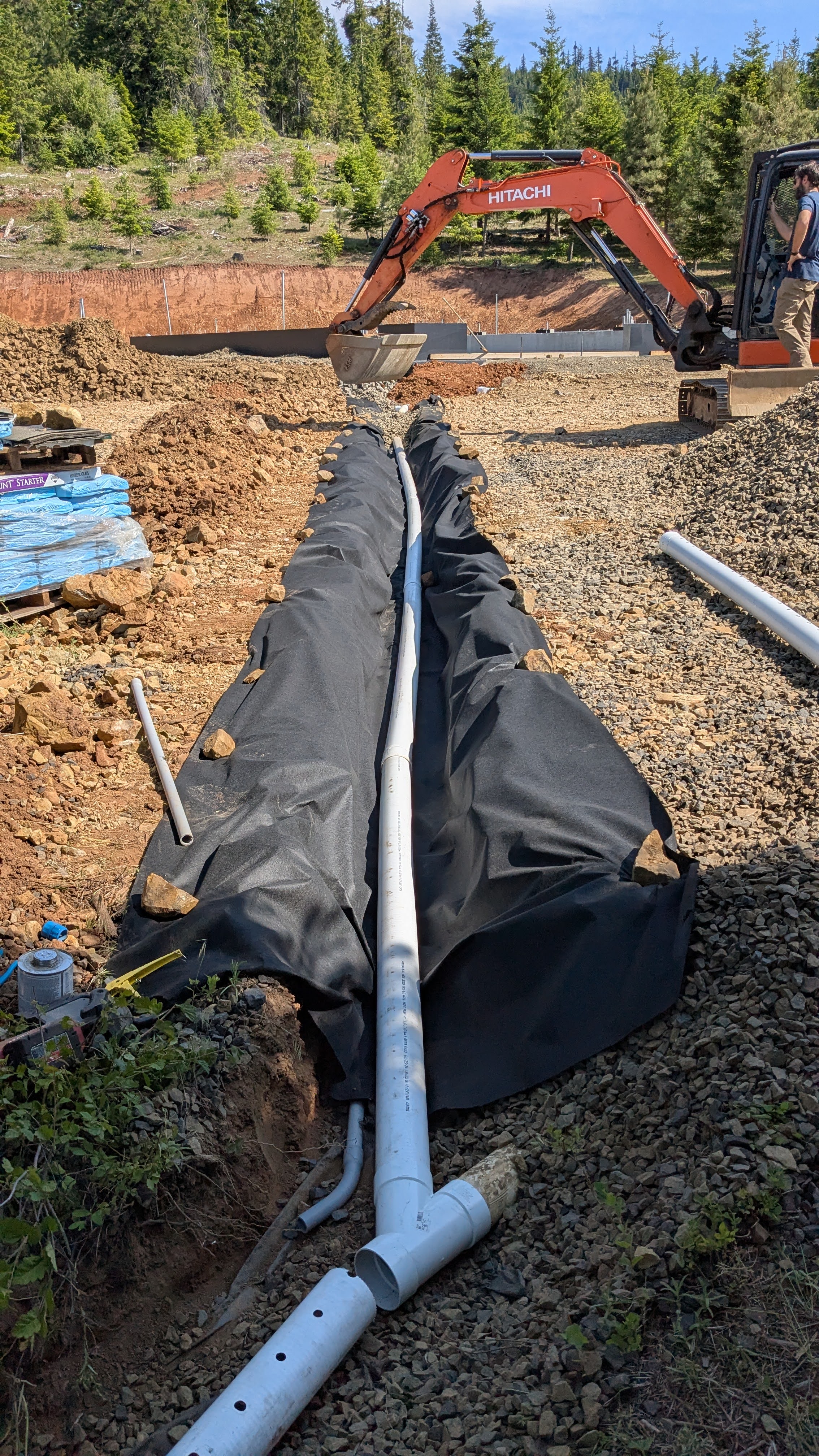
The French drains are complete, but there is still some work to be done to control the flow of surface water.
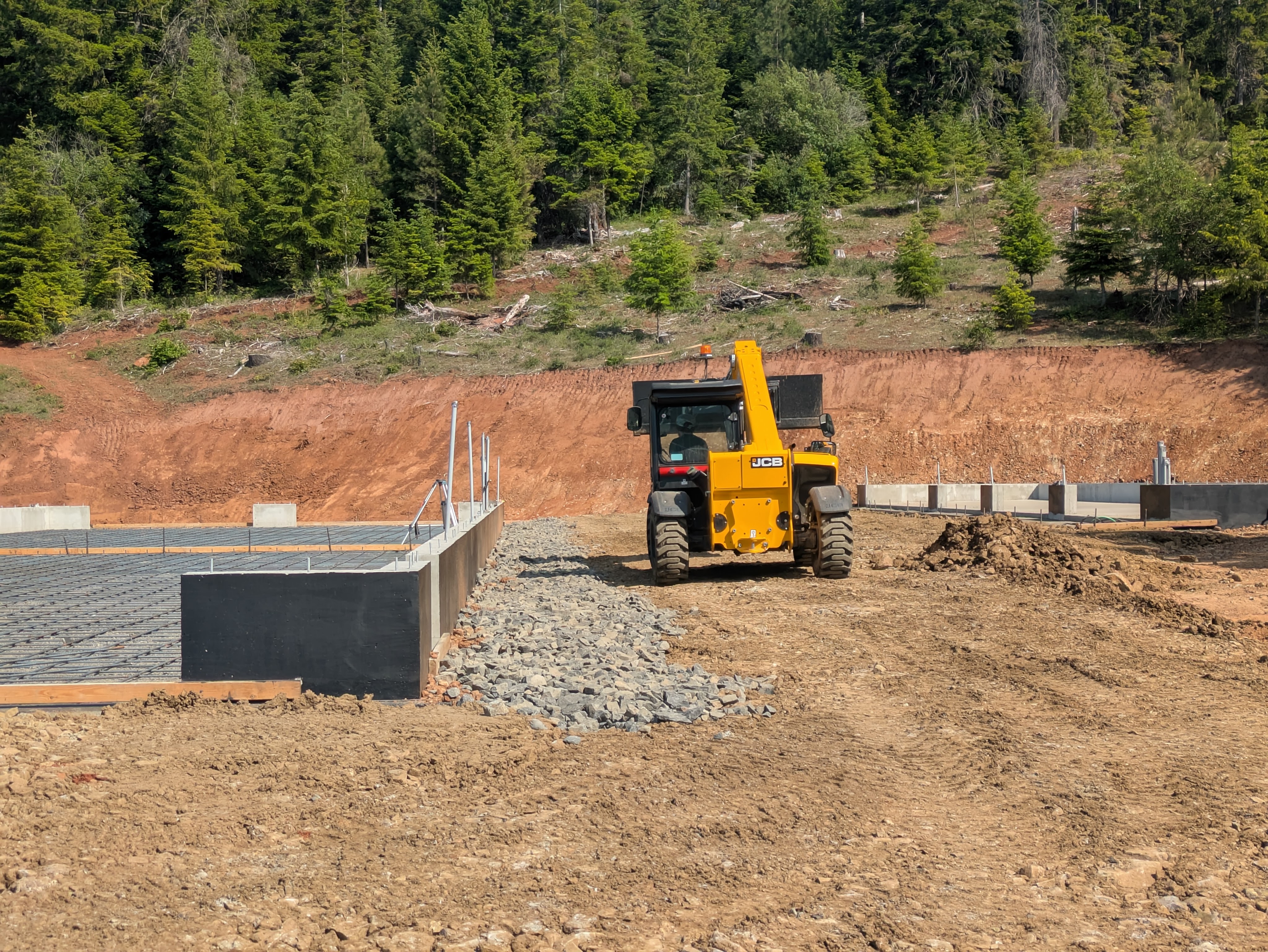


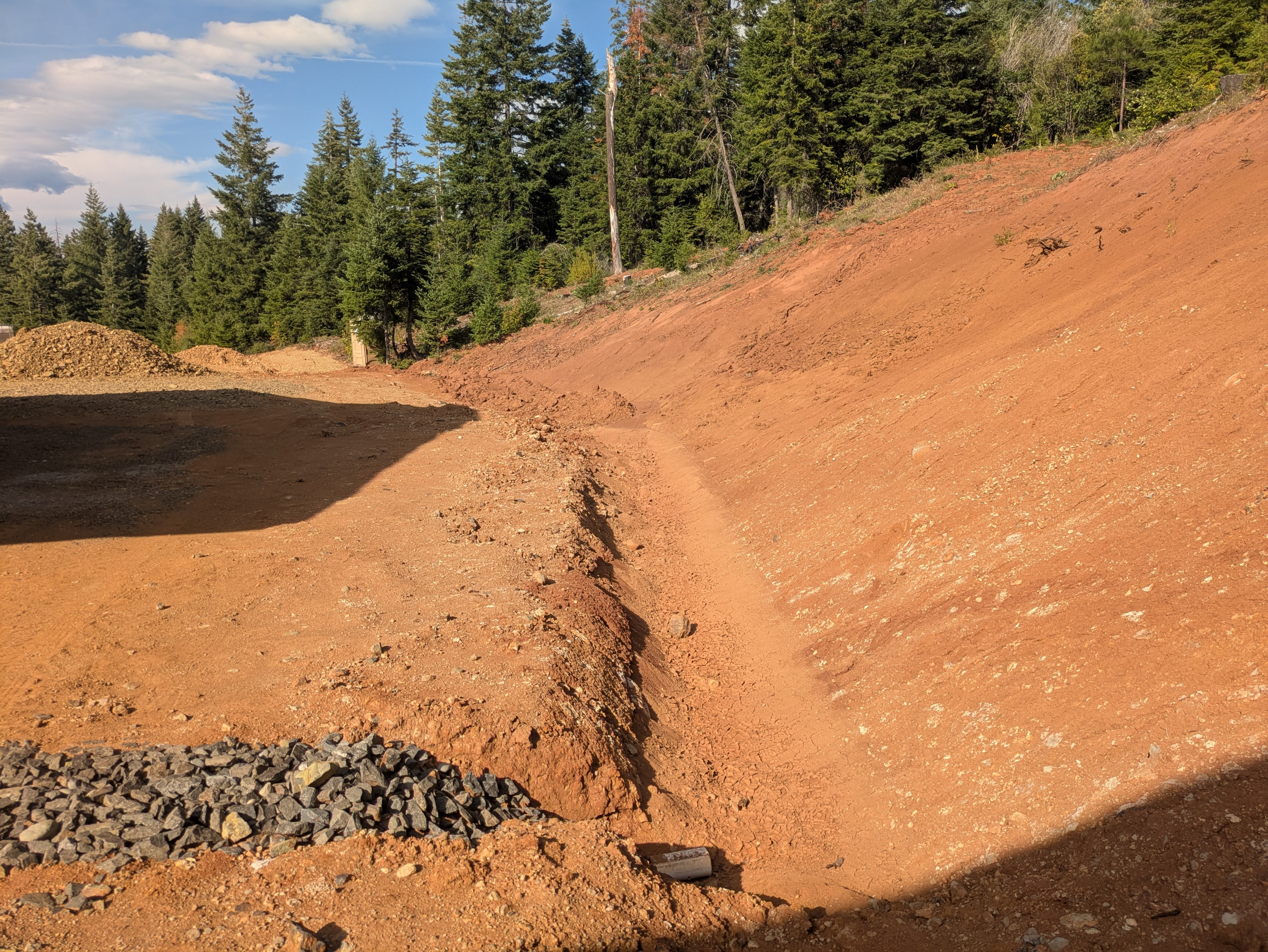
You might be wondering why 500 ft of French drain is needed in an area that gets very little precipitation (about 30 inches per year – including snow). We get a little drizzle in the Spring and Fall, and a lot of snow melting off the roof in the Winter. We estimated that 107,500 gallons of water will run off the garage roof per year, plus another 35,000 gallons from the shed roof! That’s over 1000 gallons per inch of rain. Maybe we should be collecting some of that water…
On a final note, the dozer is no longer with us. The 1982 machine finally had enough. It basically needed a new motor at the end of this project. Sam sold it for a pretty penny to someone a few hours north of us.

 diamondgapbuild.com