Upon learning that the roofs of our new buildings will shed 140,000 gallons of water a year, we decided to collect some of that water. We researched all types of water storage tanks. Sam determined the above-ground plastic tanks had a high risk of collapsing under the snow load. We entered the world of buried tanks. They seemed better for many reasons- we wouldn’t have to look at them nor worry about anything freezing over the winter. Eventually we found a good price on 3000 gallon concrete water tanks. The only drawback was that each tank required a massive hole.
Each tank is over 12 ft tall with an 8 ft diameter. And we wanted 4 tanks! We planned to bury them in pairs- two by the shed and two downhill from the garage.

The ones by the shed will be used for fire suppression. The others will have a split use- one for irrigation (landscaping in front of the house) and one for fire.
We staked out the locations for the 9’x18’x13′ holes, and Sam started digging. He borrowed the big excavator again since ours didn’t have enough reach.

Sam opened up the first hole over two days.

He had to climb down to check the dimensions many many times.

Buster was very tempted to climb down the ladder, but Smokey talked him out of it.

Once the hole was deep enough, Sam got the laser out and fine-tuned the bottom of the hole. I was his eyes at this point, as he couldn’t see the bucket.
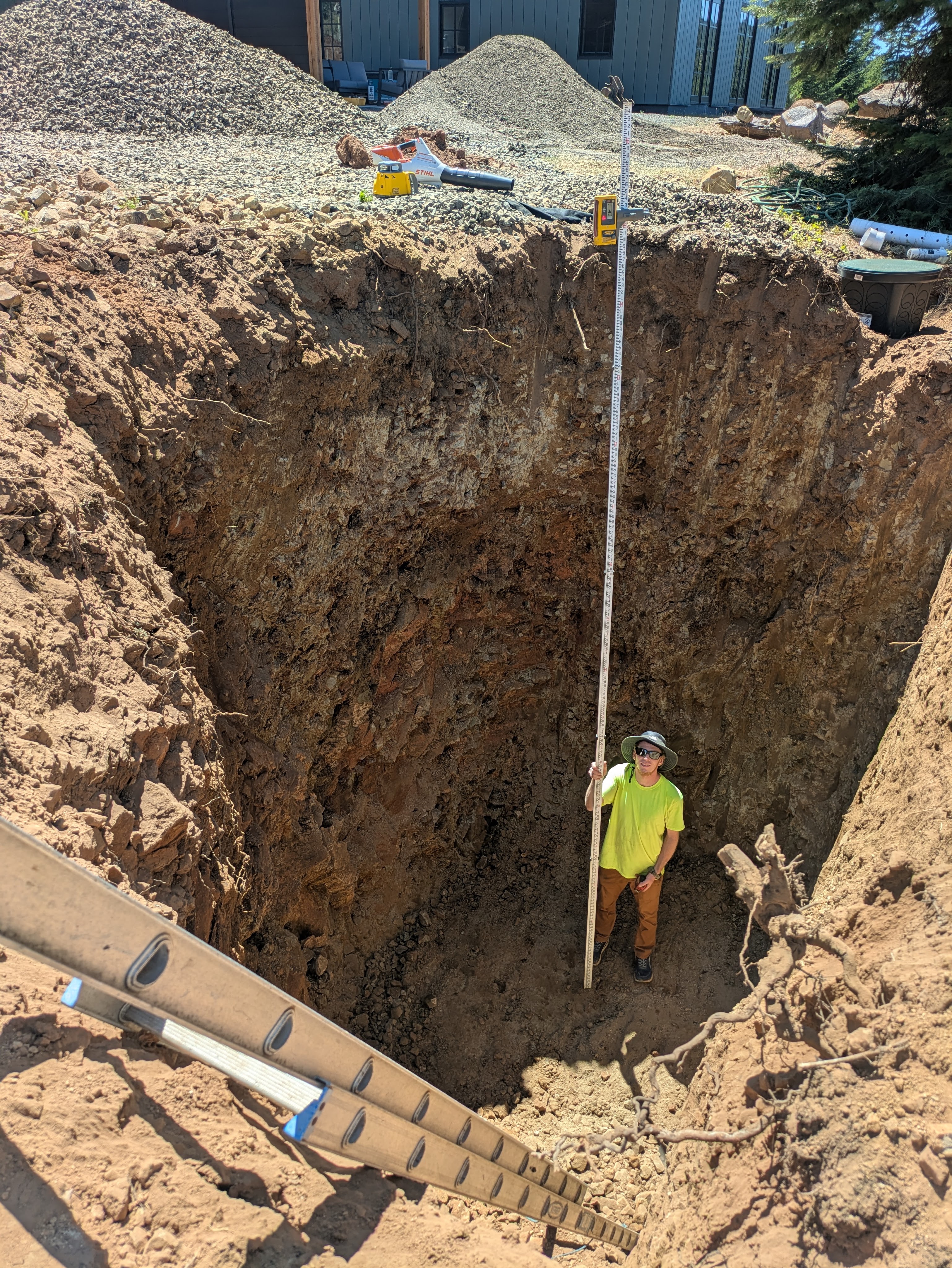
Once the bottom was close to level, Sam brought some sand down. He used the sand to make a really flat surface. I doubt many other people get their holes this nice for water storage tanks.


The first set of tanks arrived!

Each tank is composed of four stacked cylinders, plus a riser on the top.

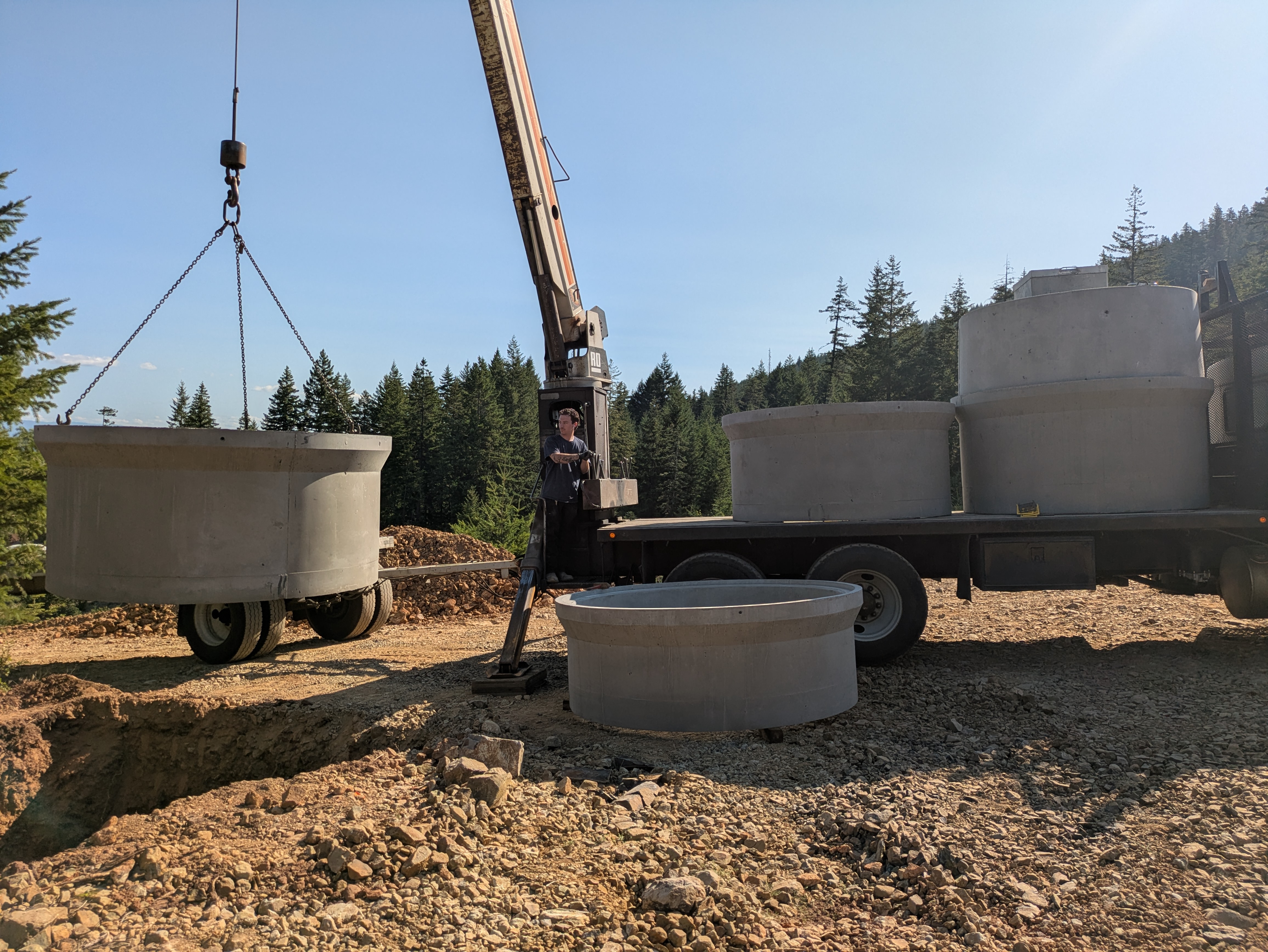
We made sure the first cylinder was level and proceeded to stack the other parts. The crane guy was very skilled but couldn’t see down where he was placing the cylinders. He had to rely on our instructions. Sam and I stood on opposite sides and made sure that the cylinders were well-aligned as he set them down.


There is a butyl seal between the parts. The seal compresses under the weight of the parts; however, grout was still required at each of those seams.

After each cylinder was set, Sam had to climb down to unhook the crane rigging. It was pretty tight around the tanks but he fit. Then Sam had to climb out before the next part was placed.

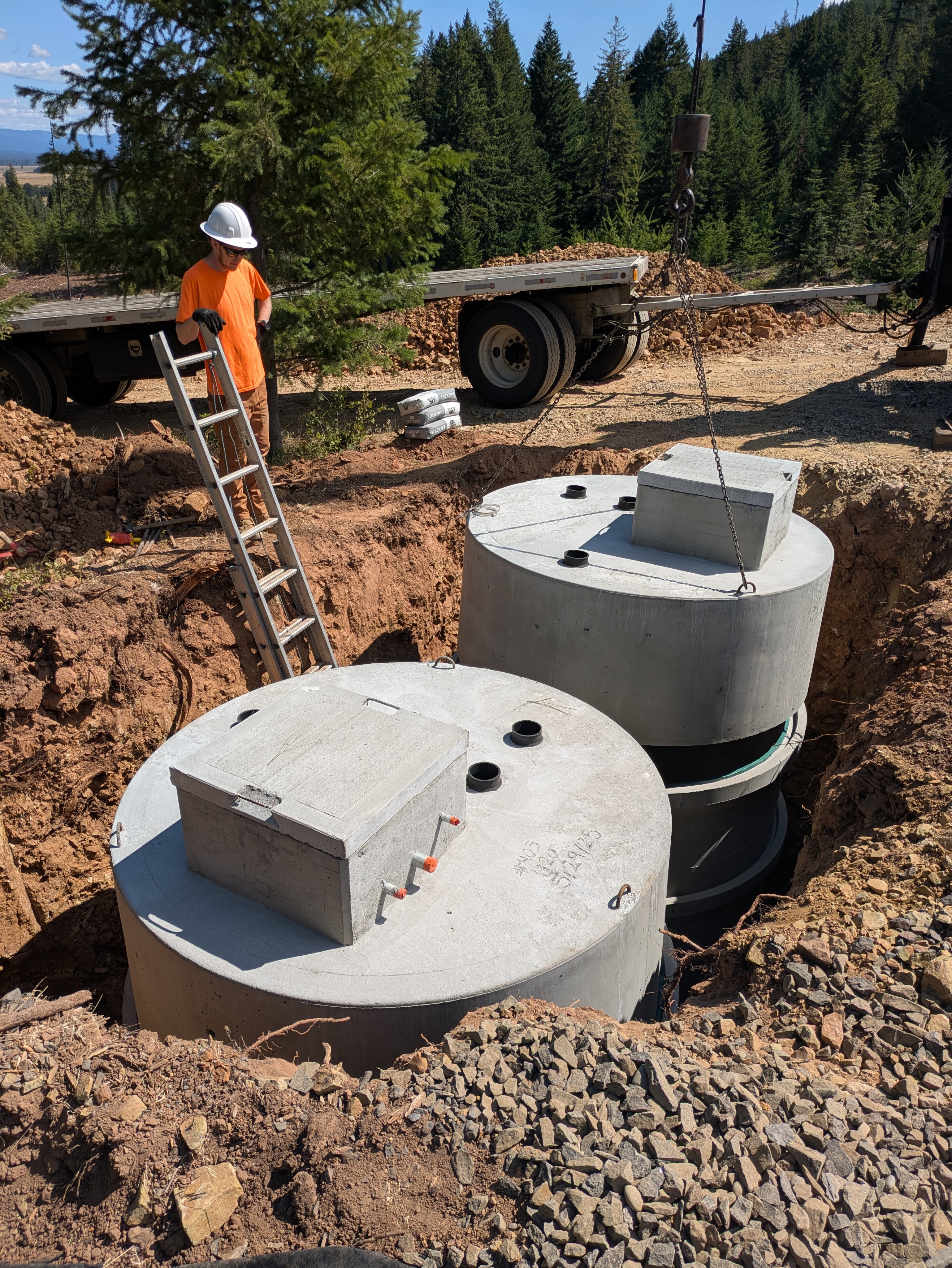
The first two tanks were all set!

Mixing and pouring the grout was a lot more time-consuming than getting the tanks in. Sam had some help from Kevin, but they were sweating in the hole for hours dealing with the grout.
The following day, Sam started digging the second hole… It was quite rocky over there. Kevin came over to help again. They were just about to give up and rent a rock blaster attachment when they started to make some progress with the excavator.
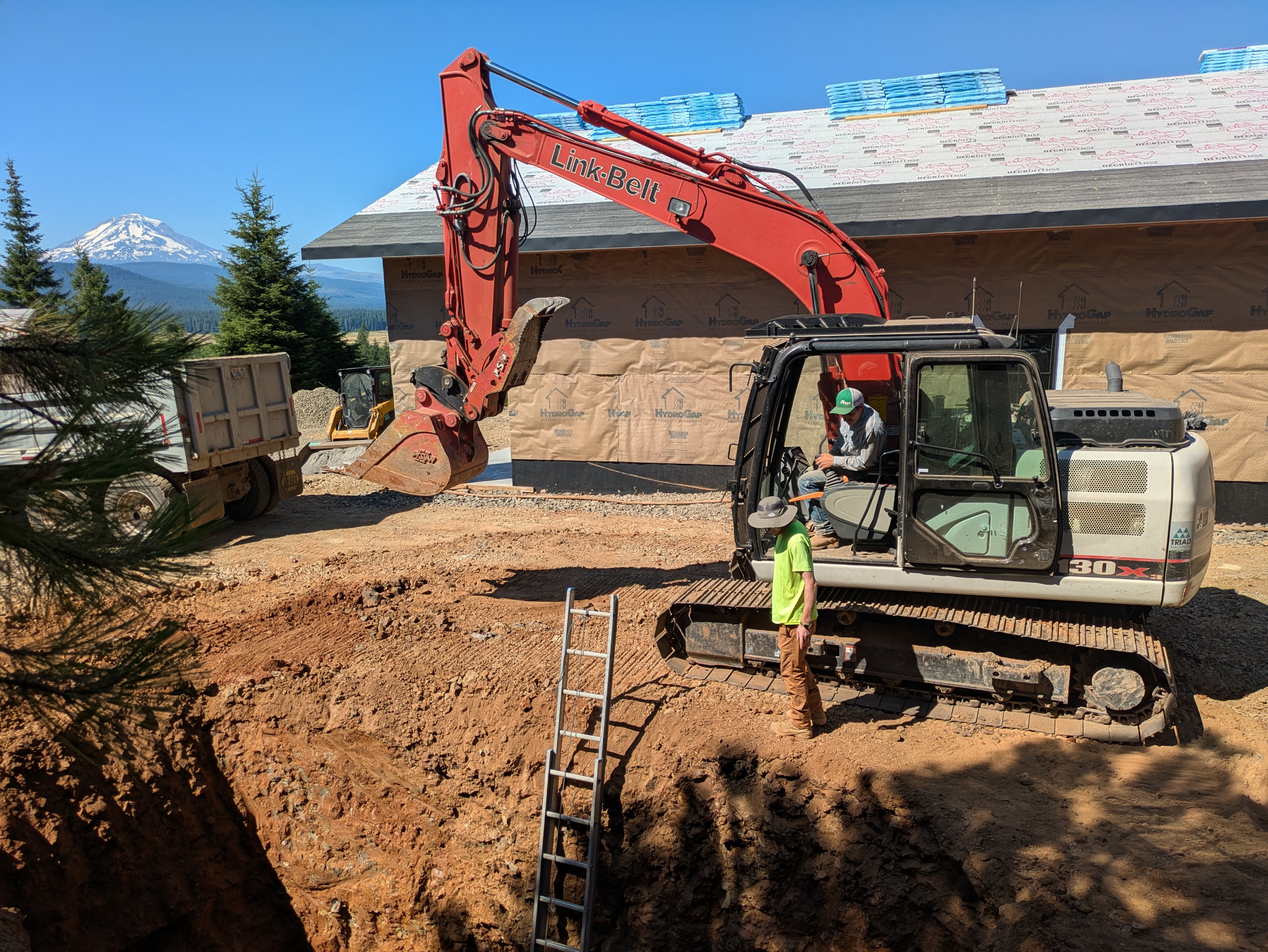
The rock continued all the way down. When you dig through big rock, the excavator tracks lift off the ground, and then the whole machine slams down. Imagine riding a mechanical bull for 8 hours. I could hear the fight from inside the house!


There was nowhere to put the material, so Sam and Kevin loaded it directly into the dump truck and deposited it a half mile away.


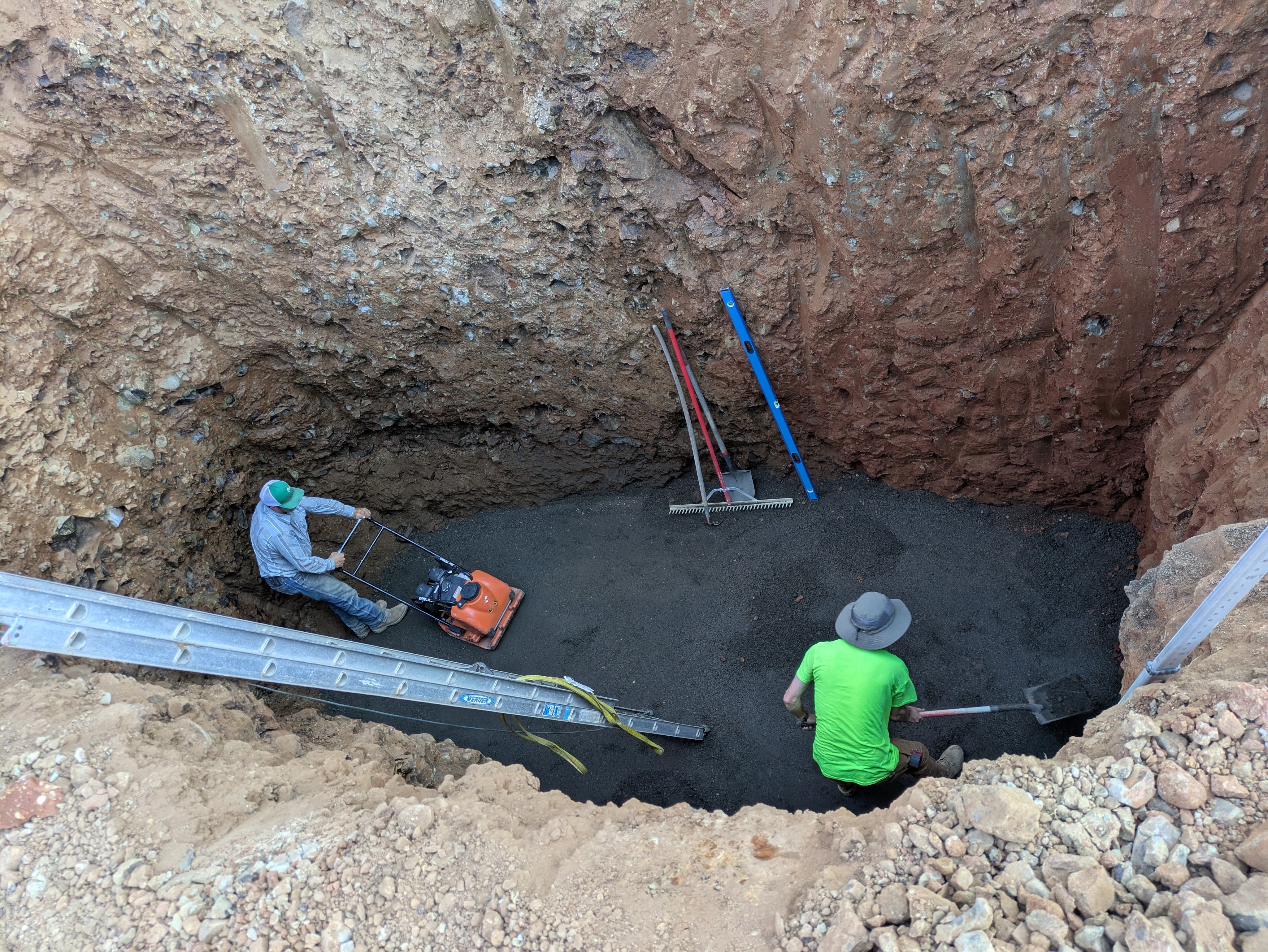
Just before the sun set, they reached the bottom of the hole. Sam and Kevin dumped some sand in and ran a compactor over it. This hole ended up being even nicer than the first!
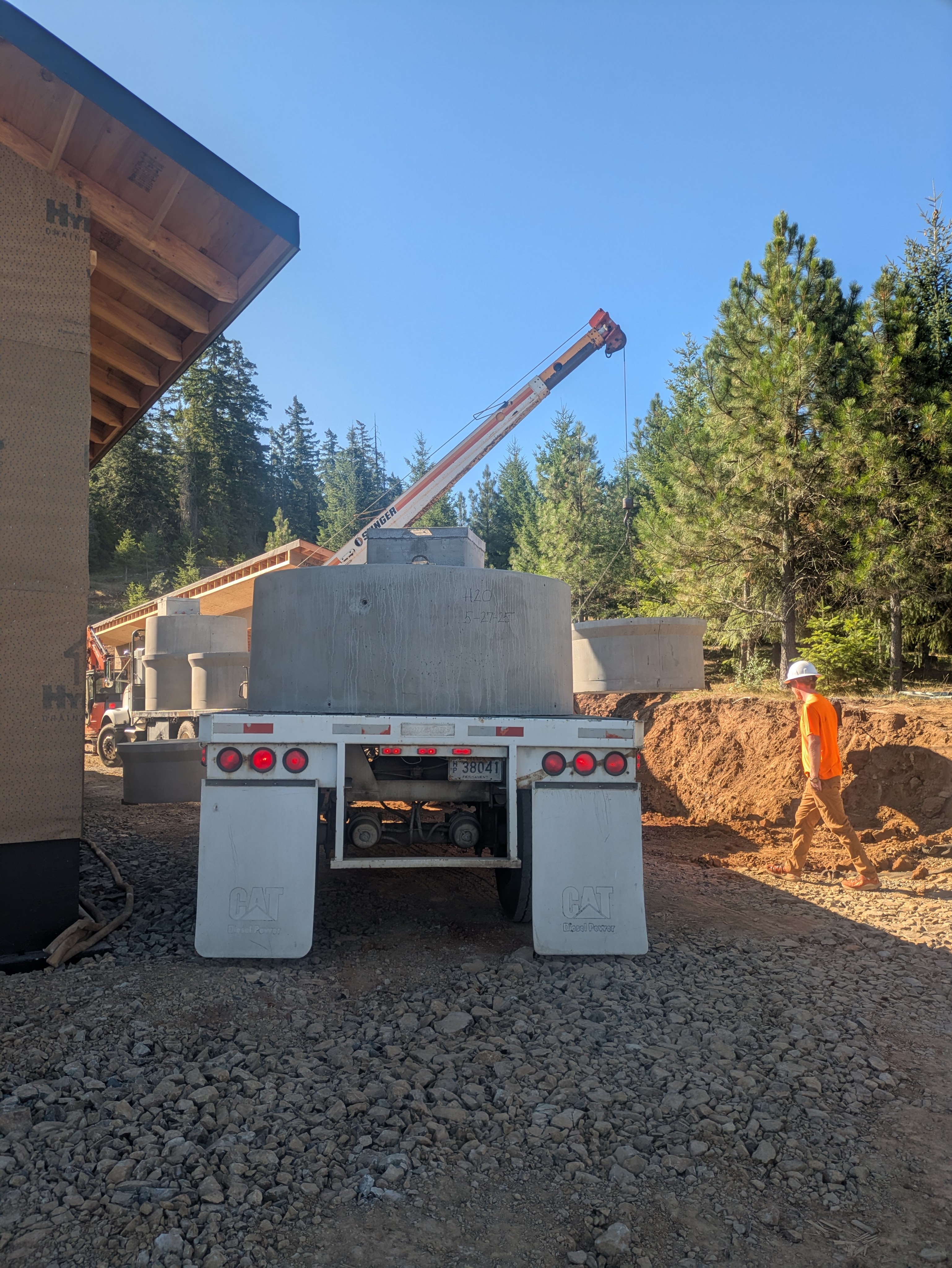
The second set of tanks arrived early the next morning. Delivery was smooth.

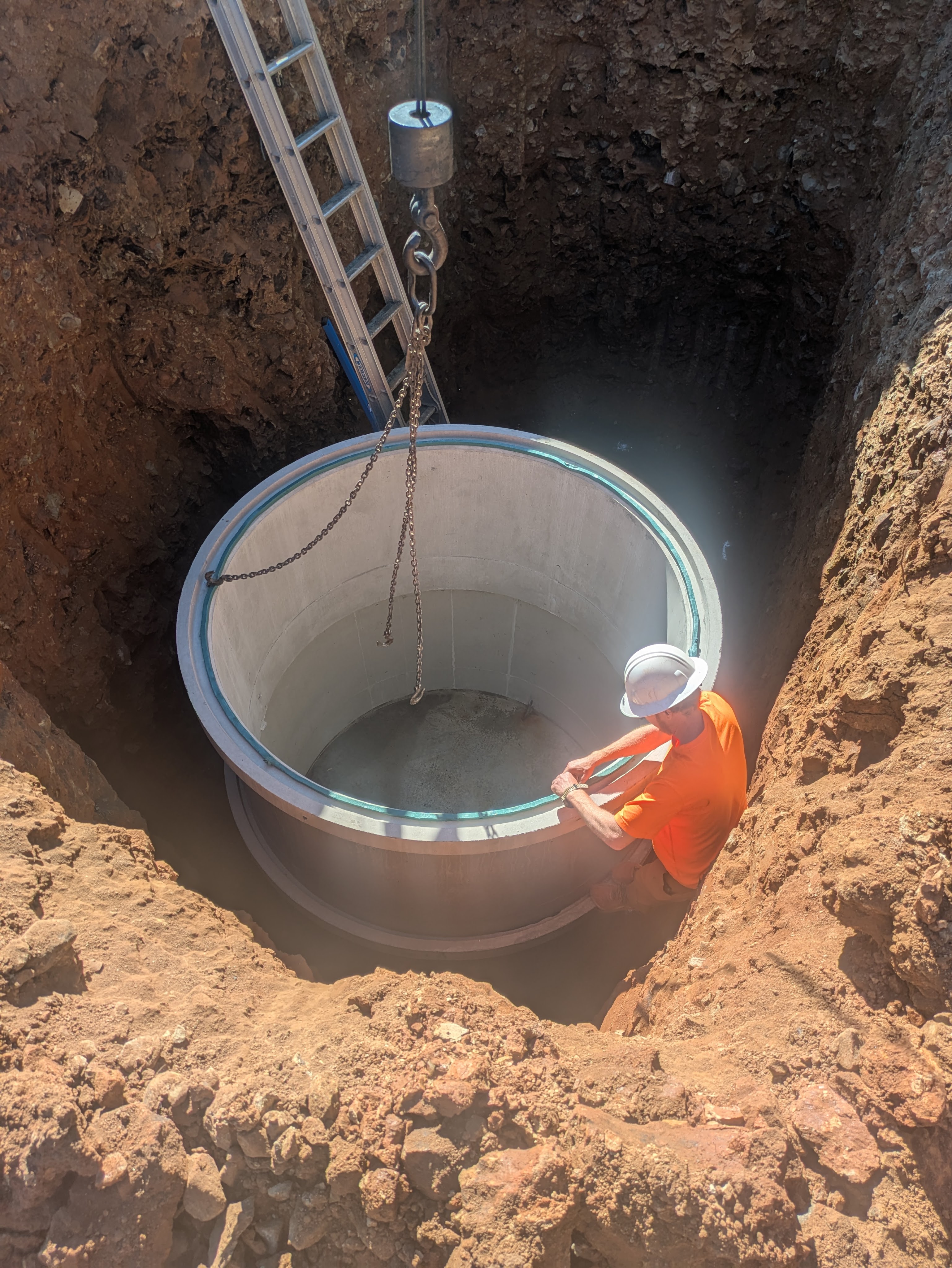
Sam ran up and down the ladder another 20 times.
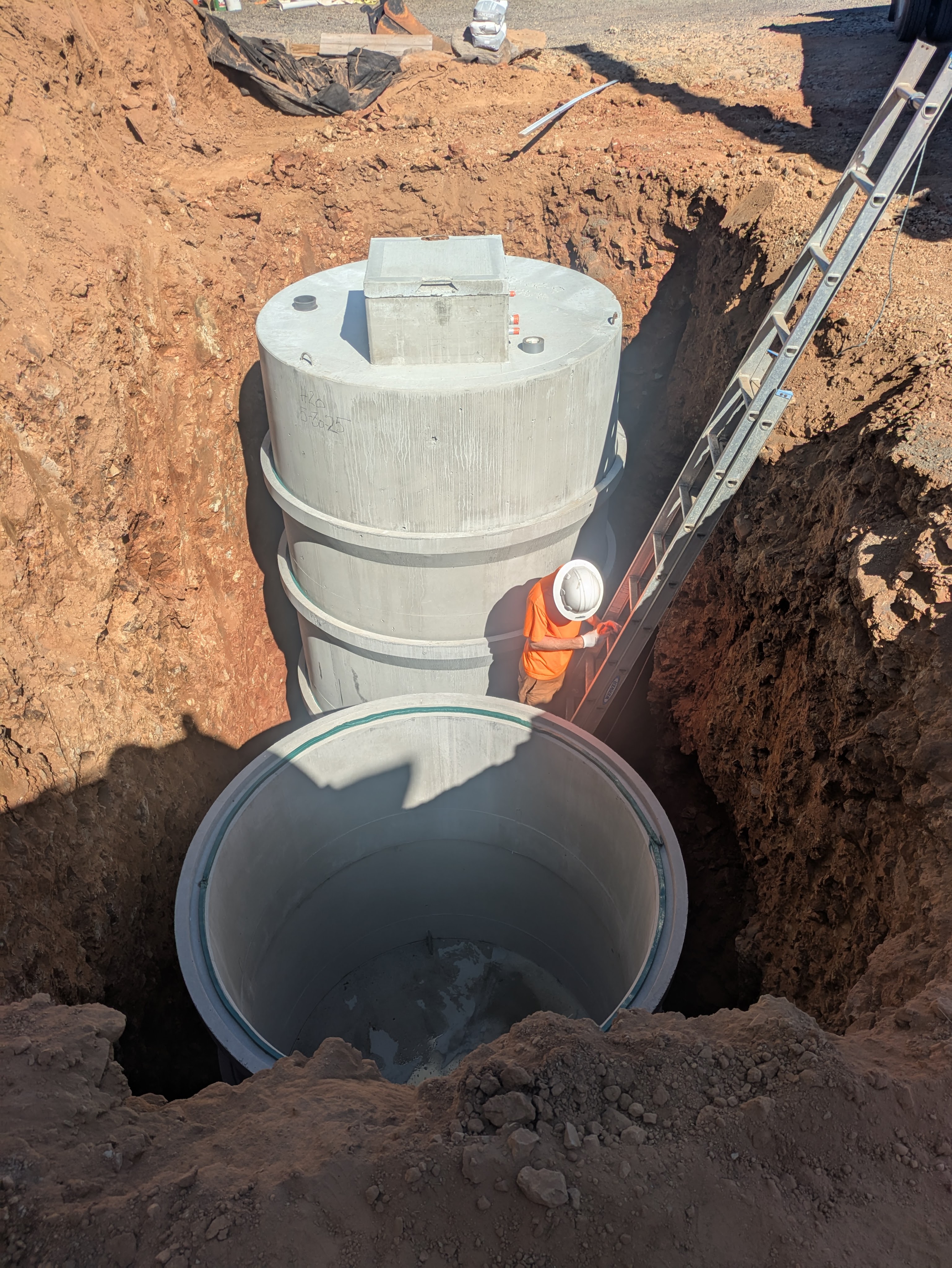
The installation of the last two tanks was complete!
Now for the real drama… Sam back-filled around the first set of tanks, and the following afternoon something wild and unexpected happened. It has never even rained a drop here in July or August, nor has it poured any time of the year (it only drizzles). Well, out of the blue, we got an isolated thunderstorm. It rained nearly an inch in under two hours! The pipe leading to the buried set of tanks wasn’t hooked up to anything and it dumped water around the tanks. Even with all the dirt and rock on them, they floated up! That’s right- 13,000 lb concrete tanks can float!
One tank rose more than 6 inches, and its intake hole was well above ground level! There was nothing we could do since the tanks were already buried. Kevin brought the water truck over and filled both tanks to weigh them down. Then Sam pushed them down further with the excavators.
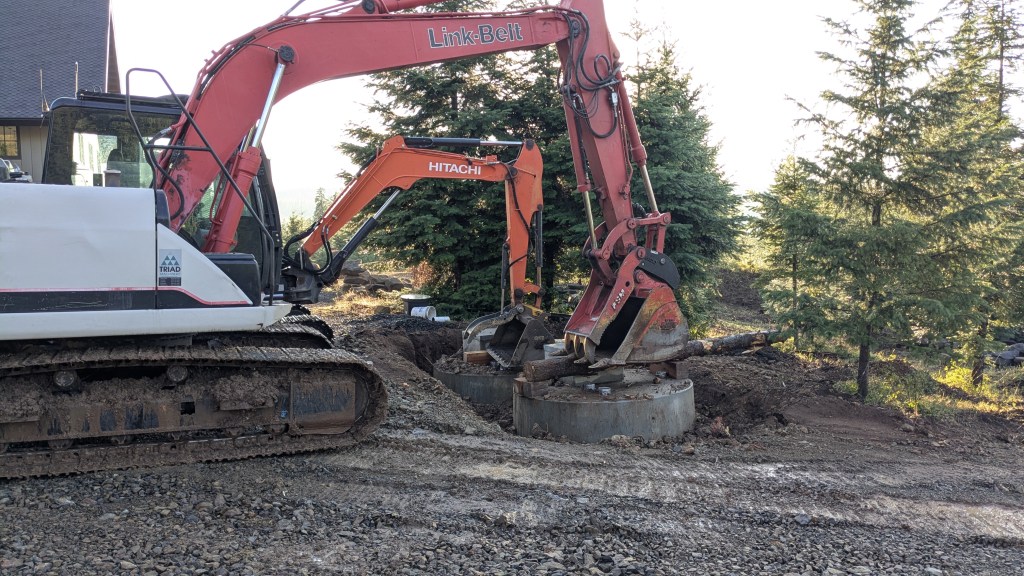
The tanks went down significantly but did not return to their original locations…Hopefully there are no large rocks under them, but there probably are. What a nightmare!
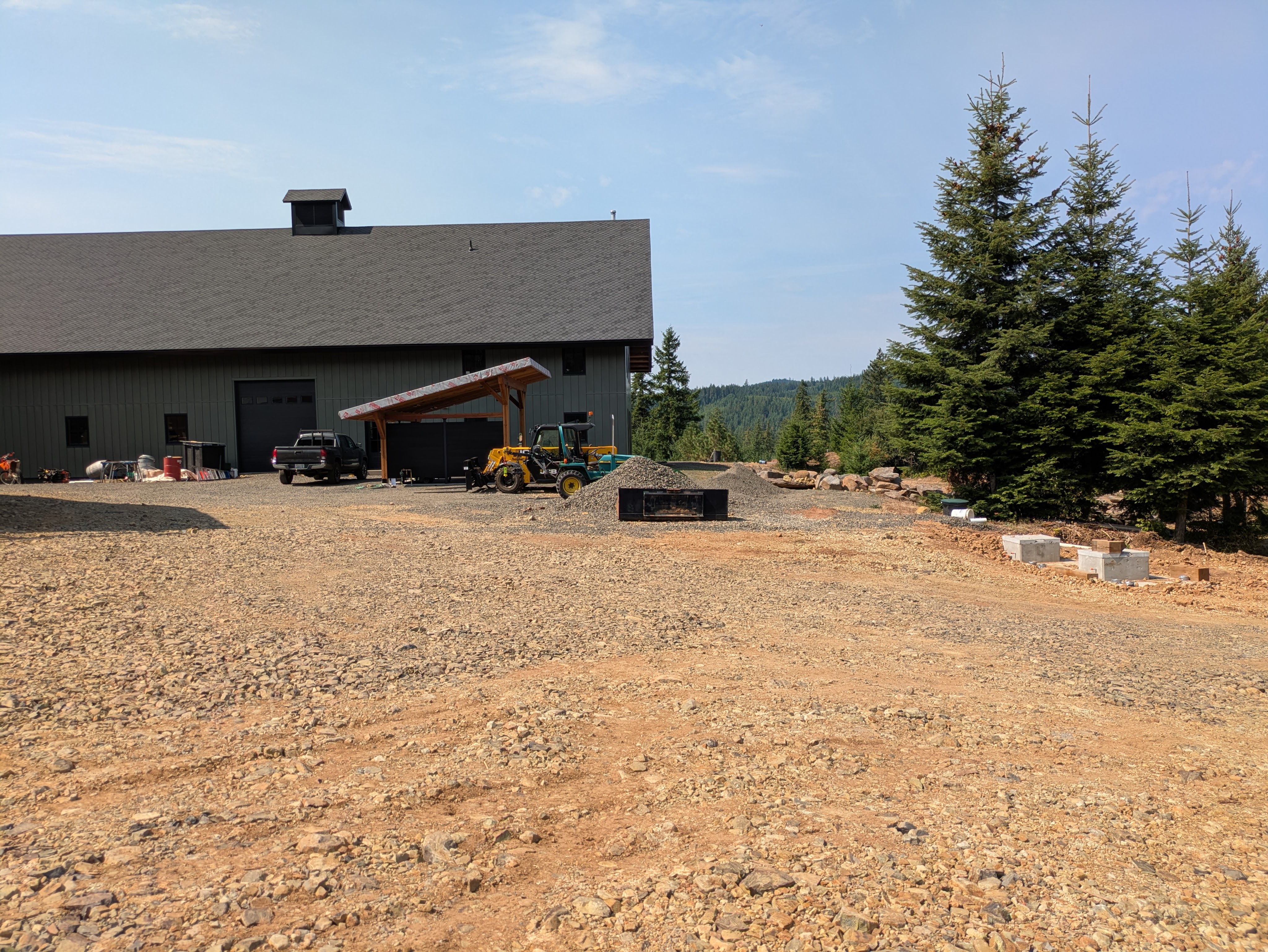
Luckily the other hole didn’t get flooded. Those tanks were still in the perfect position, so Sam started working on the plumbing. He ordered the largest selection of pipe fittings and adapters.

And you guessed it- we made another trip to the pipe store.

I just love picking up groceries with pipes in the truck. At least I didn’t put any shoppers in danger this time. This is a different scene on a Friday afternoon.
Sam now had enough parts to start the plumbing project.

He installed an electric submersible pump in the bottom of one tank. The submersible pump can fill up a water truck. After removing the lid, Sam put a ladder in the tank and carefully lowered the pump down.
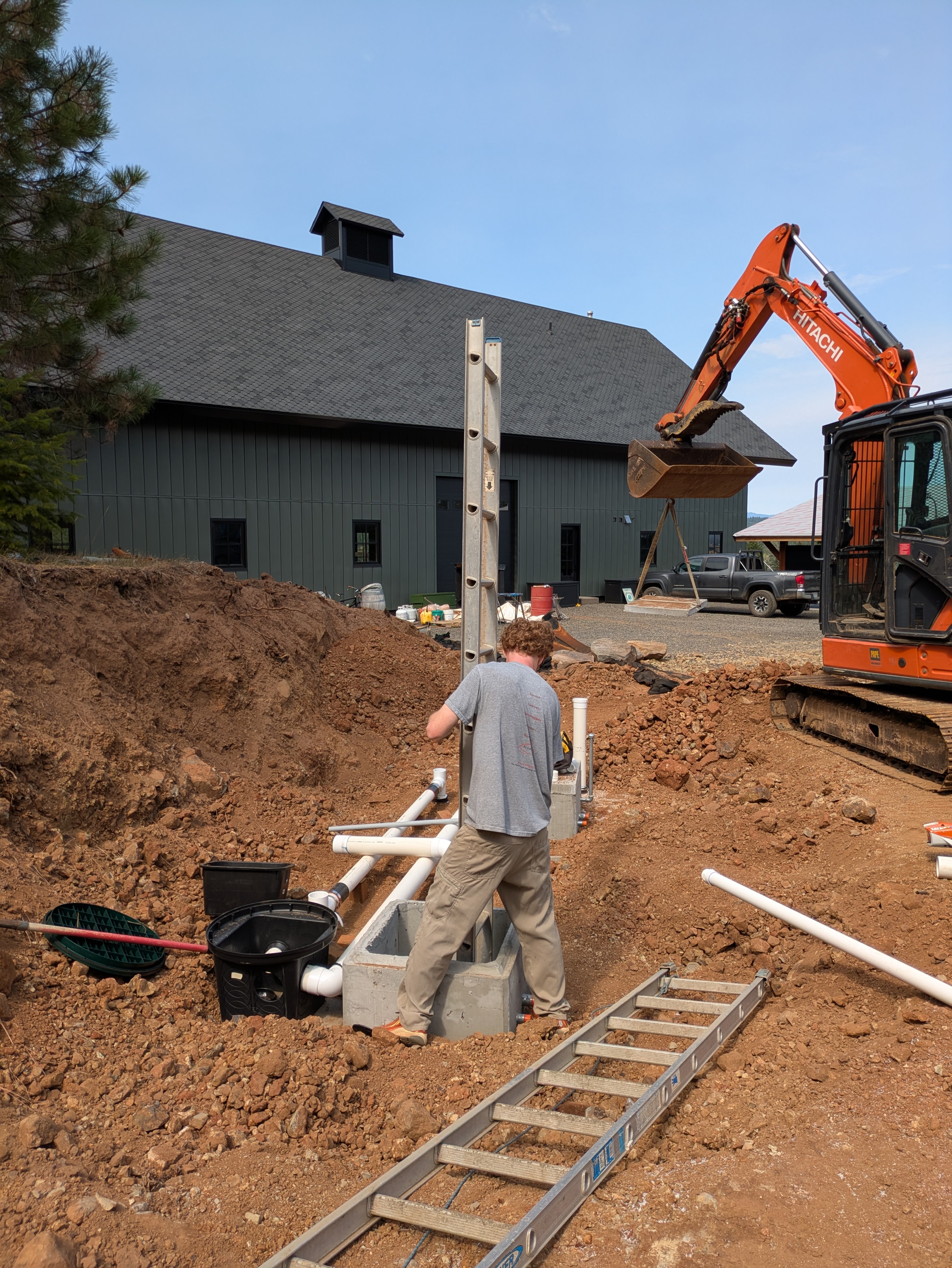
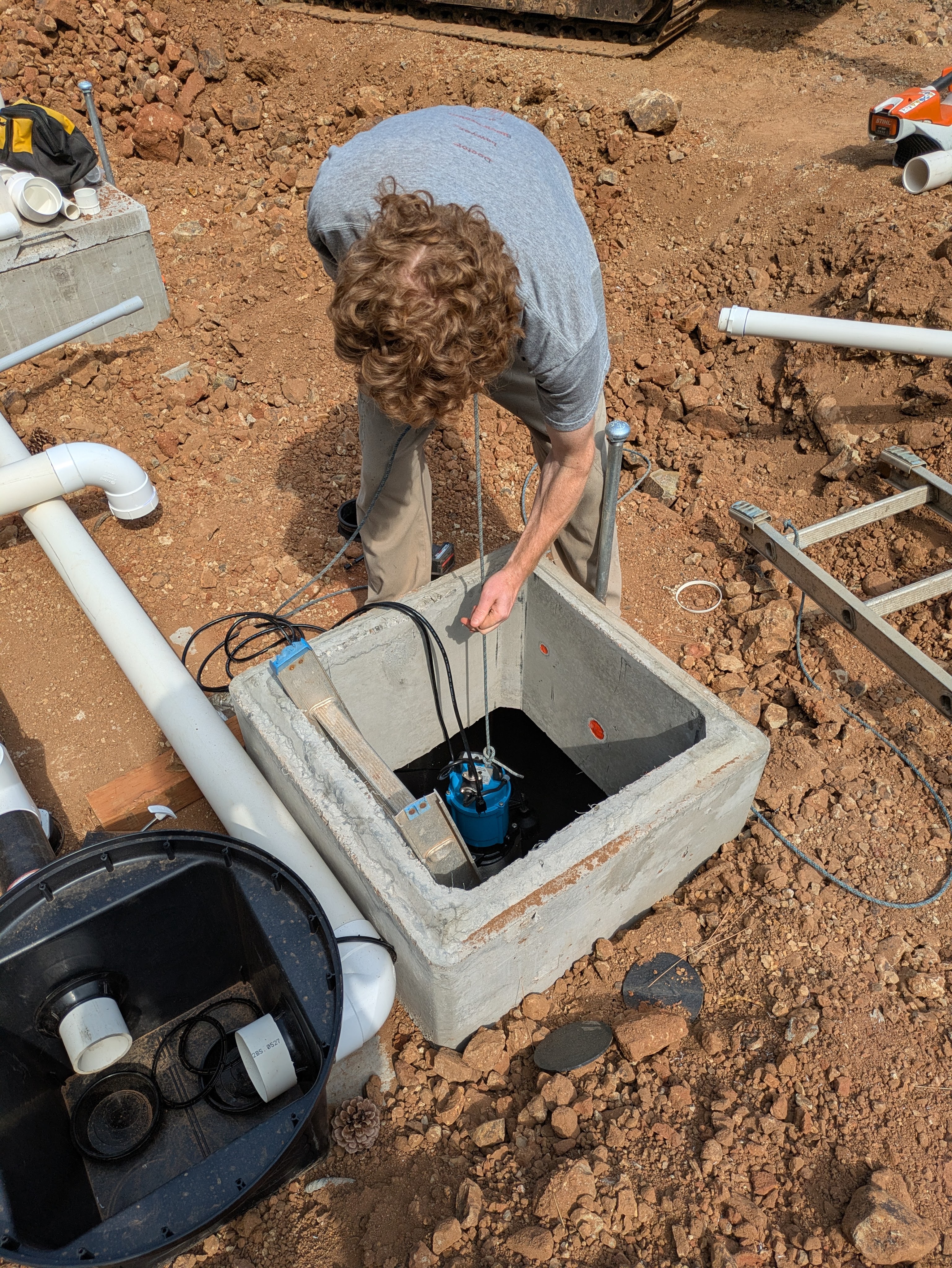
Then he descended into the dark hole and waited for me to take photos before I passed him the pipe.
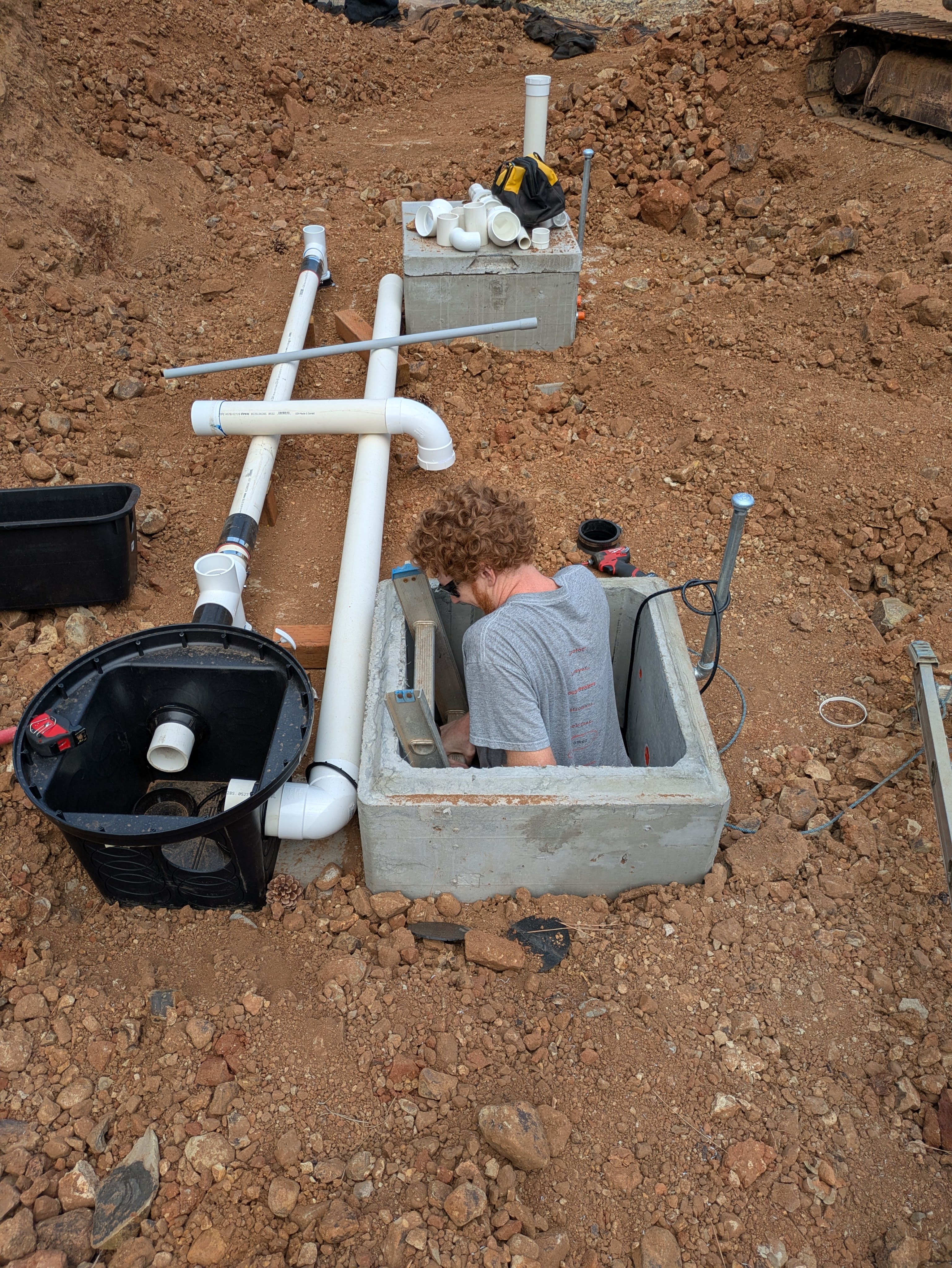
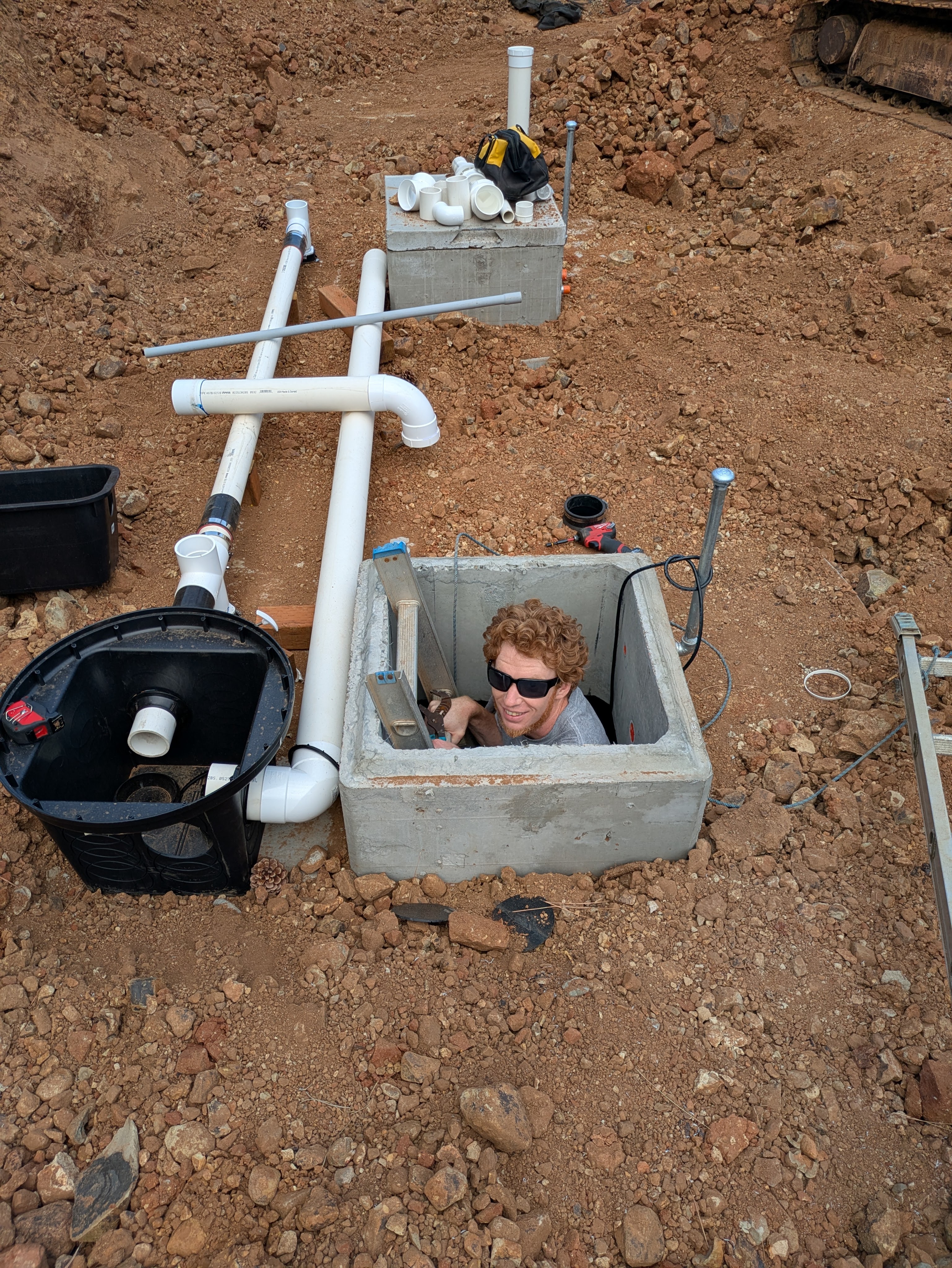
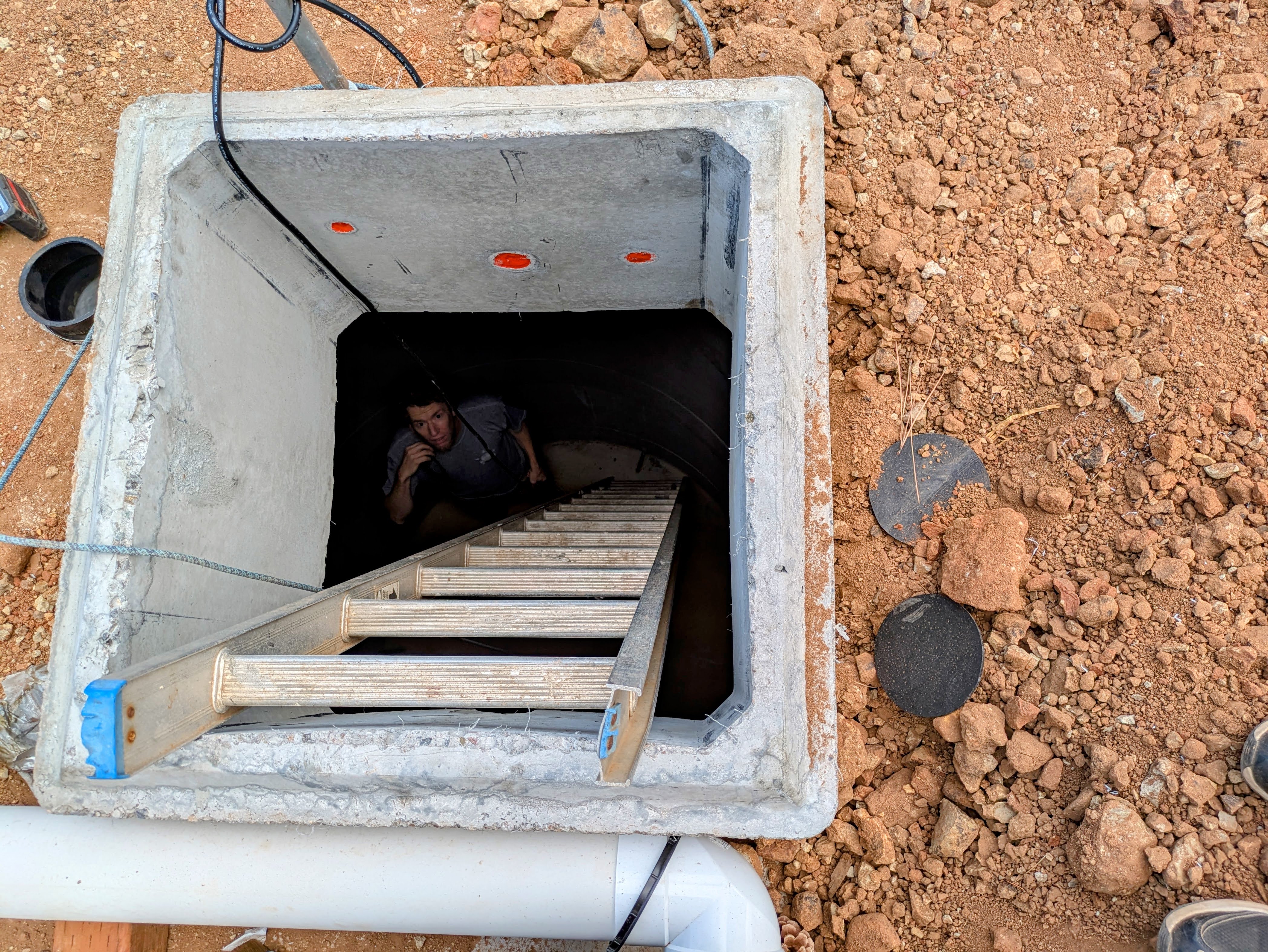
He threaded the pipe into the pump and made it back out.

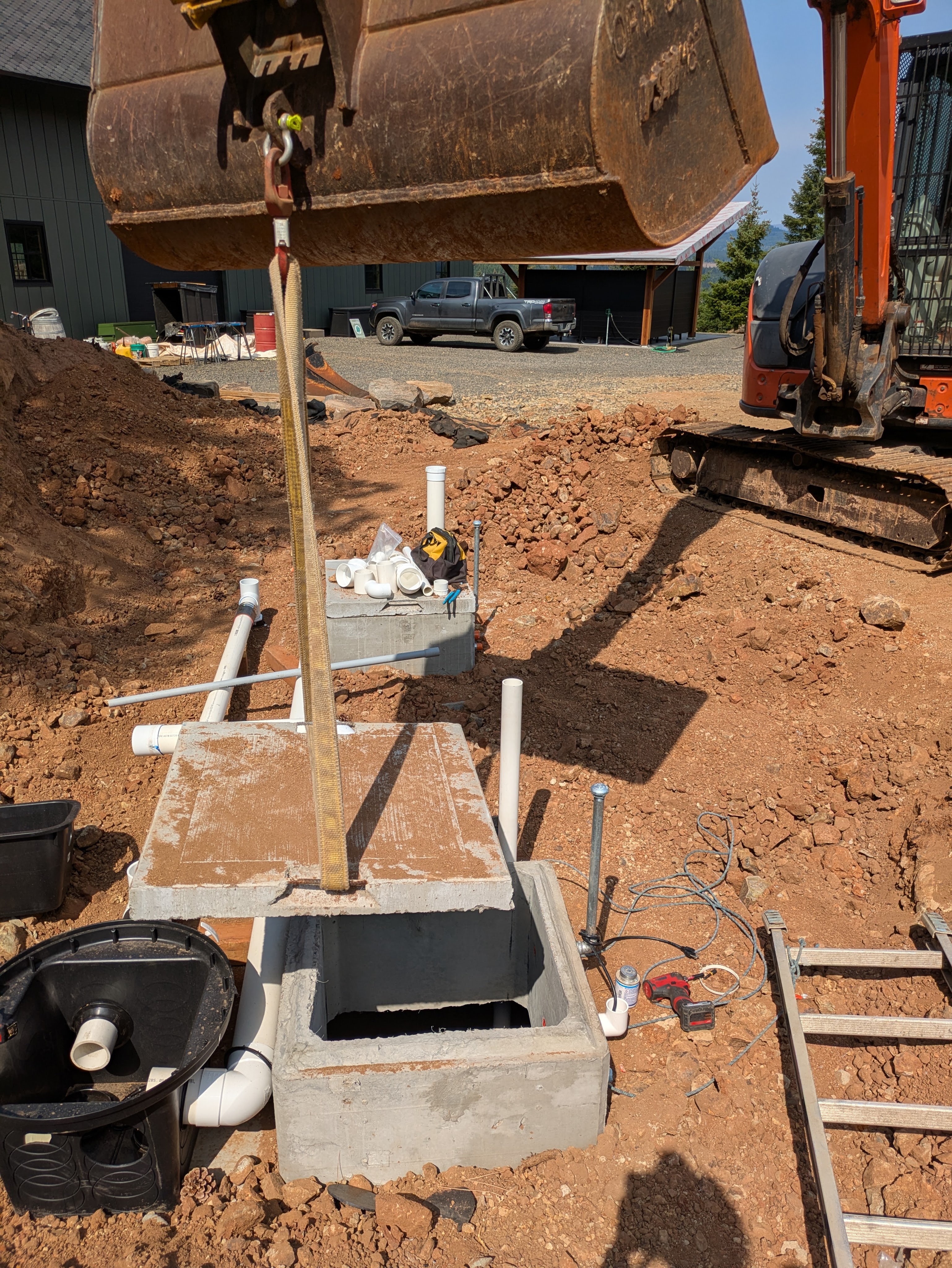
The pump doesn’t have power yet, but at least we can fill it with water now. We’ll be ready for the next rain.
Sam also designed a feature that can divert the water past the tanks. He got these large catch basins that double as the perfect outdoor coffee table.

The catch basin has one inlet port for drain water and two outlet ports. If the gate valve (the thing that looks like a gate) is open, water fills the tanks. If the gate valve is closed, water goes out the other pipe, eventually connecting to a drain pipe under our driveway.
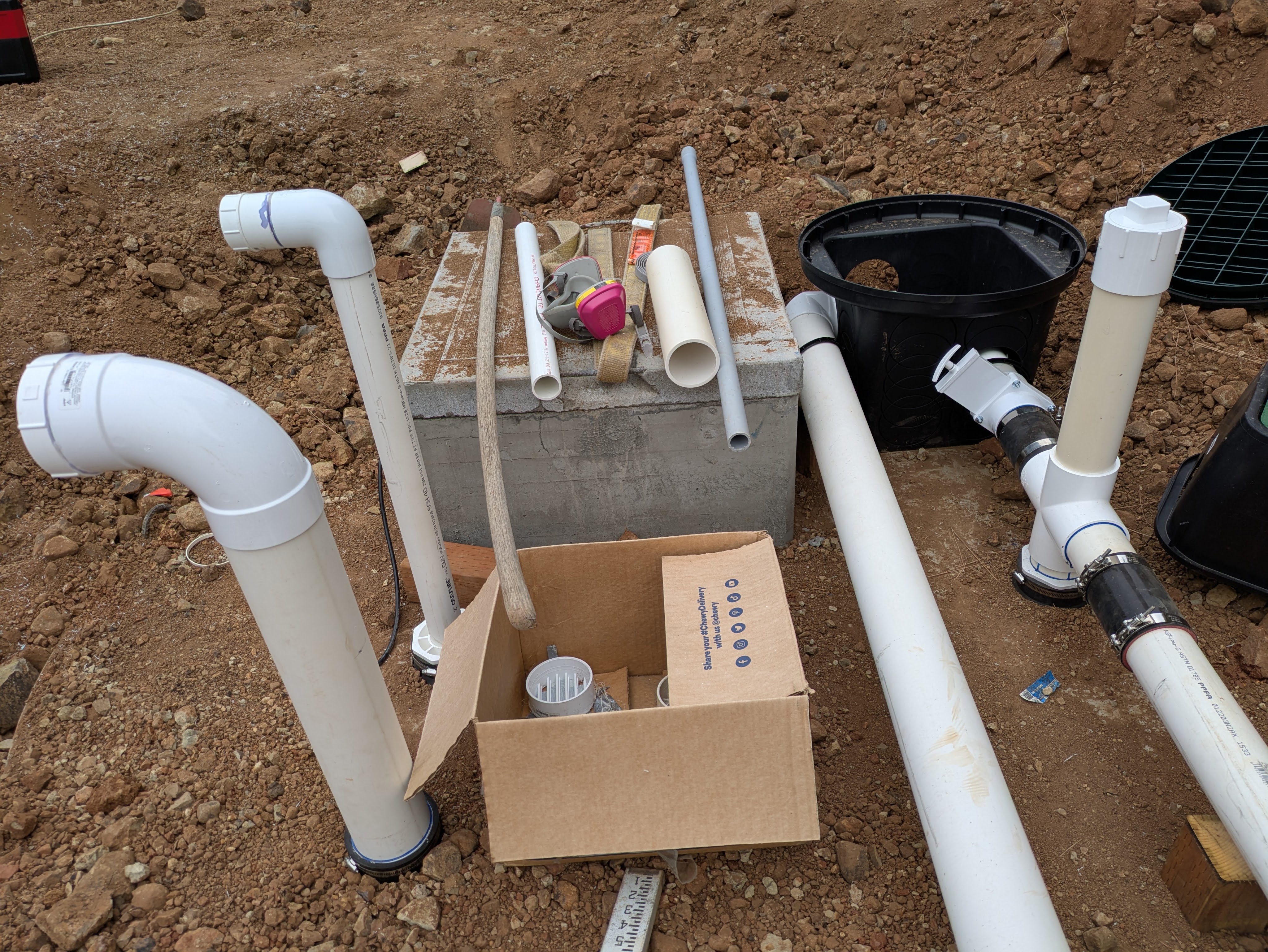
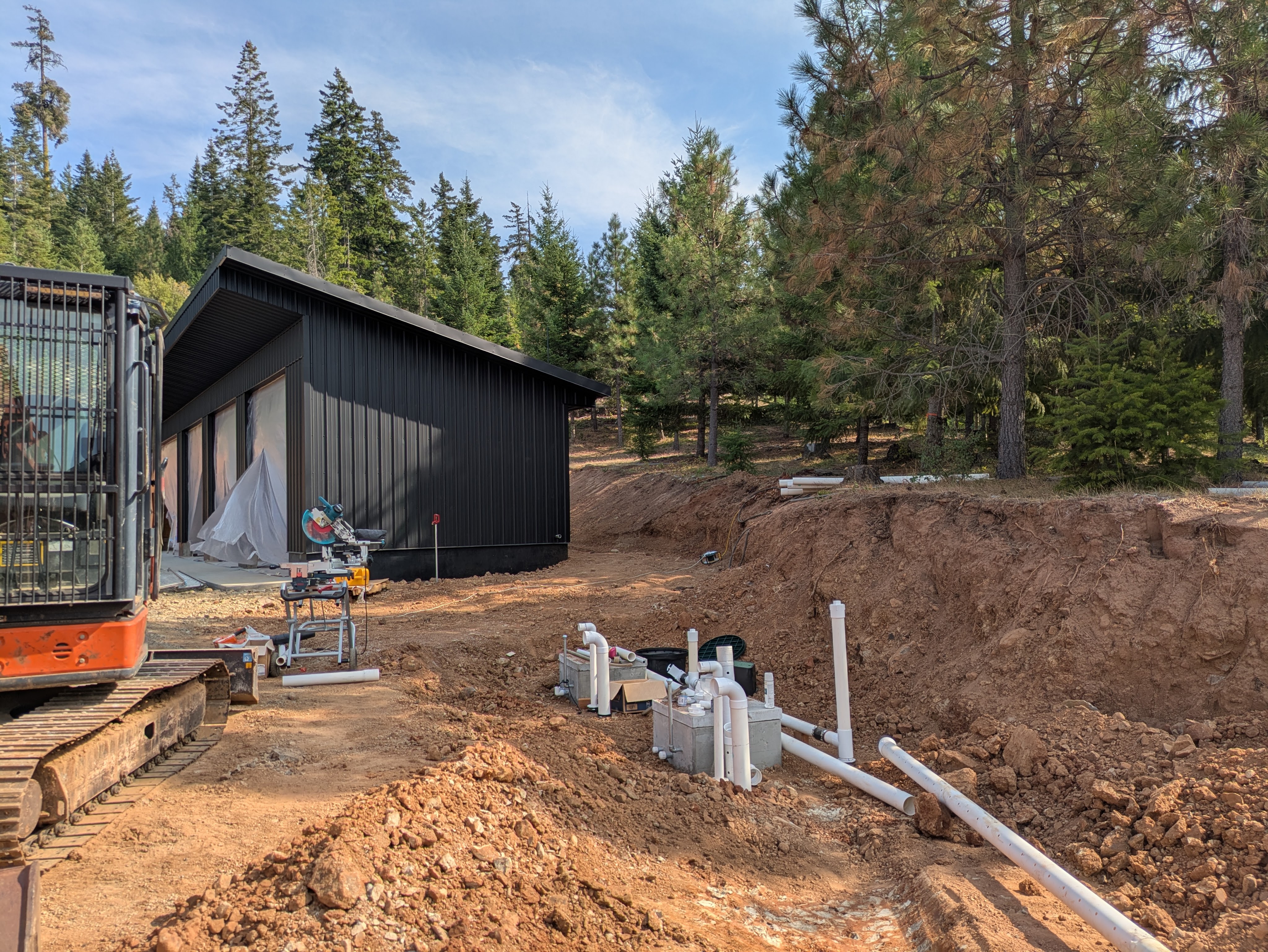
I was pretty sad to lose my coffee table. It really was the perfect height for our furniture. However, I found a great replacement that’s better looking.

After a few sunset brainstorming sessions around the new coffee table, we decided to put a sprinkler system on the roof of the shed. The sprinklers will not only water the roof but will spray about 40 feet out into the nearby trees.
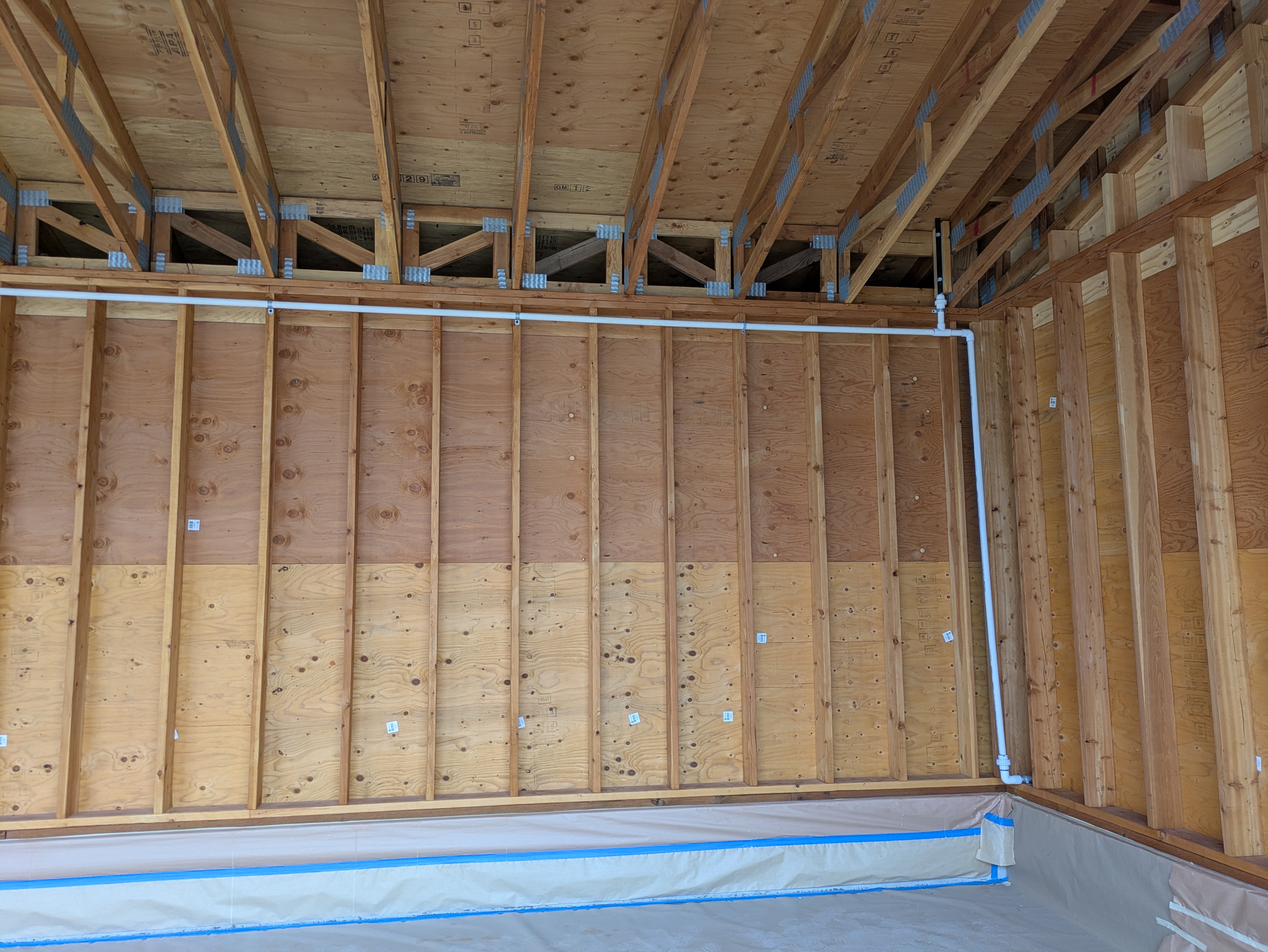
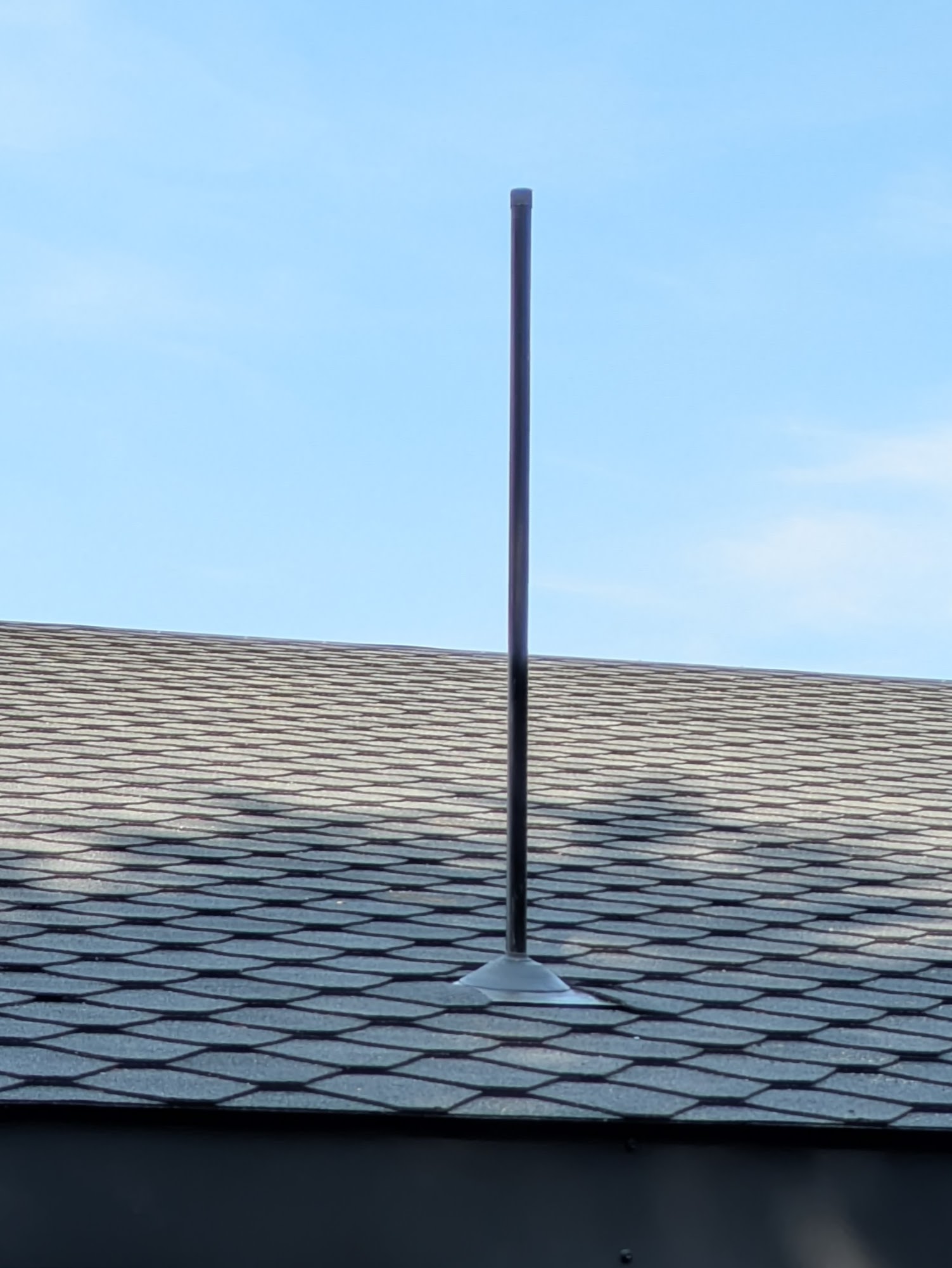
There are three sprinklers that stick up through the roof. Sam spent a very long time painting them black. Please take a moment to admire them.
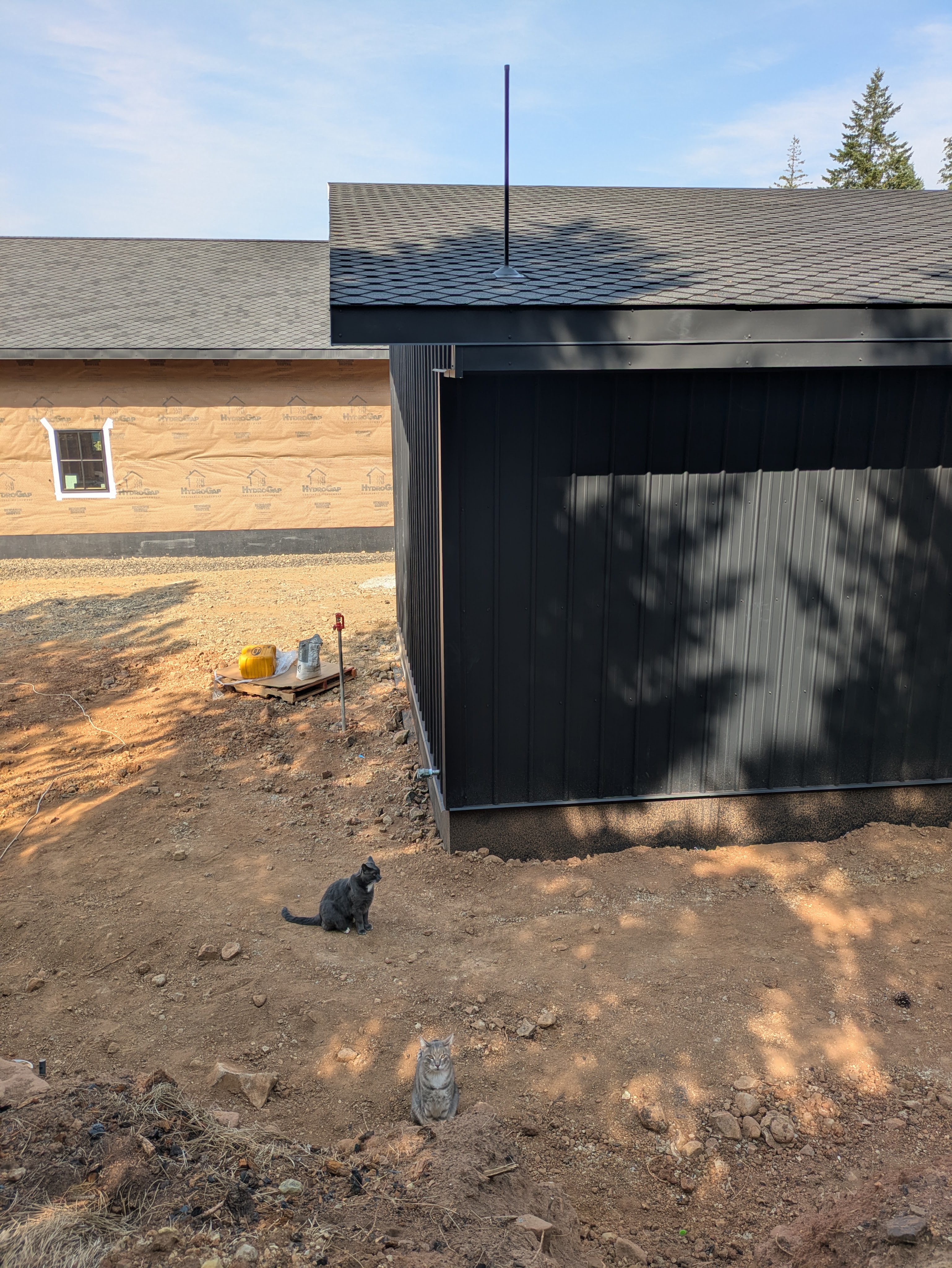
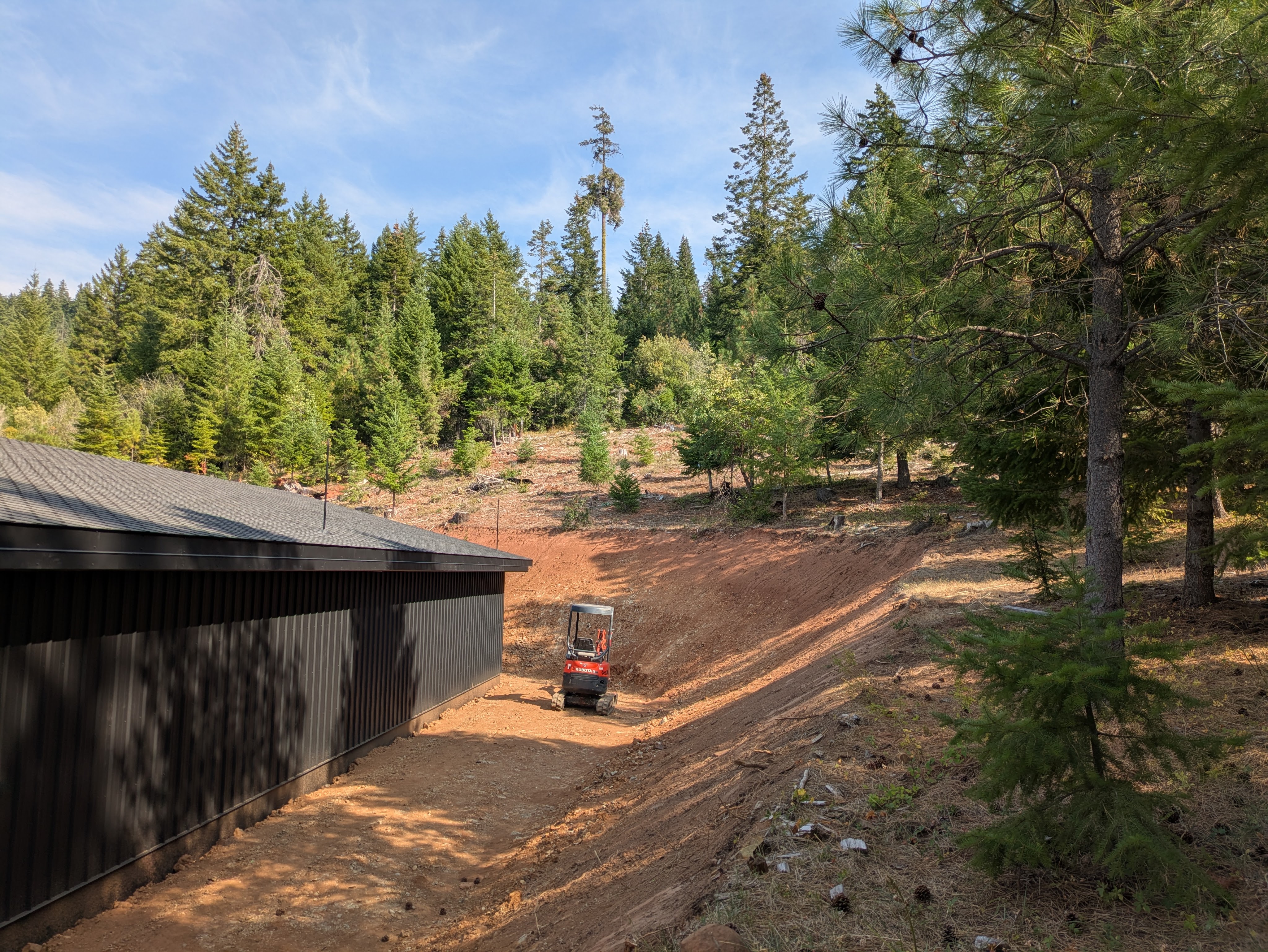
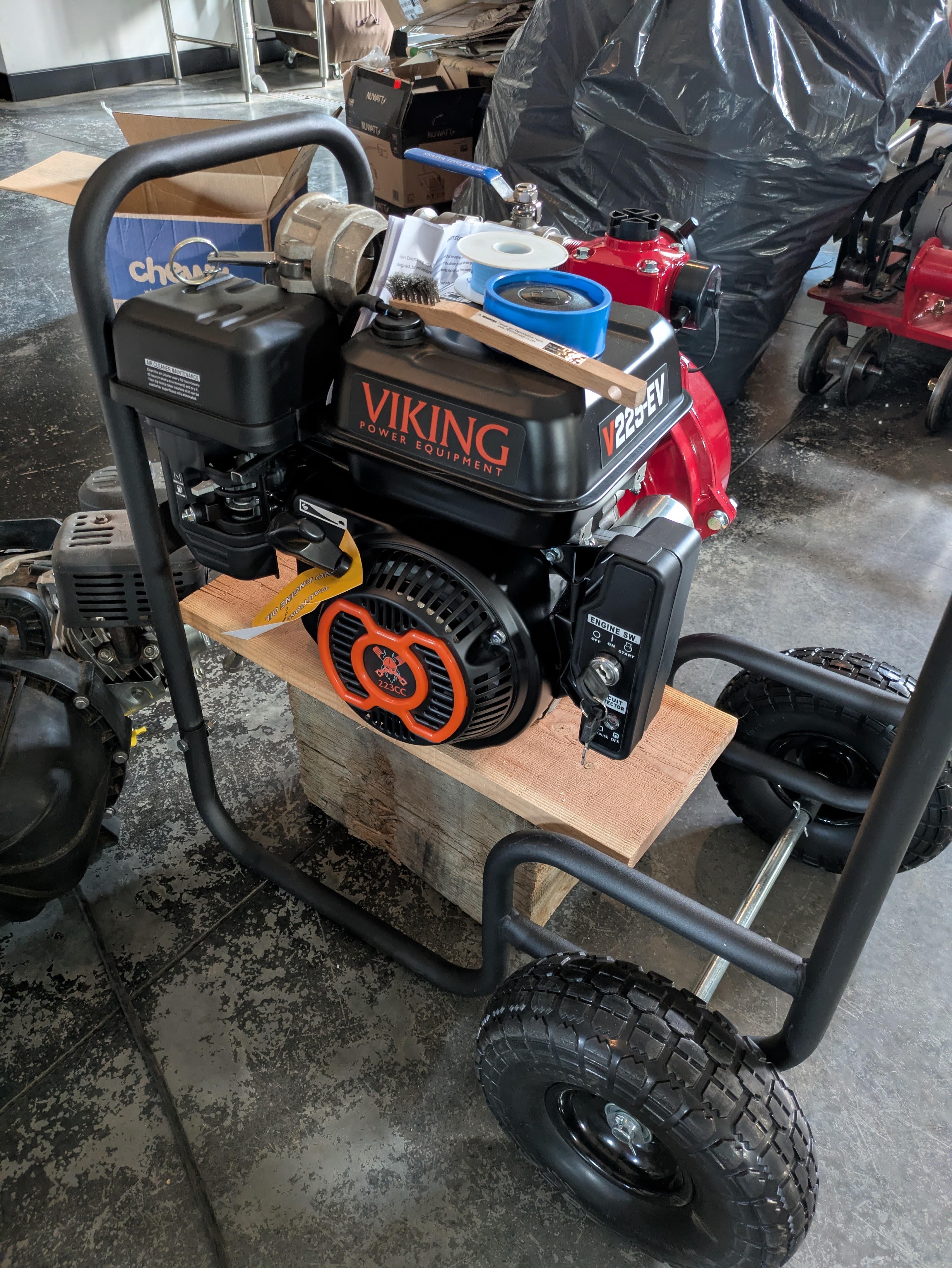
Sam purchased an above-ground gas pump (with an electric starter so I can start it) to run the sprinkler system. It’s more powerful than the submersible pump, plus it will work during a power outage. The pump will be mounted to this cart (below), so it can be moved to any of the four tanks.
This project was a lot of work, but we’ll be well-equipped for fire season!
 diamondgapbuild.com
dang! wild bad luck about the torrential rain and tank floating. i’m glad they seem to not have shifted so much that you had to remove and replace them to make them usable. phew.
Sam, you were originally a civil engineer, right? curious: how do you know which holes you can climb down into and which ones you can’t? those are some steep walls! i’d be concerned about soil collapse and getting buried. please be safe! worried about you.
LikeLike
Hi! Yes, Sam was a civil engineer, but he didn’t learn anything about holes. The material was very stable while he was digging. The walls weren’t the slightest bit crumbly, so he felt it was safe.
LikeLike